 Save to Pinterest
 The first time I tried manti, I was watching my neighbor's hands move with practiced speed, folding tiny squares of dough into perfect little pouches. She worked so quickly that by the time I blinked, her board was covered in dozens of them, each one identical. I kept staring at her yogurt sauce—this creamy, garlicky pool that seemed to hold everything together—and I asked if I could learn. What started as an afternoon in her kitchen became my favorite thing to make when I want to slow down and feel genuinely proud of something I've created.
I made these for my sister on a snowy Sunday, and she kept saying she couldn't stop eating them even though they were so small. Watching someone you love genuinely enjoy food you folded with your own hands—there's something about that moment that makes cooking feel less like a chore and more like a small gift.
Ingredients
- All-purpose flour: The foundation of silky dough; measure by spooning and leveling, never scooping straight from the bag, or you'll end up with too much.
- Salt: Just a pinch in the dough, but it makes a difference in texture and flavor.
- Large egg: Your binding agent and what gives the dough structure to hold the filling without breaking.
- Water: Add it slowly; you might not need the full half cup depending on humidity in your kitchen.
- Turkish white cheese or feta: Crumble it fine so it distributes evenly; this is where your cheese flavor comes from.
- Ricotta cheese: It softens the feta and adds creaminess without overpowering the filling.
- Fresh parsley: Chop it fine and don't skip it; it's the herbaceous note that brightens the whole dish.
- Black pepper: A quarter teaspoon is gentle but present.
- Greek yogurt: Thick and tangy; if you only have regular yogurt, drain it in cheesecloth for an hour first.
- Garlic clove: Mince it fine so it doesn't overpower, or macerate it in the salt first to mellow it out.
- Unsalted butter: This carries the warmth and spice, so use good butter.
- Paprika and Aleppo pepper: Bloom them in the warm butter so their flavors open up and become fragrant.
Tired of Takeout? 🥡
Get 10 meals you can make faster than delivery arrives. Seriously.
One email. No spam. Unsubscribe anytime.
Instructions
- Make the dough:
- Combine your flour and salt in a large bowl, then make a well in the center like you're creating a tiny flour volcano. Crack in your egg, pour in your water, and begin stirring from the center outward, gradually incorporating the flour until it comes together. Knead for a few minutes until it's smooth and elastic—you want it to feel almost silky. Cover it and let it rest; this is crucial because it lets the gluten relax and makes rolling easier later.
- Prepare the filling:
- While your dough is resting, mix your crumbled cheeses with the finely chopped parsley and black pepper in a small bowl. Taste it and adjust the salt if you need to; remember your yogurt sauce is coming later, so go easy.
- Make the yogurt sauce:
- Stir your minced garlic into the Greek yogurt with just a tiny pinch of salt, then taste and adjust. This should be creamy and pourable, not thick.
- Roll and cut:
- Flour your work surface lightly, then roll your dough out paper-thin—about 2 mm is right. You want it so thin you can almost see through it but not so thin it tears. Cut it into 1.5-inch squares; a pastry wheel works beautifully here, but a sharp knife is fine too.
- Fill and fold:
- Put a small amount of filling—about a half teaspoon—in the center of each square, then bring all four corners up and pinch them together to seal. The dumplings should look like little drawstring pouches. Don't overfill or they'll burst open when they cook.
- Cook the manti:
- Bring a large pot of salted water to a rolling boil, then add your manti in batches so they don't crowd the pot. They'll sink at first, then float to the surface after about five minutes; cook them for another minute or two after that, until they're tender and the dough has a slight bounce when you touch it.
- Make the spiced butter:
- Melt your butter in a small pan over gentle heat, then stir in your paprika and Aleppo pepper and let it sit for just 30 seconds—you want the spices to bloom and smell incredible, but not burn.
- Plate and serve:
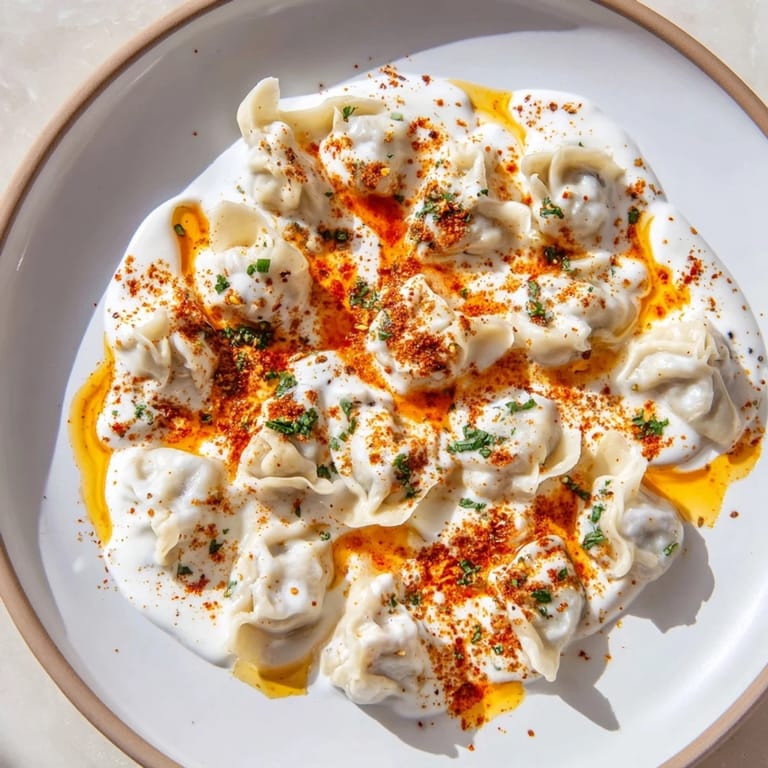
- Drain your manti well, arrange them on warm plates, spoon the yogurt sauce over the top, and finish with a drizzle of that spiced, fragrant butter. A scatter of fresh parsley on top is optional but really nice.
 Save to Pinterest
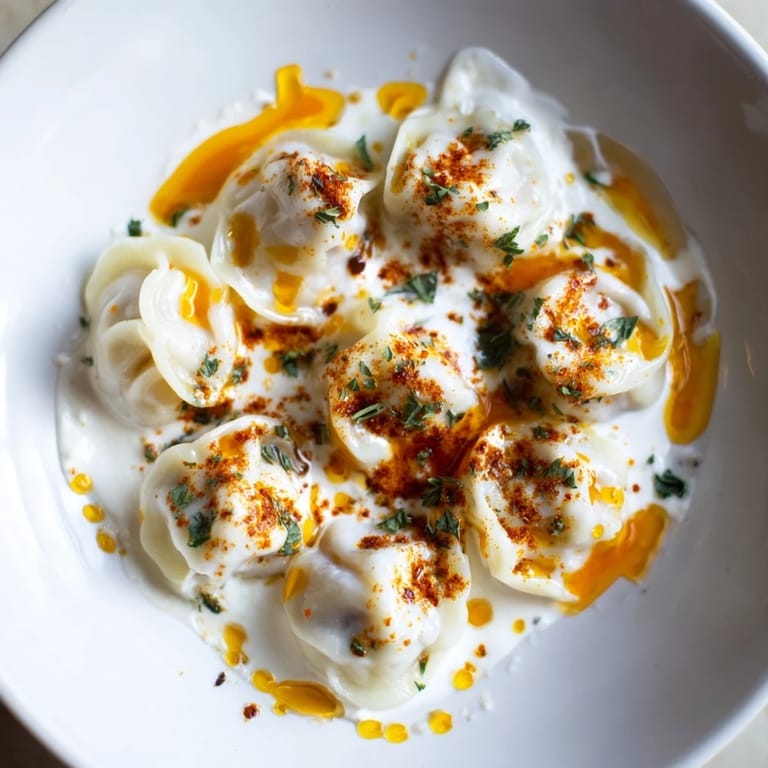
 I once made these for a dinner party and served them in shallow bowls so the yogurt sauce pooled around each dumpling like it was meant to be there. My friend said it was the kind of dish that made her feel cared for, and I understood exactly what she meant.
Why This Dish Feels Special
Turkish manti is one of those dishes that asks you to slow down and be present while you're making it. There's no rushing the dough folding, no shortcuts that won't show up in the final bite. It's humble but elegant, which is probably why it's been made the same way for generations across Turkey. When you eat it, you're tasting both the skill and the care someone put into creating something beautiful from simple ingredients.
Variations and Tweaks
Once you master the basic version, this recipe opens up in fun directions. Some cooks add a tiny pinch of sumac or dried mint on top for brightness, while others use a mix of white cheddar and feta for a slightly sharper filling. The yogurt sauce can be drizzled more generously if you like it swimming, or applied more sparingly if you prefer the focus on the dumplings themselves. I've even seen cooks brown the spiced butter until it's nutty and almost crispy, which adds a wonderful texture contrast.
Make-Ahead and Storage Tips
You can fold your manti several hours ahead and keep them on a parchment-lined tray in the fridge, which is perfect for busy nights or when you're cooking for a crowd. The yogurt sauce keeps for days, and the spiced butter can be made while your water comes to a boil. The only thing that doesn't improve with time is the texture of the cooked manti, so assemble everything right before you cook them for the best results.
- Freeze uncooked manti on a tray, then transfer to a freezer bag for up to a month; add an extra minute or two to the cooking time if cooking from frozen.
- Make double the filling if you want to meal prep several batches throughout the week.
- The yogurt sauce is actually better the next day after the garlic has mellowed slightly.
 Save to Pinterest
 Make this when you want to remember why cooking for people you care about matters. These little dumplings carry so much warmth.
Questions & Answers About This Recipe
- → What cheeses are used for the filling?
A blend of Turkish white cheese or feta and ricotta provides a creamy, tangy filling with fresh parsley and black pepper for seasoning.
- → How thin should the dough be rolled?
The dough should be rolled very thin, about 2 millimeters, to ensure delicate dumplings that cook evenly and have a light texture.
- → What is the role of the spiced butter?
The melted butter infused with paprika and Aleppo pepper adds a rich, smoky, and slightly spicy finish that enhances the dish’s flavor.
- → Can the dish be made vegetarian?
Yes, this version is naturally vegetarian, relying on cheese and yogurt without any meat or animal-based broths.
- → How are the dumplings cooked?
They are boiled in salted water until they float and become tender, typically 5 to 7 minutes, then drained before serving.