 Save to Pinterest
 My neighbor stopped by on a random Tuesday evening, and I was frantically searching my pantry for something to bring to a potluck the next day. There, staring back at me, were potatoes, butter, and enough cheese to make anyone smile. That night I assembled my first batch of scalloped potatoes, and by the time they came out of the oven, their golden tops were practically glowing. The aroma alone had my family gathered in the kitchen before I could even set them down. It became the dish I'd make again and again, each time discovering something new about its simple, honest charm.
Years ago, I made this for Easter dinner at my parents' house, and my dad, who rarely asks for seconds, went back for thirds. Watching him silently enjoy bite after bite while everyone else chattered around the table felt oddly meaningful. That's when I realized scalloped potatoes aren't just comfort food—they're the kind of dish that makes people feel cared for, even when you're not trying to do anything fancy.
Ingredients
- Yukon Gold or Russet potatoes (2 lbs): Yukon Golds hold their shape better and have a buttery flavor, while Russets get creamier—pick whichever feels right for your mood.
- Yellow onion (1 medium): Slice it thin so it softens into the sauce and disappears into the background, adding sweetness without announcing itself.
- Sharp cheddar cheese (2 cups shredded): Sharp means flavor, and in a creamy dish like this, you want the cheese to actually taste like something instead of just melting into oblivion.
- Mozzarella cheese (1 cup shredded): The mozzarella keeps things stretchy and helps create that golden, bubbling top that makes people's eyes light up.
- Whole milk (2 cups): Whole milk creates the silky sauce that binds everything together without breaking or becoming grainy.
- Unsalted butter (2 tbsp): Use unsalted so you control the salt level and taste the pure butter flavor in your roux.
- All-purpose flour (2 tbsp): This thickens the milk into sauce, but don't skip the whisking or you'll end up with lumps that ruin the whole thing.
- Salt, pepper, garlic powder, and paprika: These seasonings live in the sauce, so they season every layer evenly instead of just sitting on top.
Tired of Takeout? 🥡
Get 10 meals you can make faster than delivery arrives. Seriously.
One email. No spam. Unsubscribe anytime.
Instructions
- Prep your dish and heat the oven:
- Set your oven to 375°F and rub a little butter around your 9x13-inch dish so nothing sticks later. This moment feels small, but it saves frustration when you're tired at the end of cooking.
- Make a proper roux:
- Melt butter over medium heat, sprinkle in flour, and whisk for a full minute until it looks like wet sand. This cooking step cooks out the raw flour taste and creates the foundation for a sauce that won't break when you add cold milk.
- Build the sauce slowly:
- Pour milk in gradually while whisking constantly, as if you're coaxing it into submission rather than forcing it. You'll feel the mixture thicken under your whisk—that moment when it goes from thin to silky is pure kitchen magic, usually around three or four minutes.
- Season and melt the cheese:
- Pull the pan off heat, stir in your seasonings and half the shredded cheeses, and watch them melt into a smooth, luxurious sauce. Taste it here—this is your chance to adjust seasonings before everything goes into the dish.
- Layer with intention:
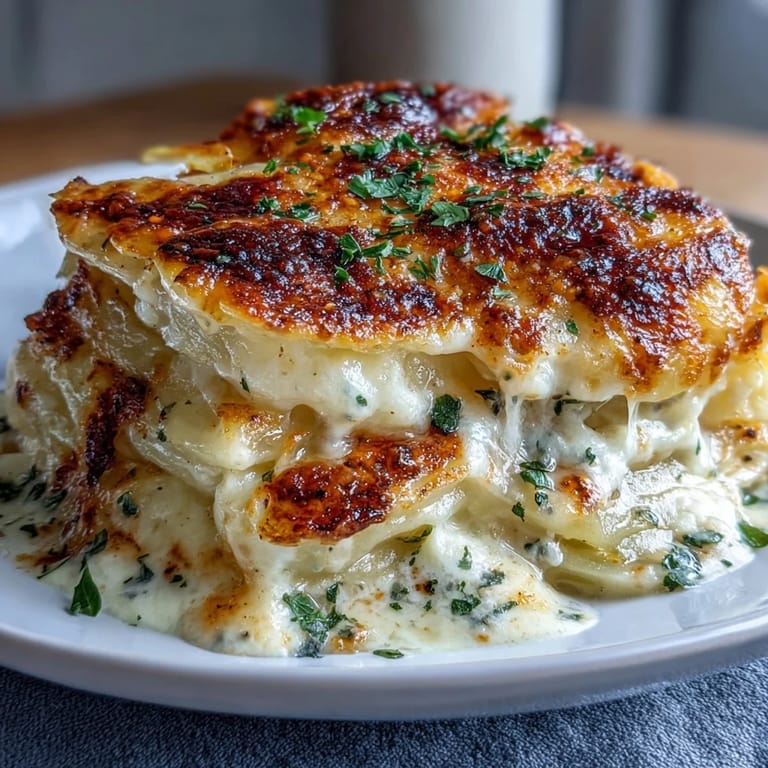
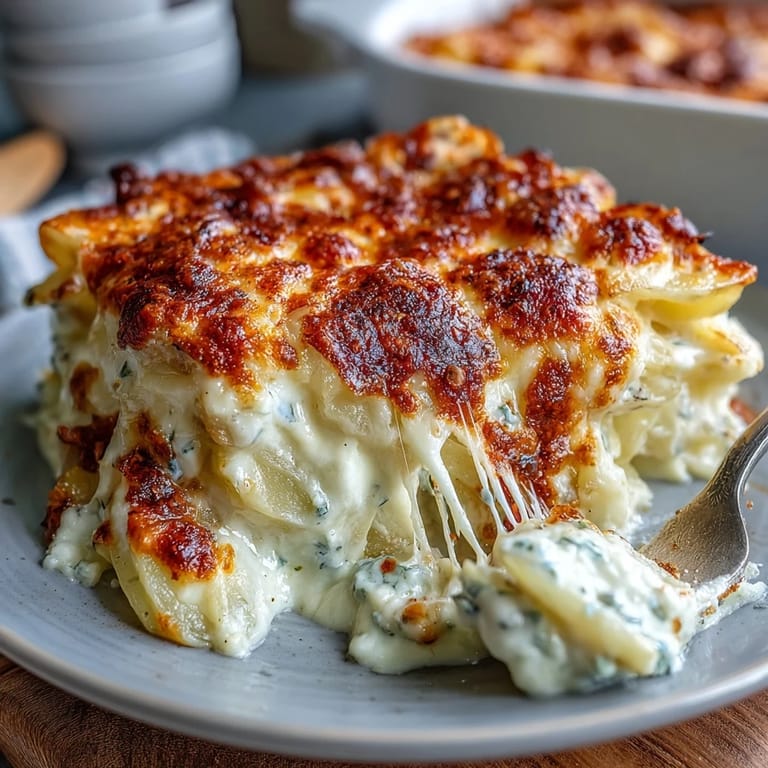
- Spread half your potato slices across the bottom of the dish, scatter half the onions, then pour half the sauce over top. Repeat with the remaining potatoes, onions, and sauce, making sure the top layer gets a little extra love with the remaining cheeses and a sprinkle of paprika.
- Bake covered, then uncovered:
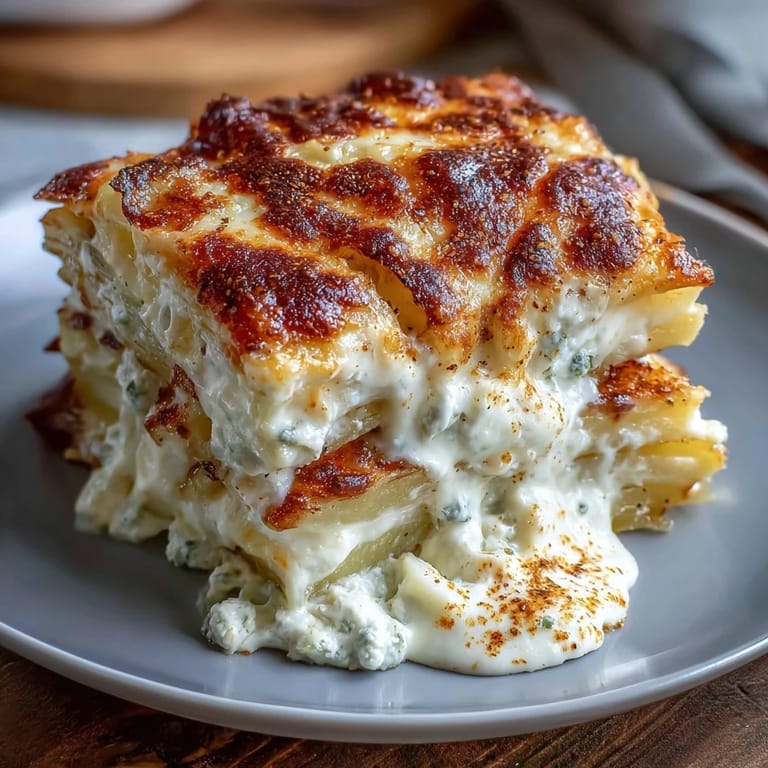
- Cover with foil and let the potatoes steam for 40 minutes until they're mostly tender, then remove the foil and bake another 25 to 30 minutes until the top turns golden brown and the edges are bubbling. That transition from foil to no foil is when the magic happens—the top begins crisping while the potatoes underneath finish cooking through.
- Rest before serving:
- This feels counterintuitive when everything is steaming and smells incredible, but waiting 10 minutes lets the sauce set just enough so it doesn't run all over the plate. Those 10 minutes are the hardest part of the whole recipe.
 Save to Pinterest
 There was a time I brought this to a dinner where I didn't know anyone very well, and somehow a dish of baked potatoes became the conversation starter. People asked for the recipe, told stories about their own kitchen experiments, and suddenly I wasn't the awkward newcomer anymore—I was the person who brought something that tasted like home. It reminded me that good food does more than fill a plate; it creates a reason for people to connect.
The Best Cheese Combinations to Try
Once you master the basic version, playing with cheeses opens up a whole new world of flavors. Gruyère adds an earthiness and sophistication that makes this feel like restaurant food, while a blend of white cheddar and fontina creates something richer and almost nutty. I've even mixed smoked gouda with sharp cheddar on a whim, and the subtle smokiness lingered in the best way. The rule I follow is simple: choose cheeses that melt smoothly and have real flavor, not the pre-shredded stuff with cellulose that never quite melts properly.
Make-Ahead Magic
One of my favorite discoveries was that you can assemble this dish completely hours before you bake it, which means it's a lifesaver during busy holiday weeks. Cover it with foil and stick it in the fridge—when you're ready to cook, just add a few extra minutes to the covered baking time since the potatoes start cold. This flexibility is why I now make a batch every Thanksgiving: it frees up my mental energy for everything else while the oven does the work. I've even successfully baked one straight from the fridge at 350°F for about 75 minutes and gotten beautiful results, though 375°F is faster and preferred.
Flavor Upgrades and Personal Touches
The base recipe is delicious, but there's room for personality if you want to explore. A pinch of nutmeg in the sauce adds a whisper of warmth that people can't quite identify but suddenly ask about, while fresh thyme or sage chopped and stirred in at the end brings brightness. I once added crispy bacon bits and caramelized onions on impulse, and it became the version my kids request by name now. Don't be afraid to experiment—scalloped potatoes are forgiving enough to handle your creativity, and the results teach you something new about how flavors work together.
- Stir in a tiny bit of Dijon mustard to the sauce for subtle tanginess that plays beautifully with sharp cheddar.
- Layer in sautéed mushrooms or caramelized onions between the potatoes for extra depth and texture.
- Finish with fresh chives or parsley right before serving to cut through the richness with a bright green note.
 Save to Pinterest
 Every time I make this, I'm reminded that the best food doesn't need to be complicated—it just needs to be made with intention and shared with people who matter. That's the real recipe.
Questions & Answers About This Recipe
- → What type of potatoes work best for scalloped layers?
Yukon Gold or Russet potatoes are ideal due to their texture and ability to hold shape when thinly sliced and baked.
- → How is the cheese sauce prepared for this dish?
A roux is made by melting butter and whisking in flour, then milk is added gradually, thickened over heat before melting in shredded cheddar and mozzarella cheeses.
- → Can this dish be prepared ahead of time?
Yes, layers can be assembled several hours before baking. Just cover and refrigerate until ready to bake.
- → How do I achieve a golden crust on top?
Sprinkle additional shredded cheeses and paprika on top, then bake uncovered during the last 25-30 minutes to form a golden crust.
- → Are there any common variations to enhance flavor?
Adding a pinch of nutmeg or fresh herbs to the sauce or substituting Gruyère for cheddar offers deeper, richer flavor options.
- → Is there a gluten-free option for the sauce?
Yes, substitute the all-purpose flour with a gluten-free alternative to make the sauce suitable for gluten-free diets.