 Save to Pinterest
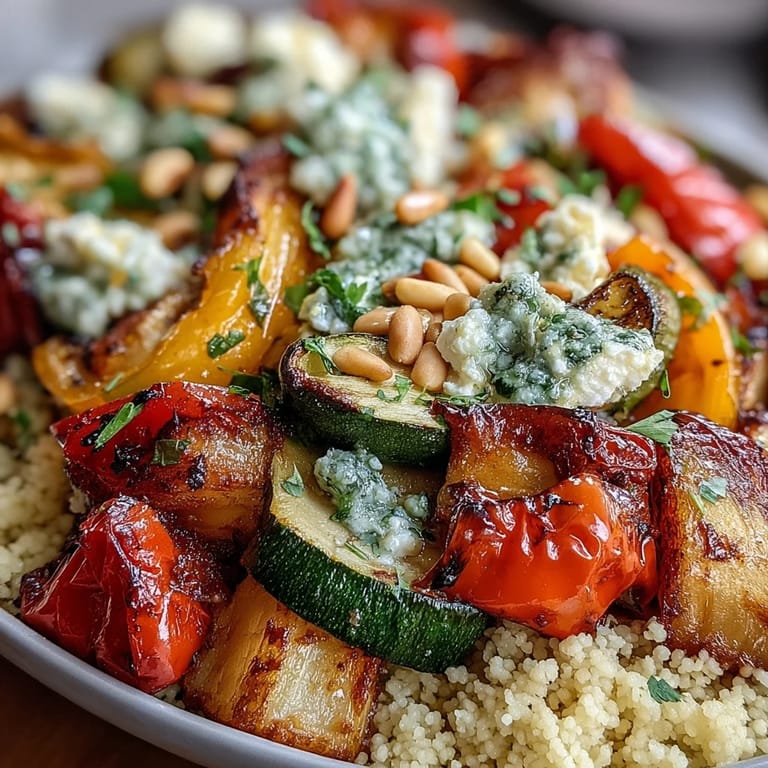
 There's something about the smell of roasted vegetables that fills a kitchen with pure Mediterranean warmth, and I discovered this bake completely by accident one Thursday evening when I had leftover couscous and a fridge full of peppers that needed rescuing. My neighbor had just returned from Greece raving about feta, so I thought, why not layer it all together and see what happens? The result was so golden and bubbly that my partner asked for seconds before I'd even sat down, and I've been making it ever since whenever I need something that feels both effortless and impressive.
I made this for a casual Sunday lunch with friends who'd just moved to the neighborhood, and somehow it became the dish everyone asked for the recipe for, even though I'd honestly winged half of it that morning. One friend swore the pine nuts were toasted pine nuts I'd specifically hunted down, when really I'd just sprinkled them on top and let the oven do the work. That meal turned into a standing invite, and now I make it whenever we gather because it's become our thing.
Ingredients
- Zucchini: One medium one, diced into rough chunks—the slightly larger pieces hold their shape better and won't turn mushy in the oven.
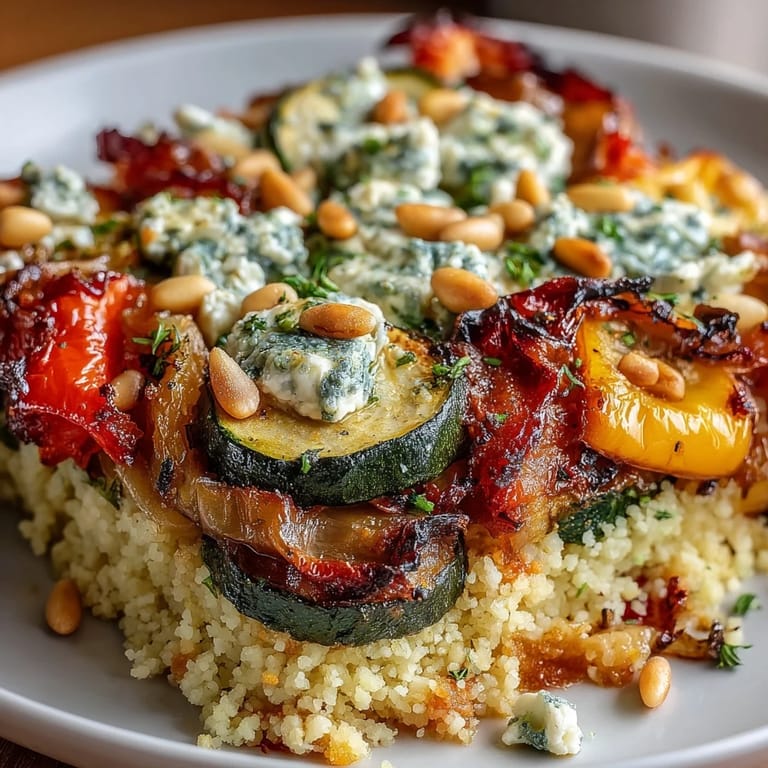
- Red and yellow bell peppers: Use both for color and sweetness, and don't worry about uniform sizing since uneven pieces add texture.
- Red onion: Sharp and sweet when roasted, it mellows out beautifully and adds depth you won't expect.
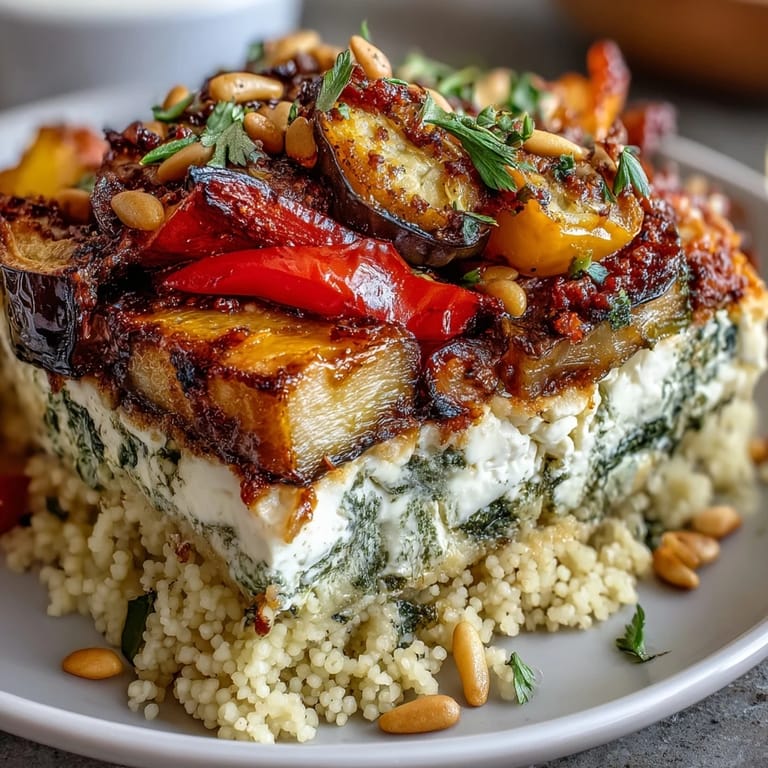
- Eggplant: Small and diced small, it soaks up all those Mediterranean flavors and becomes silky when roasted.
- Olive oil: Two tablespoons for the vegetables, one for the couscous—this is where you taste the difference between good oil and great oil.
- Dried oregano: One teaspoon feels generous, but trust it; the heat and time bring out its earthy warmth.
- Sea salt and black pepper: Season generously on the vegetables before roasting since they're the foundation of everything that follows.
- Couscous: One cup of this fluffy grain becomes the base, and it's forgiving enough that even if you mess up the broth amount slightly, it still works.
- Vegetable broth: One cup boiling—the heat activates the couscous's ability to absorb, so use actually boiling broth, not lukewarm.
- Lemon zest: Fresh and bright, it cuts through the richness and prevents the dish from feeling heavy.
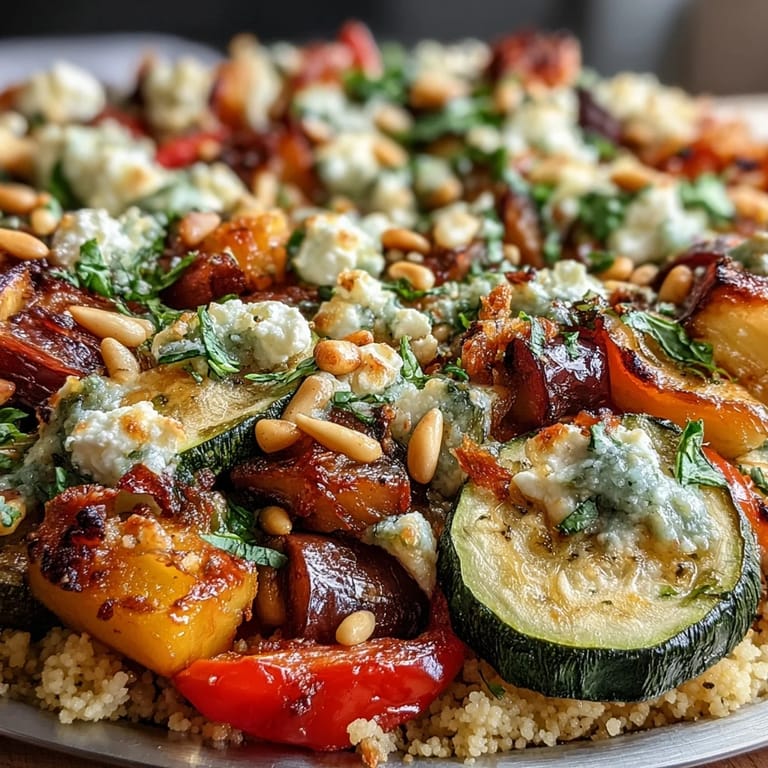
- Fresh parsley: Two tablespoons chopped, plus more for serving because green against gold never looks bad.
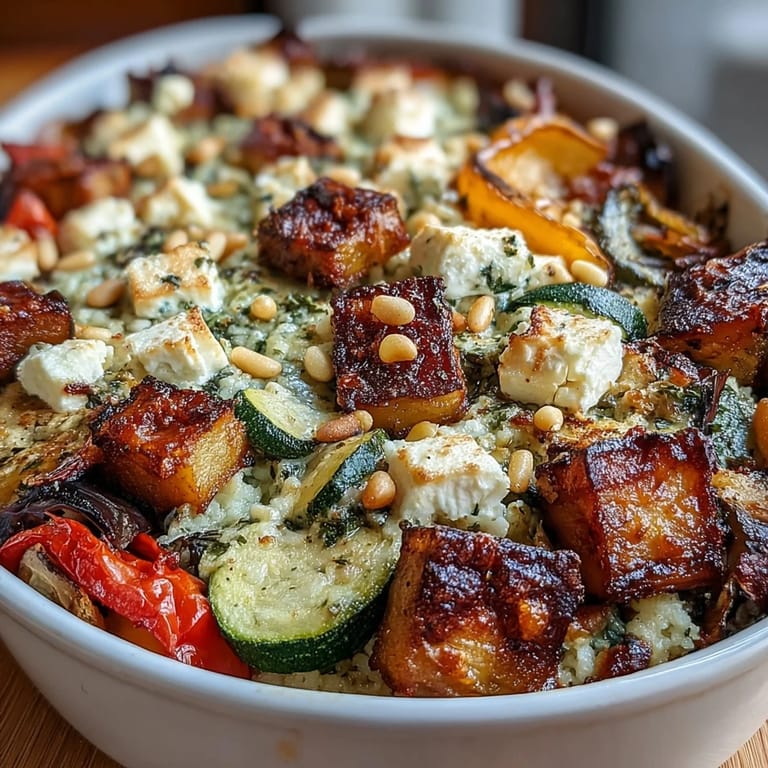
- Feta cheese: Two hundred grams total, divided so some melts into the couscous and some gets golden and bubbly on top—this is the star of the show.
- Pine nuts: Optional but they add a delicate crunch that makes people pause mid-bite and ask what that texture is.
- Chili flakes: A quarter teaspoon scattered on top brings a whisper of heat that sneaks up on you pleasantly.
Tired of Takeout? 🥡
Get 10 meals you can make faster than delivery arrives. Seriously.
One email. No spam. Unsubscribe anytime.
Instructions
- Heat your oven and prep the vegetables:
- Preheat to 220°C (425°F), then toss all your diced vegetables with olive oil, oregano, salt, and pepper on a large baking tray. Spread them out in a single layer and let them roast for 20 to 25 minutes, stirring about halfway through when you start smelling that caramelized sweetness, until they're golden and tender at the edges.
- Wake up your couscous:
- While the vegetables roast, place one cup of couscous in a heatproof bowl and pour one cup of boiling vegetable broth over it along with one tablespoon of olive oil. Cover it tightly and let it sit for exactly five minutes—this is not the time to peek—then fluff it gently with a fork and stir in your lemon zest and parsley.
- Adjust the oven and combine everything:
- Lower your oven temperature to 190°C (375°F), then fold together the roasted vegetables, fluffy couscous, and half of your crumbled feta cheese in a large bowl. Mix gently so the couscous stays light and airy rather than compacted.
- Transfer and top with cheese:
- Spoon the mixture into a lightly greased baking dish, then scatter the remaining feta over the top. Sprinkle with pine nuts and a pinch of chili flakes if you're using them.
- Finish with a final bake:
- Bake for 12 to 15 minutes until the feta on top turns golden and bubbly and starts to smell absolutely irresistible. You'll know it's done when the cheese has melted into pockets of warmth throughout.
 Save to Pinterest
  Save to Pinterest
 One winter evening, my youngest nephew tried this for the first time and declared that feta cheese was his new favorite food, which led to him requesting it at every family gathering for the next three months. It became the bridge that made him curious about Mediterranean flavors in general, and now he's the one requesting olives and capers on things, which felt like watching someone discover a whole new world. These are the moments that make cooking for people feel like something beyond just feeding them.
When to Serve This
This dish walks a beautiful line between side and main, depending on what mood you're in and who you're feeding. Serve it warm as a vegetarian main course alongside a crisp green salad and some crusty bread, or bring it to a gathering as a hearty side that somehow stays warm longer than you'd expect because the couscous and cheese hold onto heat like nobody's business.
Ways to Make It Your Own
The beauty of this recipe is that it invites you to improvise based on what's in season and what you have on hand. I've made it with cherry tomatoes instead of zucchini, with fresh spinach stirred in after roasting, with sun-dried tomatoes for a deeper flavor, and even with a handful of kalamata olives that transformed it into something almost Greek-taverna-like.
Storage and Reheating
This dish keeps beautifully in the refrigerator for up to three days, and I've found that reheating it gently in a 180°C oven for about ten minutes brings back its magic without drying anything out. It's also surprisingly good cold the next day if you're the type who eats leftovers straight from the fridge with a fork while standing at the counter.
- Make it ahead and reheat gently before serving so the feta stays creamy rather than rubbery.
- Add fresh herbs like mint or basil after reheating for brightness that tastes like just-made.
- Store leftovers in an airtight container and don't skip the gentle reheating step because that's what brings it back to life.
 Save to Pinterest
  Save to Pinterest
 This recipe has become my go-to when I need something that feels special without stress, and it somehow always makes people feel cared for in a way that fancy plating never could. There's something deeply comforting about a warm, golden dish that tastes like Mediterranean sunshine, even when you're cooking it in the middle of winter with vegetables from the grocery store.
Questions & Answers About This Recipe
- → Can I prepare this ahead of time?
Yes, roast the vegetables and prepare the couscous up to a day in advance. Store them separately in the refrigerator, then combine with feta and bake when ready to serve.
- → What vegetables work best in this bake?
Zucchini, bell peppers, eggplant, and red onion are classic choices. You can also add cherry tomatoes, mushrooms, or swap in seasonal vegetables like butternut squash in fall.
- → Is this suitable for freezing?
The assembled bake freezes well for up to 3 months. Thaw overnight in the refrigerator, then reheat at 180°C until heated through and the cheese bubbles again.
- → Can I make this gluten-free?
Substitute regular couscous with quinoa or a gluten-free couscous alternative. The cooking method remains the same, though timing may vary slightly.
- → How can I add more protein?
Stir in chickpeas or white beans with the roasted vegetables, or serve alongside grilled chicken or lamb for a non-vegetarian version.
- → What can I use instead of feta?
Goat cheese, halloumi, or a dairy-free feta alternative all work beautifully. Each brings a slightly different salty, tangy element to the dish.