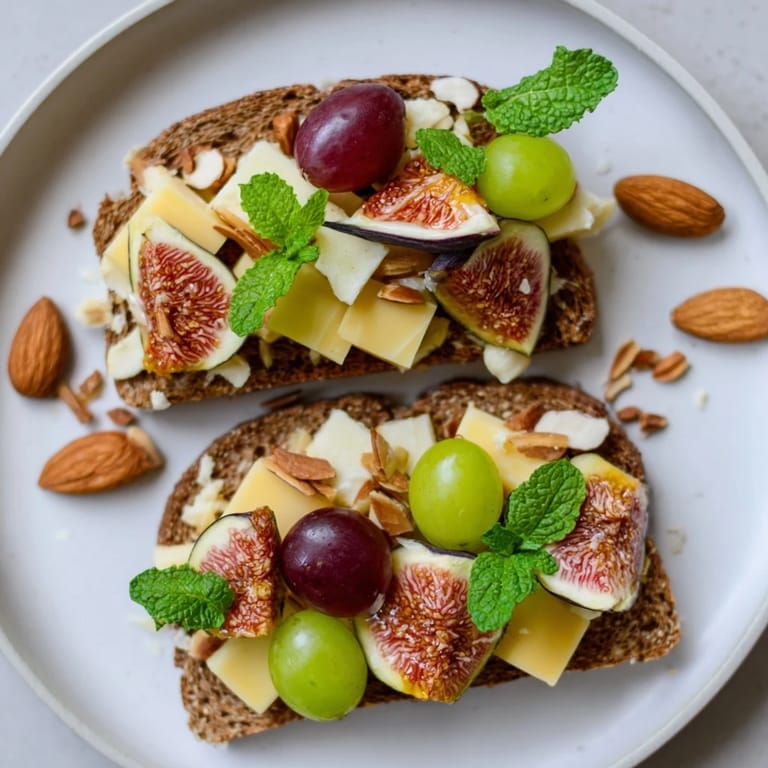
 Save to Pinterest
 There's something about late summer that makes you want to gather people around food that doesn't require much more than a sharp knife and a good eye for arrangement. I discovered this platter while wandering through a farmers market on a warm afternoon, surrounded by the season's abundance, and thought: why not celebrate all of it at once? The idea struck me that morning, and by evening, friends were circled around a wooden board, picking through golden breads and jewel-toned fruits like we'd known each other for years.
My roommate once called this my "show-off platter," but what she really meant was that it felt generous in a way that made people relax. I'd made it for a small dinner party on a Tuesday night when everyone was tired, and somehow the arrangement—those sweeping curves of bread and grain—shifted the whole mood. Nobody felt rushed to eat. Nobody felt like they were being served something that required apologies. It just felt abundant and honest.
Ingredients
- Baguette, sliced: Use day-old bread if you have it; it won't dry out as fast on the board and holds up better when people reach for it throughout the meal.
- Multi-grain crackers: Choose sturdy ones that won't shatter under the weight of cheese or spreads, and pick varieties with visible seeds for visual interest.
- Seeded rye bread, thinly sliced: The earthiness of rye balances the sweetness of fruits and honey, and thin slices make it less intimidating to pick up.
- Cooked farro or barley, cooled: This is your anchor, the visual element that makes the whole arrangement feel intentional—cook it the morning of or the day before.
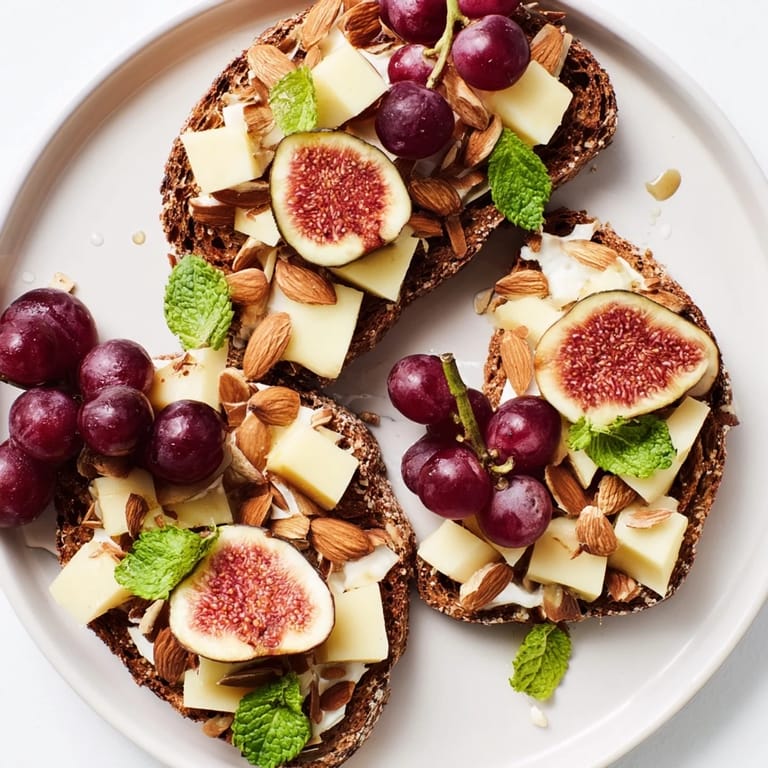
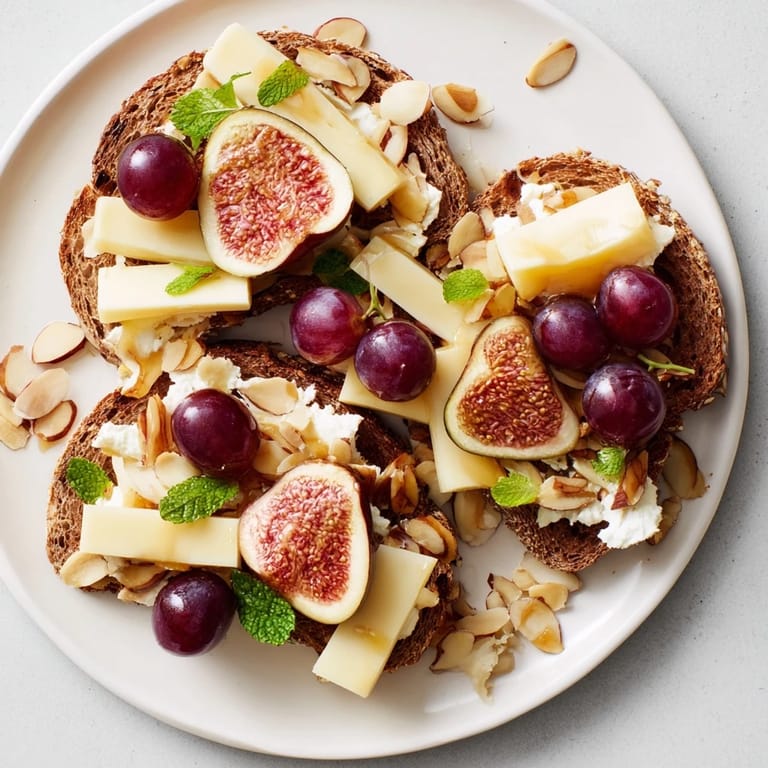
- Seedless red grapes: They're forgiving to arrange, stay fresh for hours, and their color anchors the whole display.
- Sliced pears and apples: Toss these gently in a bit of lemon juice right before arranging to prevent browning and add a subtle brightness.
- Dried apricots and fresh or dried figs: These add pockets of concentrated sweetness and chewy texture that make people slow down and savor.
- Brie and aged cheddar: Soft and hard cheeses together create visual contrast and give people choices depending on their mood.
- Honey or fig jam: A small bowl nearby feels like a secret luxury, though not everyone uses it—and that's fine.
- Fresh mint and roasted nuts: These finish the board with aroma and crunch, scattered just before serving so they don't wilt or absorb moisture.
Tired of Takeout? 🥡
Get 10 meals you can make faster than delivery arrives. Seriously.
One email. No spam. Unsubscribe anytime.
Instructions
- Set your stage with bread:
- Lay out your wooden board and arrange the sliced baguette, rye bread, and crackers in a gentle, curved line that mimics a scythe's sweep. Step back and squint at it—the curve should feel natural, not forced, like you're drawing with your hands rather than following a grid.
- Build the grain foundation:
- Scatter your cooled farro or barley along the inside curve of the bread line, creating a thin, even layer that suggests a field of grain waiting to be harvested. You're looking for enough texture to catch the eye without burying anything underneath.
- Weave in the fruit:
- Fan your pears and apples in gentle overlaps, then cluster the grapes, apricots, and figs in pockets between the breads. Let colors and textures mingle—this isn't about perfection; it's about abundance.
- Anchor with cheese:
- Place your brie slices and cheddar cubes in small, casual clusters near the breads where they're easy to grab and pair. Think of them as little rest stops rather than architectural elements.
- Add the sweet note:
- Place a small bowl of honey or jam somewhere on the board where it's visible but not dominating—the edge works well. People will find it if they want it.
- Finish with life:
- Just before serving, scatter fresh mint leaves and roasted nuts across the whole board, giving it a final moment of aroma and visual shimmer. This is the moment where it stops looking like a list of ingredients and starts looking like a celebration.
 Save to Pinterest
 Once, a friend brought her elderly mother to dinner, and I watched her spend forty minutes picking through that board, trying tiny combinations: rye bread with apricot, brie with fig, a grape by itself just to taste the season. She didn't talk much, but when she left, she held my hand and thanked me for making something that let her take her time. That's when I understood this wasn't really about being fancy or impressing anyone.
The Art of Arrangement
The scythe shape isn't sacred—it's just a reason to think about how food looks on a board before you throw it down. Curves feel more welcoming than lines. Clustering certain elements (like grapes or nuts) draws the eye and gives your hands natural places to land when reaching. You're not decorating; you're making a map that invites people to explore.
Timing and Temperature
Everything here is best served at room temperature or just slightly chilled, which means you can actually build this board while your guests are arriving instead of panicking in the kitchen. The only thing that changes over time is the apples—they brown—and the fresh mint, which wilts if it sits too long. Everything else holds its composure for hours.
Making It Your Own
This is a template wearing a beautiful name, not a rulebook you need to obey. Swap in whatever breads and fruits exist near you, whatever cheeses you love, whatever nuts you have roasted. In winter, I've used pomegranate seeds and dried cranberries. In spring, I've thrown in fresh strawberries and soft goat cheese. The principle stays the same: contrast textures, layer flavors, and arrange with intention.
- Seasonal swaps keep this platter fresh and exciting across different times of year.
- If you're making this for a picnic, skip the honey bowl and pack it separately to avoid spills.
- This platter scales beautifully—double or triple the quantities for bigger crowds without changing your technique at all.
 Save to Pinterest
 Make this whenever you want to slow people down and remind them that the best meals aren't always the most complicated ones. There's real generosity in a board full of good things, arranged with care, left for people to discover at their own pace.
Questions & Answers About This Recipe
- → How do I create the scythe shape with breads and fruits?
Arrange sliced breads and crackers in a sweeping curved line to mimic a scythe's blade, then fan fruits alongside to blend colors and textures naturally.
- → Can I substitute grains in the platter?
Yes, cooked farro can be swapped with barley or other cooked grains like quinoa to suit taste or availability.
- → What cheeses pair well with this arrangement?
Soft cheeses like brie and aged cheddar complement the fresh fruits and breads nicely, adding creamy and sharp contrasts.
- → How should I serve the platter to keep it fresh?
Serve immediately after assembling to preserve the texture and freshness of fruits and breads; keep chilled if preparing slightly ahead.
- → Are there options for dietary restrictions?
Gluten-free bread and crackers can be used, and cheeses may be replaced with vegan alternatives or omitted for plant-based preferences.