 Save to Pinterest
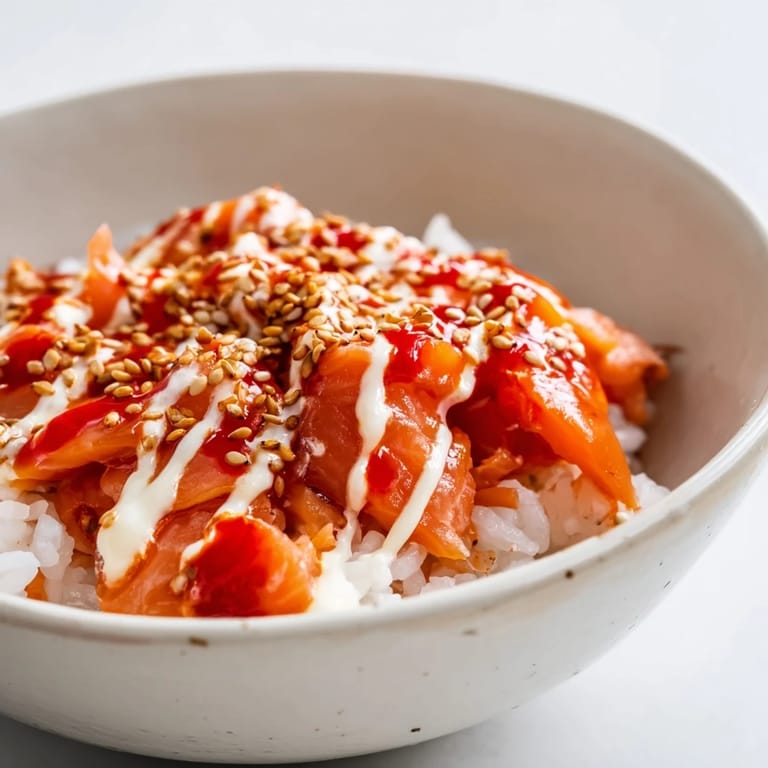
 My roommate showed me this dish on her phone one afternoon while we were both staring into the fridge wondering what to do with leftover rice. The video made it look so easy, and within ten minutes we were fighting over who got the last seaweed sheet. It smelled like the inside of a sushi restaurant, but without any of the fuss or expensive takeout prices. That bowl became our go-to whenever we needed something quick, comforting, and ridiculously satisfying.
I made this for my sister when she came over tired from work, and she literally paused mid-bite to ask why we ever bother with actual sushi rolls. We sat on the couch, wrapping little parcels of rice and salmon in nori, and she admitted it was the first meal all week that didnt feel like a chore. The best part was watching her steal extra sriracha mayo when she thought I wasnt looking.
Ingredients
- Cooked salmon fillet: Leftover salmon works beautifully here, and flaking it while still slightly warm makes mixing so much easier.
- Short-grain rice: Day-old rice is key because it holds its shape and doesnt turn mushy when you reheat it.
- Soy sauce: This is your seasoning base, so use a good quality one you actually like the taste of straight.
- Japanese mayonnaise: Kewpie has that slight tang and creaminess that regular mayo just cant match.
- Sriracha sauce: Adjust the amount depending on how much heat you want, it should tingle but not overpower.
- Avocado: Ripe but firm avocado adds a buttery coolness that balances the spice.
- Green onion: A fresh, sharp bite that cuts through all the richness.
- Toasted sesame seeds: They add a nutty crunch that makes every bite a little more interesting.
- Roasted seaweed sheets: The nori snack packs are perfect because theyre already sized for scooping.
Tired of Takeout? 🥡
Get 10 meals you can make faster than delivery arrives. Seriously.
One email. No spam. Unsubscribe anytime.
Instructions
- Prep the bowl:
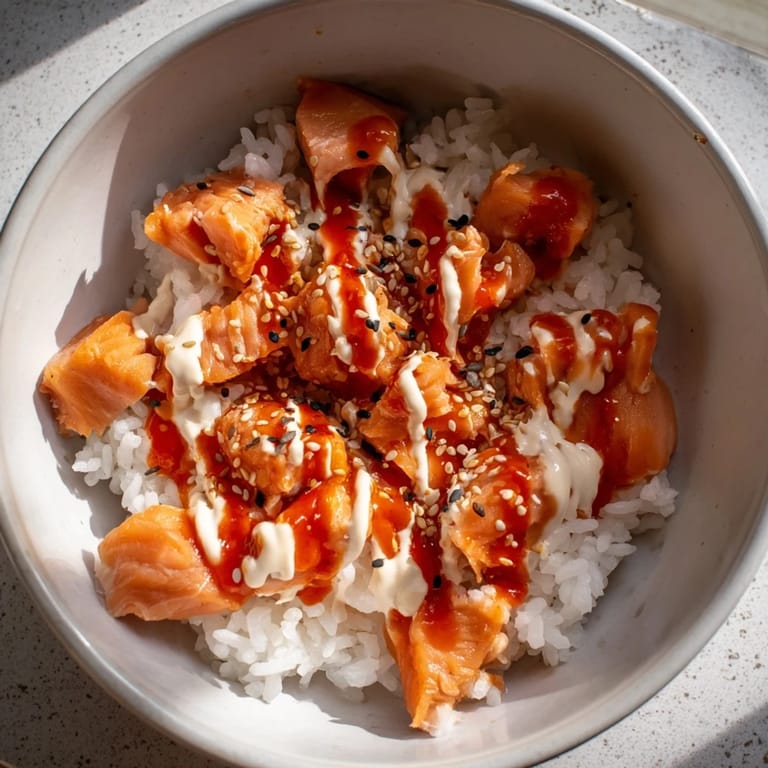
- Put your cold rice in a microwave-safe bowl and scatter the flaked salmon on top. Drizzle with one tablespoon of soy sauce so everything gets a head start on flavor.
- Heat it up:
- Cover loosely with parchment or a microwave cover and zap it for one to two minutes until the rice is steaming and the salmon is warmed through. The steam does most of the work here.
- Add the sauces:
- Drizzle the Japanese mayo and sriracha over the hot rice and salmon, then add the second tablespoon of soy sauce if you want it saltier. The heat will help everything blend smoothly.
- Mix it together:
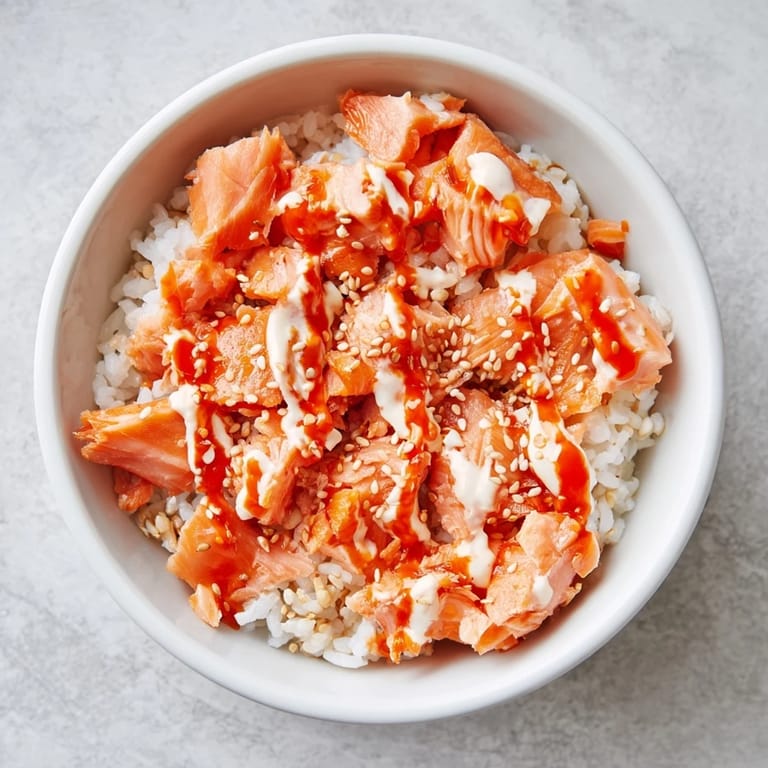
- Use a fork or rice paddle to gently fold everything until the salmon breaks into smaller pieces and the sauces coat every grain. Dont mash it, just combine.
- Top and serve:
- Arrange the avocado slices on top, scatter the green onion and sesame seeds over everything, and set the seaweed sheets on the side. Scoop, wrap, and eat like a hand roll.
 Save to Pinterest
 One night I made this after a long shift and realized halfway through that I was smiling at my bowl. It wasnt fancy, but it felt like the kind of meal that understands you. I texted my friend a photo and she replied with three heart-eye emojis and a demand for the recipe.
Customizing Your Bowl
This bowl is wildly forgiving and begs to be personalized. Swap the salmon for canned tuna, leftover grilled chicken, or even crispy tofu if you want to switch up the protein. A handful of shredded cucumber, pickled ginger, or thinly sliced radish adds crunch and brightness. If you love heat, try chili crisp instead of sriracha for a different kind of kick with added texture.
Getting the Rice Just Right
The magic of this dish starts with the rice texture. When you use day-old refrigerated rice, the grains firm up and separate, which means they reheat without clumping or getting sticky. If you only have fresh rice, spread it out on a plate and let it cool completely, then refrigerate for at least an hour before using. Cold rice also absorbs the sauces better, giving you more flavor in every bite instead of a soggy mess.
Serving and Storing
This bowl is best eaten fresh and warm, right after you mix everything together. The avocado starts to brown and the seaweed loses its crispness if you let it sit too long. If you need to make it ahead, keep the rice and salmon mixture separate from the toppings and seaweed until youre ready to eat.
- Store any leftover rice mixture in an airtight container in the fridge for up to one day.
- Keep seaweed sheets in their original package so they stay crunchy.
- Slice the avocado fresh right before serving to avoid browning.
 Save to Pinterest
 This bowl has saved me more times than I can count, and it never gets old. Make it your own, and it might just become your new favorite way to use up leftovers.
Questions & Answers About This Recipe
- → Can I use canned salmon instead of fresh?
Yes, canned salmon works perfectly as a convenient substitute. Drain it well and flake it with a fork. The flavor and texture will be slightly different but equally delicious. Make sure to check for any bones and remove them before using.
- → Why should I use day-old rice?
Day-old or leftover rice is chilled and firmer, preventing it from becoming mushy when mixed with the warm salmon and sauces. Fresh, hot rice tends to get too soft. If you must use freshly cooked rice, spread it on a plate to cool first.
- → What's the best way to slice the avocado?
Cut the avocado in half lengthwise, remove the pit, and use a spoon to scoop the flesh directly onto your bowl. Alternatively, slice it on a cutting board and carefully transfer to the bowl. Add avocado just before serving to prevent browning.
- → Can I make this without mayo or sriracha?
Absolutely. Try chili crisp, regular hot sauce, or even a drizzle of sesame oil instead. A splash of rice vinegar and a sprinkle of furikake seasoning also add wonderful depth. Customize based on your heat preference and available ingredients.
- → How should I eat it with the seaweed sheets?
Scoop a bite of the salmon rice mixture onto a roasted seaweed sheet and roll it slightly to create a hand roll. It's interactive and fun, mimicking sushi but with a deconstructed twist. You can also eat it straight from the bowl if preferred.
- → Is this pescatarian-friendly?
Yes, this dish is naturally pescatarian since it contains only salmon as the protein source. Just verify that your mayonnaise brand doesn't contain anchovies, and check your seaweed seasoning for any animal products if you prefer strict vegetarian options.