 Save to Pinterest
 My neighbor knocked on my door last New Year's Eve with a jar of her grandmother's black-eyed peas, insisting I needed luck for the coming year. I'd never thought much about the tradition until I tasted them cold the next morning, mixed with leftover rice and whatever vegetables I had scattered in my crisper drawer. That accidental bowl became something I actually looked forward to making, but I wanted it lighter, brighter, less about superstition and more about genuinely enjoying what I was eating. This tahini-dressed version keeps the soul of Hoppin' John alive while turning it into something you'd actually crave on a regular Tuesday, not just because of what the calendar says.
I made this for a small group of friends on January second, when everyone was tired of holiday leftovers and ready to pretend they were starting fresh. Someone asked for seconds before finishing their first plate, which rarely happens with salads. What surprised me most wasn't just that it disappeared, but that people actually asked for the recipe instead of just making a vague compliment and moving on.
Ingredients
- Black-eyed peas: Use dried if you have time (they taste noticeably better and cost less), but canned won't disappoint you on a weeknight when dried means planning ahead.
- Chickpeas: These add earthiness and extra protein that keeps you full; don't skip them thinking one legume is enough.
- Cooked long-grain rice: Letting it cool before mixing prevents the dressing from sliding off warm grains; cold rice actually holds flavor better.
- Red bell pepper: The sweetness balances the tahini's nuttiness in a way green peppers just don't quite manage.
- Cherry tomatoes: Halving them instead of chopping means they don't get lost in the bowl and their juice flavors everything around them.
- Green onions: These stay bright and sharp even after sitting in the fridge, unlike regular onions which mellow out completely.
- Fresh parsley: Essential for something that tastes both fresh and substantial, not just like you threw beans on a plate.
- Tahini: The backbone of the dressing; buy good quality because you'll taste the difference immediately.
- Lemon juice and apple cider vinegar: Together they punch through the richness without needing any dairy whatsoever.
- Maple syrup: Just enough sweetness to round out the flavors without making this taste like dessert.
- Garlic: Raw garlic in the dressing sharpens everything up; don't be tempted to cook it out of existence.
Tired of Takeout? 🥡
Get 10 meals you can make faster than delivery arrives. Seriously.
One email. No spam. Unsubscribe anytime.
Instructions
- Prepare your peas:
- If you're using dried peas, soak them overnight (or at least four hours) until they've swollen up and softened slightly. After draining, simmer them for thirty to forty minutes until tender but not mushy, tasting near the end so you catch them at exactly the right moment. Canned peas need only a good rinse under cold water to wash away the canning liquid.
- Build the salad base:
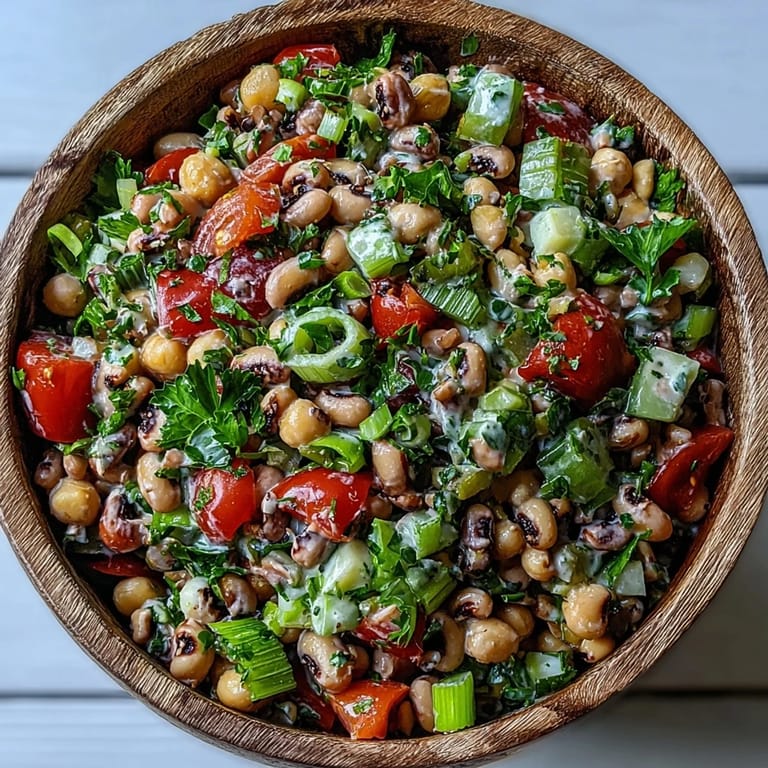
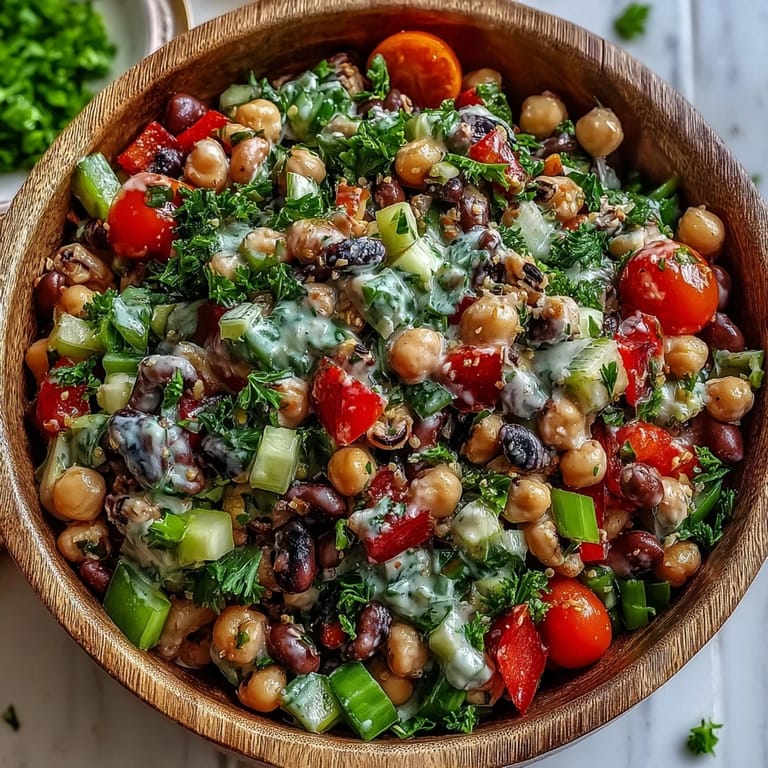
- Combine your cooled peas and chickpeas with the rice in a large bowl, then add all your diced vegetables and herbs, tossing gently so nothing bruises. This moment always feels like watching a painting come together—the colors suddenly matter when you see them all at once.
- Whisk the tahini dressing:
- In a separate bowl, combine tahini, lemon juice, vinegar, olive oil, maple syrup, minced garlic, salt, pepper, and paprika if you're using it, whisking until roughly combined. Add water one tablespoon at a time, whisking between additions until the dressing transforms from thick paste to something pourable but still creamy.
- Marry everything together:
- Pour the dressing over the salad and toss gently, letting each ingredient get coated without breaking up the vegetables into smaller pieces. Taste it and trust your instincts—if you want more tang, add lemon juice; if it needs salt, add it now rather than regretting it later.
- Let it rest:
- Either serve immediately if you like a fresher taste, or refrigerate for an hour so the flavors have time to get to know each other better. Stir gently before serving so the dressing coats everything again.
 Save to Pinterest
 There was a moment when my friend Emily asked if this was why I suddenly cared about cooking, and I realized the shift wasn't about the recipe itself—it was about discovering that food you make for others stays in their memory longer than you'd expect. This salad became her request every time she visited, which meant it stopped being about New Year's luck and started being about having something I genuinely wanted to make again and again.
The Magic of Tahini Dressing
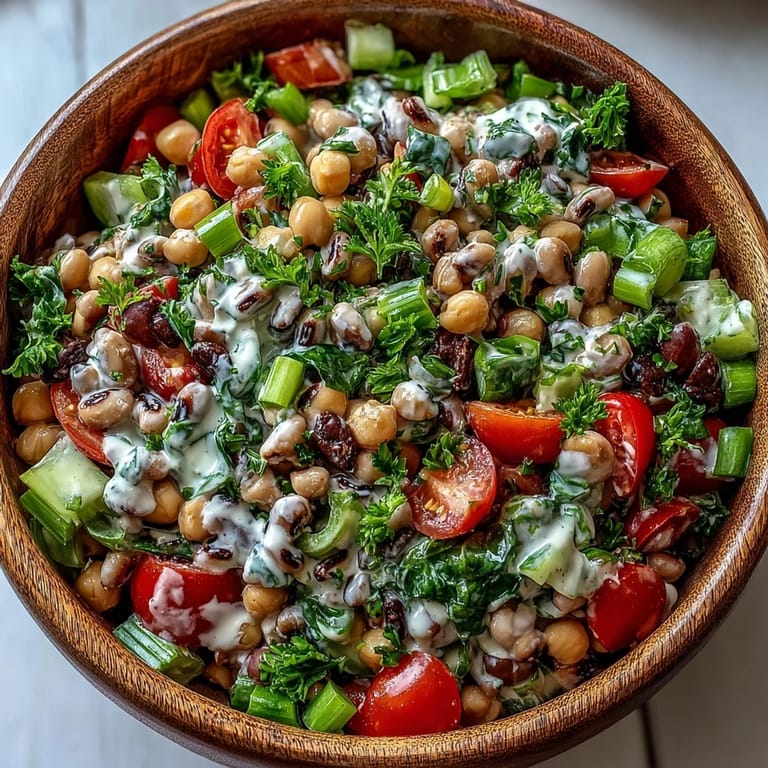
I'd always thought tahini belonged exclusively to hummus or drizzled over roasted vegetables, but using it as a base for a full dressing changed how I think about vegetables entirely. It doesn't taste like ranch or vinaigrette; it tastes like something richer and more interesting while still being completely plant-based. The first time I made it, I was skeptical about the maple syrup, assuming it would be too sweet, but those two tablespoons act like a balancing act between the earthiness and the acid, creating something you actually want to eat beyond the first few bites.
Why Cold Salads Matter More Than You Think
There's something about a salad that holds up in the refrigerator that changes how you approach meal planning entirely. This one doesn't wilt or get soggy the way greens-based salads do, which means you can actually make it on Sunday and eat it confidently on Wednesday without wondering if you're about to bite into something sad. The legumes and rice are sturdy enough to protect the vegetables from breaking down, and the tahini dressing actually coats everything more evenly after it's been sitting overnight, if you can resist eating it sooner.
Customizing Without Losing the Plot
Once you understand how this salad works, you can bend it without breaking it. Swap the bell pepper for roasted red peppers if that's what you have, or add diced avocado right before serving if you want extra creaminess. The fundamentals stay the same—you need legumes, you need something acidic and creamy in the dressing, and you need vegetables that won't completely fall apart. Here's what works beautifully:
- Jalapeños add heat without overwhelming the tahini's subtle nuttiness.
- Diced cucumber brings freshness if you prefer something lighter and more refreshing.
- Chopped kale tossed in just before serving adds texture without disappearing into the dressing.
 Save to Pinterest
 This salad taught me that tradition doesn't have to stay frozen in time to mean something. Making something delicious because you actually want to eat it matters infinitely more than making it because a calendar told you to.
Questions & Answers About This Recipe
- → What makes Hoppin John traditional for New Year's?
Black-eyed peas symbolize prosperity and luck in Southern folklore, while the addition of rice represents abundance. This lighter salad version maintains those auspicious traditions while offering fresh, modern flavors.
- → Can I use canned black-eyed peas instead of dried?
Absolutely. Canned black-eyed peas work perfectly—simply drain and rinse them before adding to the salad. This cuts preparation time significantly while maintaining texture and flavor.
- → How long does the tahini dressing keep?
The creamy tahini dressing stays fresh in an airtight container for up to one week. You may need to add a splash of water and whisk again before using, as it thickens when refrigerated.
- → What can I substitute for tahini?
Creamy peanut butter or almond butter work as alternatives, though they'll slightly alter the flavor profile. For nut-free options, try sunflower seed butter or a cashew-based dressing.
- → Is this salad better served immediately or chilled?
While delicious right away, refrigerating for one hour allows flavors to meld beautifully. The vegetables stay crisp for up to three days, making it excellent for meal prep or potluck gatherings.