 Save to Pinterest
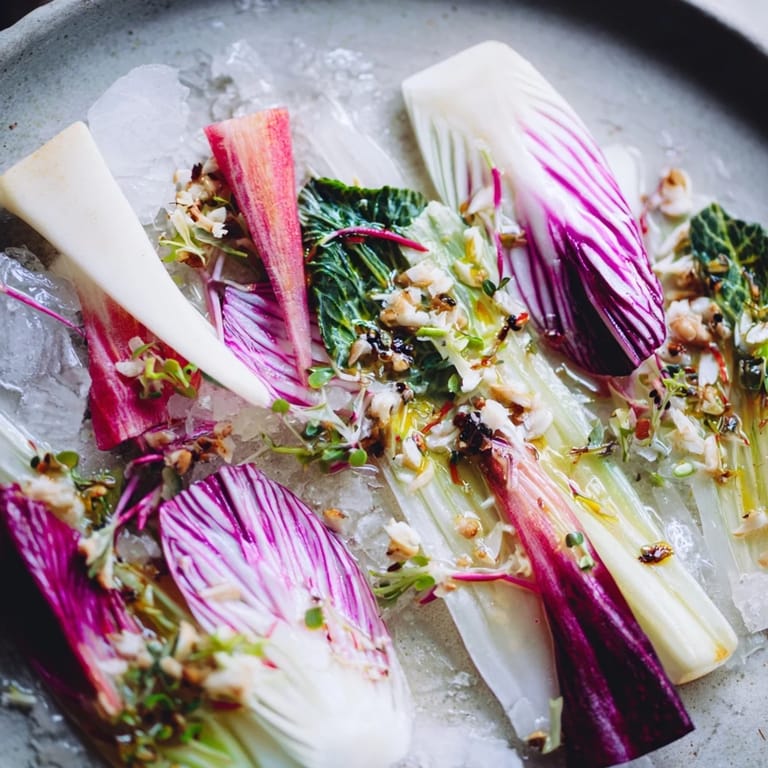
 I discovered this dish on a gallery walk through Copenhagen, where a chef had plated vegetables so sparingly they almost disappeared into the white ceramic. It struck me then how restraint could be more beautiful than abundance, and I spent the flight home sketching how I'd recreate that frozen, windswept feeling in my own kitchen. The first time I made it, I actually froze the stone plate too long and it frosted over, but that accident taught me something about patience and temperature that made the dish sing. Now whenever I serve it, I watch people pause before eating, taking in the negative space the way you'd study a landscape painting.
I served this to my sister's book club on a sweltering August evening, and I remember her friend asking if we'd somehow bottled coolness into a plate. The way the microgreens caught the light, the gentle crunch of sesame seeds under their forks—it became less about feeding people and more about giving them a moment of respite. That's when I realized this dish wasn't minimalist because it lacked flavor, but because it trusted each element to matter.
Ingredients
- Daikon radish: Sliced paper-thin, it becomes almost translucent and adds a delicate peppery snap that grounds the whole composition without overwhelming it.
- Kohlrabi: This underrated vegetable has a subtle sweetness and stays wonderfully crisp when chilled; mandoline it carefully for consistent, elegant slices.
- Belgian endive: The natural boats of each leaf catch dressing beautifully and provide a slight bitter note that elevates the entire dish.
- Cauliflower florets: Finely chopped rather than riced, they add a delicate texture that mimics the scattered feeling of the tundra landscape.
- Coconut flakes: Unsweetened is essential here; they provide a subtle creaminess and earthy undertone that balances the acidity of the dressing.
- White and black sesame seeds: Toasting the white seeds briefly brings out their nuttiness, while black seeds add visual contrast and a slightly deeper flavor.
- Microgreens: Added at the very last moment, they're your final flourish—choose pea shoots for sweetness or radish sprouts for a peppery kick.
- Flaky sea salt: The finishing touch that ties everything together and draws out the subtle flavors you might otherwise miss.
- Olive oil: Extra-virgin quality matters here since it's the only warm-weather fat in the dish and deserves to shine.
- Lemon juice and white wine vinegar: Together they create a bright, clean acid that doesn't overshadow the vegetables but rather illuminates them.
- White pepper: Milder and more delicate than black, it adds warmth without aggression, preserving the dish's refined mood.
Tired of Takeout? 🥡
Get 10 meals you can make faster than delivery arrives. Seriously.
One email. No spam. Unsubscribe anytime.
Instructions
- Chill your canvas:
- Pop that stone or marble plate into the freezer for exactly 15 minutes—this keeps everything crisp and cold, and yes, the temperature is part of the story you're telling on the plate. A cold surface keeps vegetables at their snappiest from the first bite to the last.
- Build your dressing:
- Whisk the olive oil, lemon juice, vinegar, and white pepper together in a small bowl until they look almost creamy. The white pepper will settle, so you can whisk it again just before drizzling if you'd like.
- Scatter with intention:
- Arrange your daikon, kohlrabi, and endive leaves across the chilled stone with deliberate spacing—think windswept, not crowded. This isn't about coverage; it's about giving each element room to breathe and be appreciated on its own.
- Layer your textures:
- Sprinkle the finely chopped cauliflower, coconut flakes, and sesame seeds across the vegetables in a random pattern that feels organic rather than calculated. The beauty is in the apparent randomness, even if you're secretly composing.
- Dress lightly:
- Drizzle the dressing in thin, deliberate lines or small pools rather than coating everything—restraint is the whole philosophy here. You want people to taste the vegetables first, then discover the brightness of the dressing as a surprise.
- Finish with flourish:
- Right before serving, scatter the microgreens across the top and add a final pinch of flaky sea salt where you see gaps. This last-minute addition keeps the greens at their freshest and ensures they don't wilt into the cold plate.
- Serve with intention:
- Bring it to the table immediately and take a moment to let people look before they eat—this dish deserves that pause. The cold textures are part of the experience, so speed matters here.
 Save to Pinterest
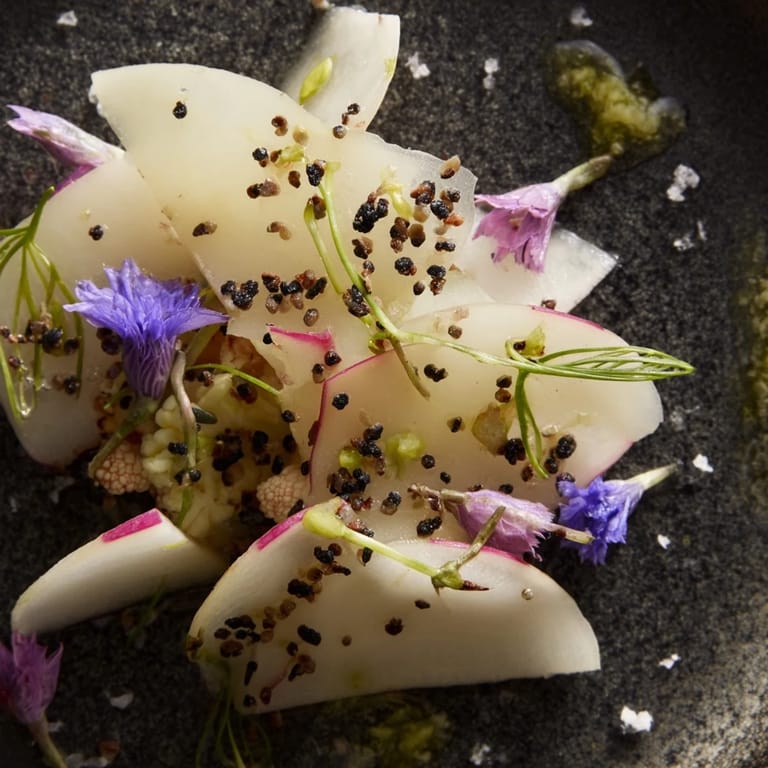
 I'll never forget the silence that fell over the table when I brought this out—not awkward silence, but the kind where everyone's too busy looking and eating to make small talk. It felt like a small rebellion against the noise of regular cooking, a moment where less genuinely was more.
The Art of Restraint
This dish is a lesson in minimalism that I've carried into my kitchen in other ways. Once you understand how to make five ingredients sing instead of drowning ten in sauce, you start seeing possibilities everywhere. The tundra's beauty isn't in abundance; it's in what's *there* despite harshness, and that philosophy changes how you cook.
Choosing Your Vegetables
The three vegetables—daikon, kohlrabi, and endive—were chosen specifically for their color palette and texture contrast. Daikon is the palest, almost ghost-like; kohlrabi adds a subtle green hue and sturdier bite; endive brings elegance and a whisper of bitterness. You could swap kohlrabi for thinly sliced celery root or watermelon radish if you want to experiment, but each substitution shifts the mood of the plate slightly, so choose thoughtfully.
Pairing and Serving Suggestions
Serve this as a first course before something warm and substantial, or as a palate cleanser between courses at a formal dinner. The notes suggest chilled aquavit or dry white wine, and I'd add that a crisp Riesling or even a light sake works beautifully if you want something less traditional. For a protein-forward version, scatter smoked whitefish flakes or cold poached shrimp over the top—the cool seafood echoes the arctic theme and adds substance without overwhelming the delicate flavors you've built.
- Try yuzu juice instead of lemon for a more exotic Asian-leaning profile that still honors the minimalist approach.
- Experiment with rice vinegar in place of white wine vinegar if you want a gentler acidity.
- Remember that this dish is about what's *not* there as much as what is, so resist the urge to over-garnish or add extra elements.
 Save to Pinterest
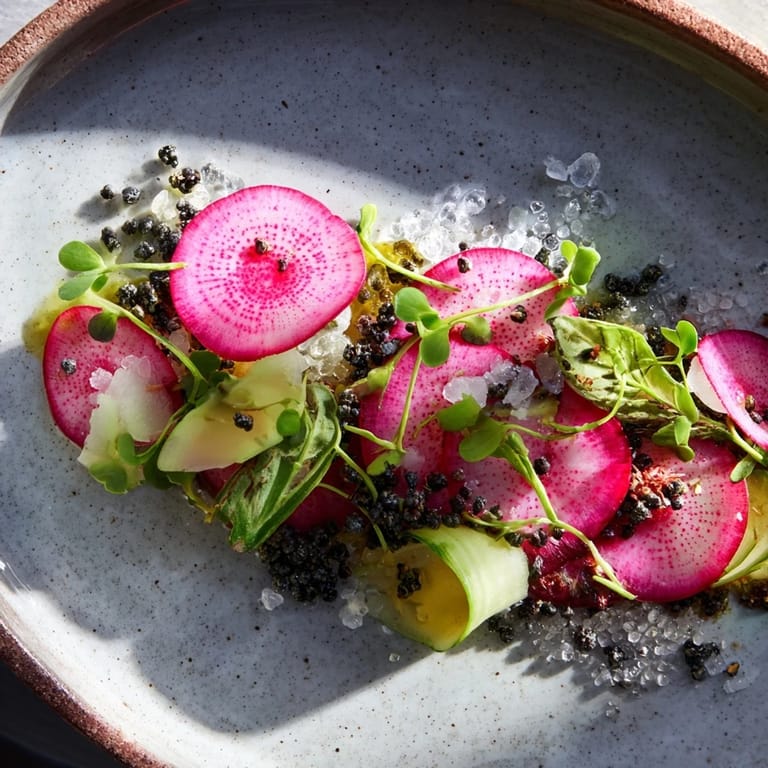
 This dish taught me that sometimes the most memorable meals aren't the ones with the longest ingredient lists or the most elaborate techniques. They're the ones that make you slow down and pay attention.
Questions & Answers About This Recipe
- → What vegetables are used in this dish?
Daikon radish, kohlrabi, Belgian endive, and finely chopped cauliflower make up the core vegetables.
- → How is the dish served to maintain its crispness?
It is arranged on a chilled stone or marble plate that has been pre-cooled in the freezer to keep the vegetables fresh and cold.
- → What kind of garnish enhances the flavors?
Toasted white and black sesame seeds, unsweetened coconut flakes, and vibrant microgreens add crunch and visual contrast.
- → What dressing complements the vegetables?
A light dressing of extra-virgin olive oil, fresh lemon juice, white wine vinegar, and white pepper is gently drizzled over the arrangement.
- → Can the dish include any additional protein?
For a variation, flakes of smoked whitefish or chilled poached shrimp can be added, though the original is vegetarian.