 Save to Pinterest
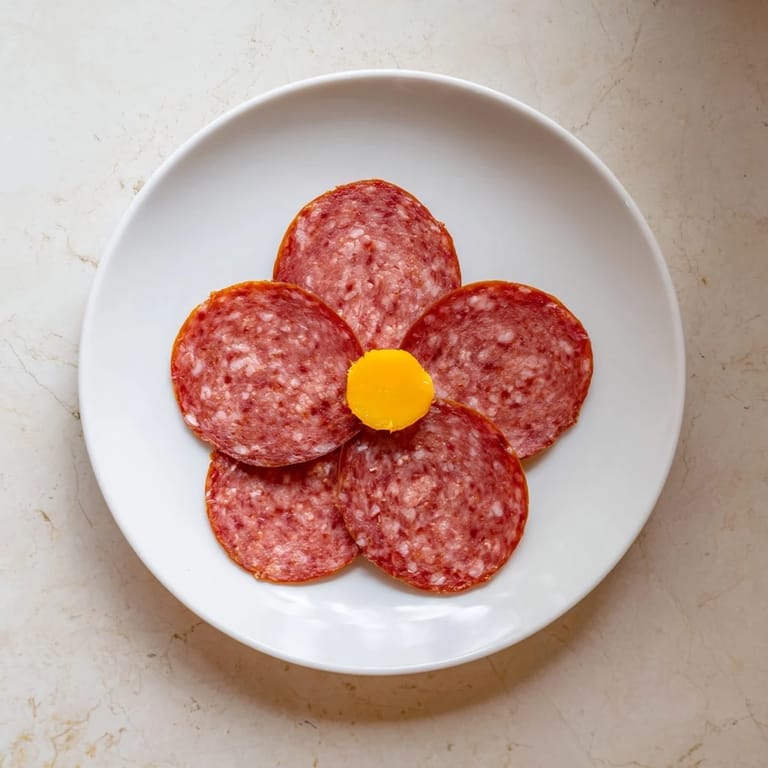
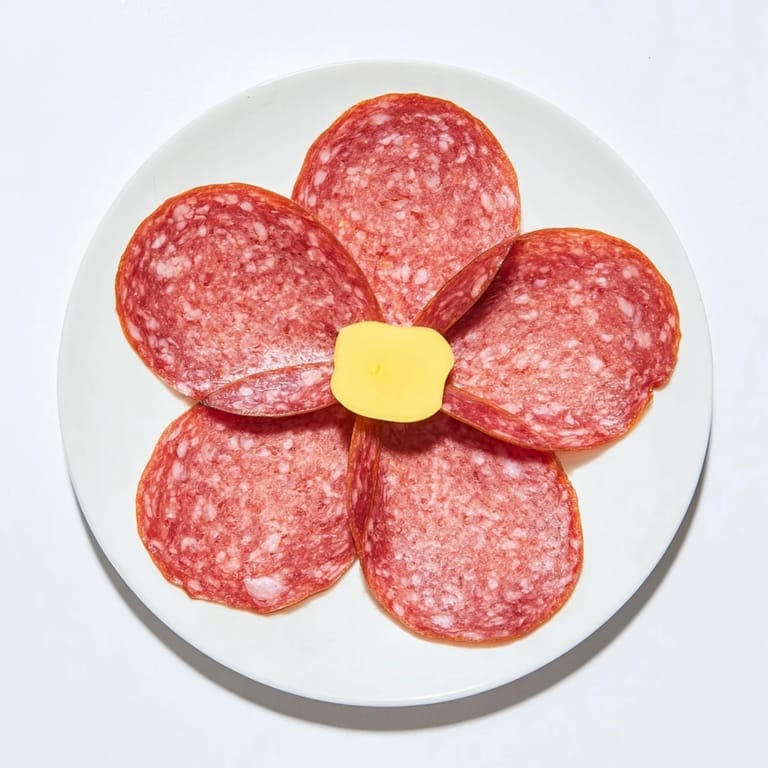
 I discovered the Tudor Rose at a gallery opening in London, of all places, arranged on a silver platter between olives and roasted nuts. The moment I saw it—that perfect geometric bloom of salami petals with a golden cheese center—I couldn't stop staring. A friend nudged me with a knowing smile and said, "It's simpler than it looks." She was right, but there's something about the confidence of that presentation that made me feel like I'd learned a secret. Now I make it whenever I need to impress without fussing, and it never fails to draw people in.
My sister once served this at a baby shower, and I watched a group of lawyers argue—actually debate—whether it was too beautiful to eat. Eventually someone broke ranks and took a petal, and suddenly everyone followed. There's something about food that looks like art that transforms how people approach it, makes them pause and actually taste instead of just consume.
Ingredients
- Salami slices: Five pieces, each about 6–8 cm across, are the backbone of this design; the size matters more than perfection, so look for slices that are roughly uniform so they stack with natural grace.
- Yellow cheese round: A small slice of Gouda, Cheddar, or similar, about 3–4 cm wide and half a centimeter thick; this becomes your flower's heart and holds the whole composition together.
Tired of Takeout? 🥡
Get 10 meals you can make faster than delivery arrives. Seriously.
One email. No spam. Unsubscribe anytime.
Instructions
- Create your base:
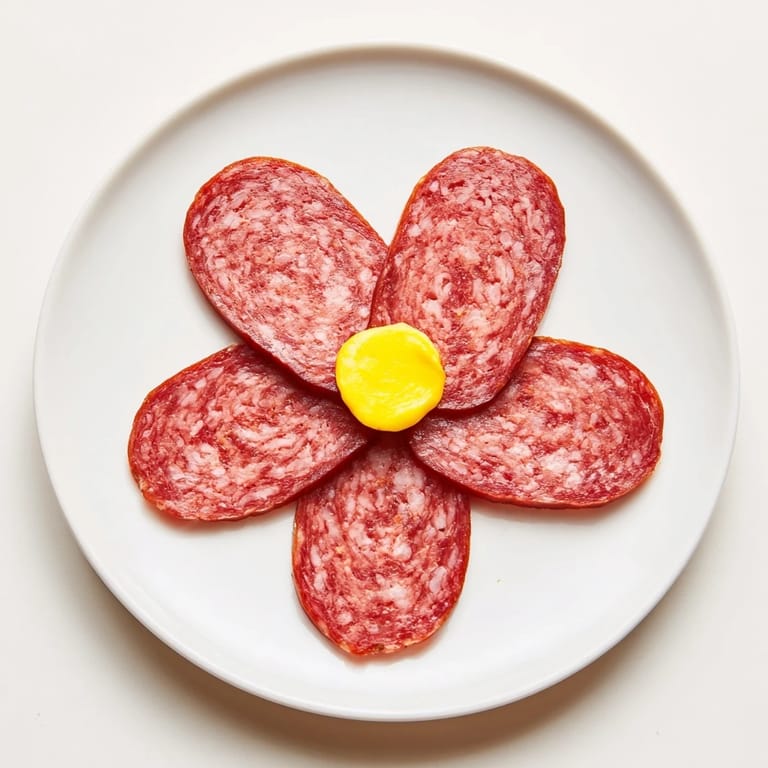
- Lay out your serving plate and arrange the five salami slices in a loose circle, each one slightly overlapping its neighbor like petals unfurling outward. You'll feel the pieces naturally want to settle into a symmetrical pattern if you trust them.
- Set the center:
- Place the yellow cheese round in the middle where all the salami edges converge, pressing down gently so it anchors the petals in place. The cheese becomes both the visual focal point and the glue that makes the whole thing feel intentional.
- Adjust and admire:
- Step back and tweak the petal positions if any look too bunched or too spread, then serve immediately while everything is fresh and the cheese still has that firm snap to it.
 Save to Pinterest
 A friend once described this rose as "proof that sometimes the most impressive things are the ones that don't overthink themselves." That stuck with me—there's an honesty in a recipe that refuses complication, that says good ingredients and a clear vision are enough.
Flavor Combinations That Work
The beauty of this appetizer is how forgiving it is with variations. I've used Spanish chorizo for a spicier petal and Spanish Manchego for the center, which gives a totally different personality while keeping the same geometric elegance. A friend who cooks Italian swears by thin prosciutto and fresh mozzarella, which softens the whole thing into something almost creamy. Another version I stumbled on used smoked salmon arranged the same way with a mild cheese, which felt lighter and more refined for a brunch setting.
Setting the Scene
Context matters with food like this—I've learned that placing it slightly off-center on a board, surrounded by something simple like fresh bread or mild crackers, lets it breathe as the star. Tucking a small sprig of fresh basil or parsley between the petals adds a hint of green that catches the eye and suggests something herbs were involved, even though they're purely decorative. The rose works best when you're not rushing, when there's time for people to actually look at their food before eating it.
When and Where This Shines
I reach for this recipe when I need something that feels special but doesn't demand hours in the kitchen—gallery openings, wine tastings, small dinner parties where the appetizer round needs to feel curated. It also works beautifully as part of a larger charcuterie arrangement where it becomes the conversation piece that anchors the whole board. The gluten-free nature means it slides onto almost any dietary constraint without apology, which is quietly powerful for a host.
- Pair it with sparkling wine or a crisp white that won't overpower the delicate saltiness of the salami.
- Make it no more than 15 minutes before serving so the cheese stays firm and the presentation stays sharp.
- If you're feeding more than two people, consider making a second rose on a separate plate rather than crowding one—it looks more intentional that way.
 Save to Pinterest
 This rose taught me that sometimes the most memorable food is the kind that makes people stop and actually see what's on their plate. It's a small thing, but it matters.
Questions & Answers About This Recipe
- → What type of cheese works best for the yellow button?
Firm cheeses like Gouda or Cheddar with a smooth texture are ideal to maintain the shape and contrast visually with the salami petals.
- → Can I substitute salami with other meats?
Yes, cured meats such as pepperoni or prosciutto can be used to create different flavors while maintaining the floral arrangement.
- → How can I make the presentation more colorful?
Adding fresh herbs like basil or parsley tucked between salami slices introduces vibrant green tones and fresh aroma to the platter.
- → Is cooking required for this dish?
No cooking is needed; simply arrange the ingredients as described for an instant, visually appealing appetizer.
- → What are some suitable accompaniments?
Serve with crackers, fresh bread, or a selection of pickles to complement the savory flavors and textures.