 Save to Pinterest
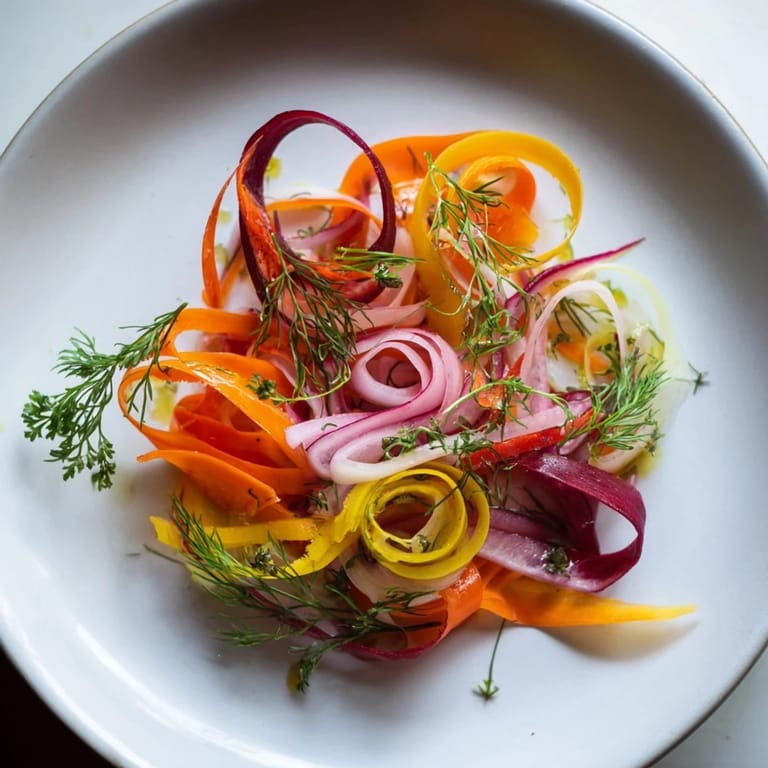
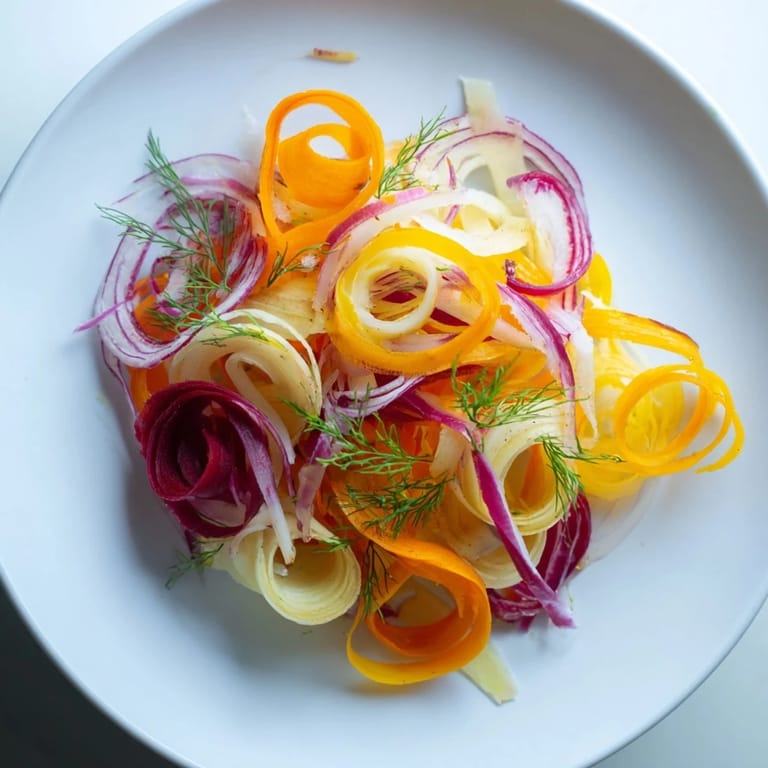
 I discovered this salad by accident while photographing vegetables in my kitchen—sunlight caught the delicate ribbons I'd just sliced, and suddenly they looked like something alive, spinning slowly on the plate. There's magic in how something so simple can feel theatrical, how a mandoline and ice water transform ordinary root vegetables into strands of silk. That's when I knew I had to make it a real recipe, something I'd actually serve to people I wanted to impress.
The first time I plated this for guests, someone actually gasped—not because it tasted extraordinary (though it does), but because they could hardly believe it was a salad and not some kind of edible art installation. That moment when someone sees food differently because you took the time to arrange it carefully, that's worth remembering. It taught me that presentation isn't vanity; it's invitation.
Ingredients
- Fennel bulb: The backbone of this salad, with a gentle licorice sweetness that feels more delicate when shaved thin and crispy.
- Rainbow carrots: Color is half the story here—mix different varieties if you can find them, as they'll add visual depth and subtle flavor variations.
- Golden beet: Choose golden over red to keep the presentation clean and avoid any bleeding into neighboring vegetables.
- Red onion: Just a sliver adds a whisper of bite; the ice bath mellows it perfectly.
- Fresh dill and chervil: These aren't garnishes, they're flavor anchors—use the delicate fronds for texture and that herby brightness.
- Microgreens: They're your final flourish, adding both visual pop and concentrated flavor in every bite.
- Extra-virgin olive oil: Quality matters here because it's doing real work, not just lubricating—taste it first to make sure it's the kind you'd happily drink.
- Lemon juice: Fresh is non-negotiable; bottled will taste thin and tired by comparison.
- Honey: A teaspoon balances the acidity and adds a subtle roundness that mustard alone can't achieve.
- Dijon mustard: The emulsifier and backbone of the dressing, keeping everything unified without overpowering.
Tired of Takeout? 🥡
Get 10 meals you can make faster than delivery arrives. Seriously.
One email. No spam. Unsubscribe anytime.
Instructions
- Slice with intention:
- Use a mandoline set to its thinnest setting, moving with steady pressure so each stroke creates nearly translucent ribbons. If you're using a peeler, your arm will get tired but you'll have better control—go slowly and overlap each stroke slightly.
- Ice bath the vegetables:
- This isn't just about coldness; the water helps the ribbons relax and curl naturally into those beautiful wispy edges. Five minutes is enough; longer and they start to lose flavor.
- Whisk the dressing together:
- Do this in a small bowl where you can actually see the emulsion happening—the honey and mustard will help the oil and lemon come together in a way that feels almost creamy.
- Build the pattern:
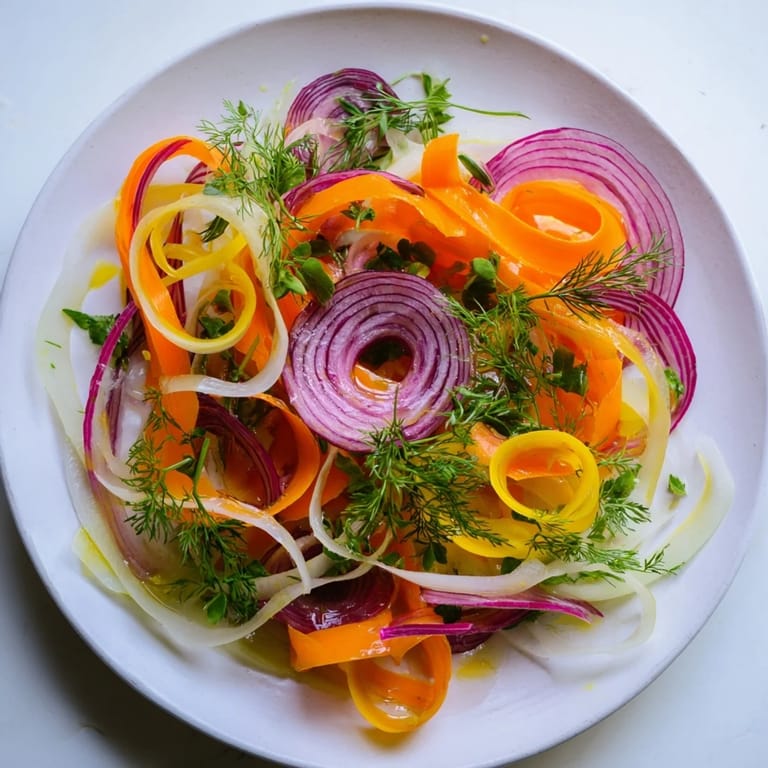
- Start from the center of your plate and spiral outward with the vegetable ribbons, letting them overlap and extend beyond the plate's edge slightly. Think of it as intentional chaos, not random tossing.
- Scatter the herbs:
- Distribute the dill and chervil generously, but save the microgreens for the outer edges where they'll catch the light and draw the eye.
- Dress at the last moment:
- Drizzle just before serving so everything stays crisp and the vegetables don't weep water into the plate.
 Save to Pinterest
 There's a quiet satisfaction in serving something that makes people slow down—not just to eat, but to really look first. This salad does that, and somewhere in that moment of appreciation, it becomes about more than vegetables and dressing. It becomes about showing up thoughtfully.
The Magic of Thin Things
Shaving vegetables releases their gentler side, the part that stays hidden when you chop or slice conventionally. A mandoline isn't just a tool; it's a translator, turning root vegetables into something that feels almost ephemeral. I learned this while standing at my cutting board on a Tuesday afternoon, watching thin ribbons catch the light. The thinner you go, the more the texture and the flavor change character—they become delicate instead of substantial, refined instead of hearty. This is where salad stops being an afterthought and starts being an experience.
Playing with Color and Contrast
The visual element of this salad isn't optional—it's the entire invitation. I spent time selecting vegetables based on their hue before I even considered their flavor, and that taught me something about cooking being an act of looking as well as tasting. The pattern you create matters because diners eat with their eyes first, and on a plate arranged this way, their eyes tell their mouths what to expect. Golden beets instead of ruby red ones, rainbow carrots instead of orange, microgreens scattered with intention instead of thrown on as an afterthought—these choices whisper that someone cared.
Timing and Service
This salad has a narrow window of perfection, and that's part of its appeal—it forces you to be present and intentional about when you plate it. You can prep everything well ahead, but the assembly and dressing must happen moments before serving, which means you're cooking right up until you hand it over. There's no hiding, no reheating, no second chances if something goes wrong. That immediacy keeps you focused and honest.
- Chill your serving plate in the freezer for 10 minutes so the vegetables stay cold longer after plating.
- Have all your components prepped and within arm's reach before you start arranging—you're racing against wilting, but in the best way.
- If you're making this for a crowd, plate each one individually rather than attempting a shared platter; it photographs better and tastes fresher.
 Save to Pinterest
 Make this salad when you want to remind yourself that cooking can be art, that vegetables deserve respect, and that sometimes the most memorable meals are the ones that require the least time but the most attention. Serve it, watch people's faces, and let that be enough.
Questions & Answers About This Recipe
- → How can I achieve the wispy vegetable ribbons?
Use a mandoline or sharp vegetable peeler to shave vegetables into thin, almost translucent ribbons for delicate texture and appearance.
- → Why soak the shaved vegetables in ice water?
Soaking in ice water crisps and curls the edges of the vegetable ribbons, enhancing texture and creating a dynamic presentation.
- → Can I substitute herbs used in this salad?
Yes, fresh chervil can be swapped with parsley or other mild herbs to maintain the herbal brightness and freshness.
- → What dressing complements the vegetable arrangement best?
A light dressing made with extra-virgin olive oil, lemon juice, honey, Dijon mustard, salt, and pepper balances freshness with subtle tang and sweetness.
- → How should this salad be served for best results?
Arrange just before serving to keep vegetables crisp and the visual spinning effect intact. Serve chilled or at room temperature.
- → Are there suggested vegetable additions for more texture?
Thinly shaved radishes or cucumber can be added for extra crunch and layered textures without overpowering the dish.