 Save to Pinterest
 There's something magical about throwing together a board without a recipe, just knowing instinctively what tastes good together. One Tuesday night, I realized I had a wedge of brie, some prosciutto, and a handful of grapes staring at me from the fridge, and instead of cooking something complicated, I simply arranged them on a plate. My friend showed up unexpectedly, and suddenly we were sitting with wine and this impromptu spread, laughing about how the simplest things often taste the best. That's when I understood: a charcuterie board isn't about effort—it's about permission to enjoy without overthinking it.
I made this board for my sister when she was stressed about a work deadline, and she literally paused mid-sentence to try the combination of sharp cheddar with fig jam. Watching her face change—that moment when food becomes more than sustenance—reminded me why I love feeding people. It's the boards, the simple ones, that somehow spark the best conversations.
Ingredients
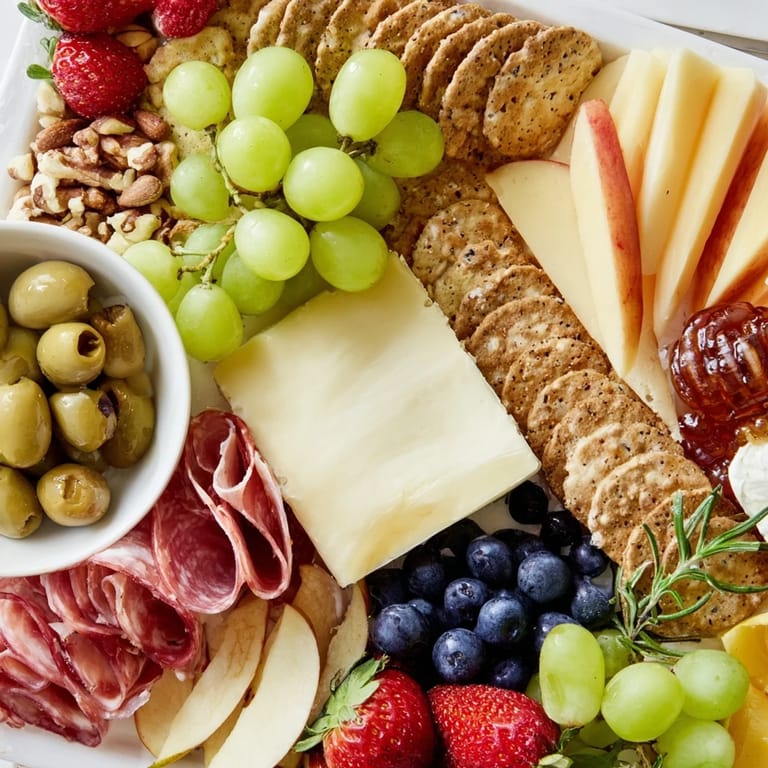
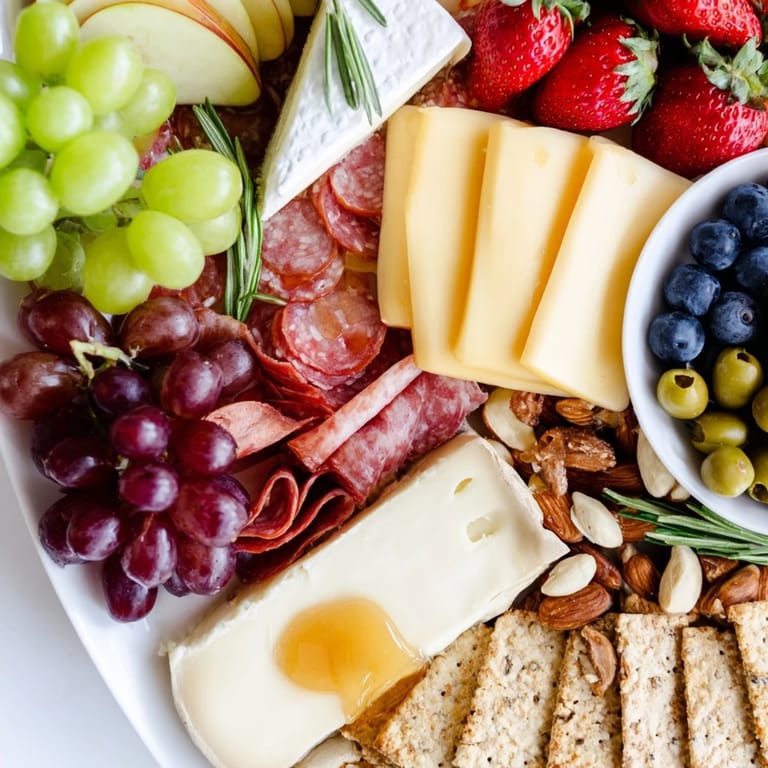
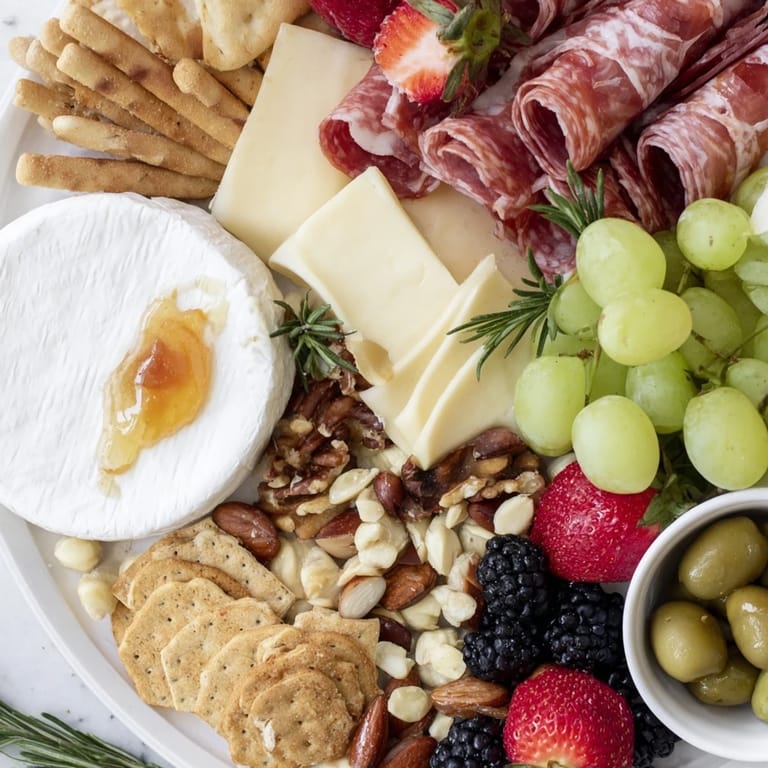
- Brie cheese: Soft and buttery, it's your gentle anchor that makes everything feel luxurious without trying.
- Sharp cheddar cheese: This one has personality—it cuts through richness and keeps your palate excited.
- Goat cheese: Tangy and slightly crumbly, it adds complexity and a welcome contrast to sweeter elements.
- Prosciutto: Paper-thin and salty, it becomes almost translucent when you fold it, creating those beautiful ribbons that catch the light.
- Salami: Choose one with good marbling; it should have enough personality to stand beside the cheeses without getting lost.
- Seedless grapes: Fresh and juicy, they're your palate cleanser and the reason people keep reaching back to the board.
- Apple slices: A touch of tartness that plays beautifully against creamy cheese—I learned to toss mine in a bit of lemon juice so they don't brown and disappoint.
- Berries: Any mix works, but they should be ripe enough to burst with flavor and add visual surprise.
- Crackers or sliced baguette: Your vehicle for everything else, so choose ones with actual flavor and texture, not the flavorless ones that disappear.
- Mixed nuts: Toasted almonds and walnuts add crunch and a subtle earthiness that somehow ties the whole board together.
- Honey or fig jam: This is where the magic happens—drizzle it, and suddenly ordinary cheese becomes an experience.
- Olives: Briny and bold, they're the wild card that keeps things interesting.
Tired of Takeout? 🥡
Get 10 meals you can make faster than delivery arrives. Seriously.
One email. No spam. Unsubscribe anytime.
Instructions
- Set your stage:
- Start with your board or plate and arrange the three cheeses with a little breathing room between them—think of it like seating people at dinner who might become friends. Space matters because it lets each cheese be itself.
- Add your meats:
- Fold or roll the prosciutto and salami so they have dimension and catch light. Nestle them near the cheeses, leaving gaps for what comes next.
- Scatter your fruits:
- Create small clusters of grapes, apple slices, and berries in the empty pockets—you're not filling every space, you're creating little moments of sweetness throughout.
- Fill thoughtfully:
- Add crackers, nuts, and olives to the remaining spaces, but don't cram them in. A board should feel abundant, not anxious.
- Finish with intention:
- Pour honey or fig jam into a small bowl and set it nearby so people can drizzle as they please. Finish with fresh herbs if you have them—just a scattered sprinkle of thyme or rosemary adds a whisper of elegance.
- Serve and enjoy:
- Bring it to the table immediately so everything is at its best, and watch how quickly people forget their phones.
 Save to Pinterest
 I once made a board for my parents' anniversary dinner, and my dad—who claims he doesn't have a palate for anything fancy—went back for brie and fig jam three times. He never said much, but the way he closed his eyes when he tried it told me everything. That's when I realized these boards aren't pretentious at all; they're just honest food arranged beautifully.
The Art of Building Without Recipe
The best part about charcuterie boards is that they teach you to trust your instincts. You start learning the geometry of flavor—how saltiness balances sweetness, how creamy needs crispy, how one bold element needs softer ones around it to shine. The more boards you make, the less you think about it, and the better they become. It becomes like arranging flowers or telling a story; there are principles, but the magic is in the freedom.
Wine and Pairing Moments
The first time I served this board with wine, I finally understood why people talk about pairings with such reverence. A crisp white wine cuts through the richness of brie, rosé echoes the fruit on the board, and even sparkling water becomes elevated when you're sitting with good cheese and good company. You don't need to be a sommelier to know this—just pay attention to what makes your mouth happy and do more of that.
Variations and Seasons
This board changes with the seasons without any real effort. In summer, I add stone fruits and fresh herbs; in winter, I include dried apricots and roasted grapes, and somehow it feels completely different. The framework stays the same, but the personality shifts. I've learned that eating seasonally doesn't require a gardening degree—it just means paying attention to what looks alive at the market and trusting that instinct.
- In autumn, try dried figs, candied walnuts, and a smoked cheese instead of brie.
- For vegetarian versions, add marinated artichokes, roasted red peppers, or pickled vegetables to replace the meats entirely.
- Don't be afraid to break the rules and add something unexpected—last week I added dark chocolate shards and someone declared it life-changing.
 Save to Pinterest
 A charcuterie board is proof that the best meals don't require a recipe or hours in the kitchen—just good ingredients, a moment of intention, and someone to share it with. That's really all cooking is.