 Save to Pinterest
 I discovered this dish by accident one evening while reorganizing my kitchen tools and noticing how the light caught the edge of my offset spatula. That simple reflection sparked something—what if plating could be sculpture, what if a single stripe of color could tell the whole story of a meal? I started blending vegetables that afternoon, less concerned with traditional recipes and more fascinated by what happens when you push purées to their smoothest, most vibrant potential. The result felt less like cooking and more like painting, except everything at the end could actually be eaten.
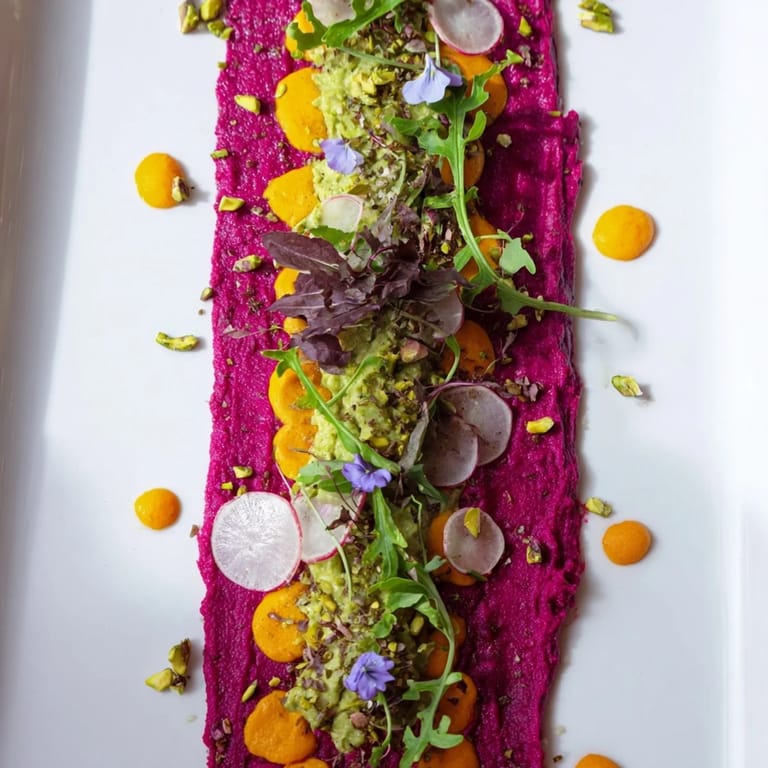
I remember the first time I plated this for my sister, who'd just started paying attention to what she actually ate. She walked into the kitchen, saw that bold red stripe running across the white board, and went completely quiet. Then she laughed and said it looked like modern art, and I realized that's exactly what I was chasing—food that makes people stop and actually look before they taste. That moment changed how I think about cooking altogether.
Ingredients
- Medium beets: Choose ones that feel firm and smooth, about the size of a golf ball—they'll roast evenly and give you that deep, almost wine-dark purée.
- Olive oil: Use good olive oil here since it's one of only a few ingredients and its flavor will shine through.
- Sea salt: Fine sea salt dissolves into the purées; reserve flaky salt for the final garnish where it adds a satisfying crunch.
- Lemon juice: Freshly squeezed if you have it—it brightens the earthiness and keeps the beet color vivid.
- Large carrots: The bigger ones have a sweeter, deeper flavor than baby carrots, which matters when they're the star of the show.
- Fresh ginger: A small knob of real ginger, not powder—it brings warmth and prevents the carrot from tasting one-dimensional.
- Unsalted butter: It adds a subtle richness that keeps the carrot purée from tasting thin or steamed.
- Ripe avocado: Wait until it yields just slightly to gentle pressure; overripe becomes grainy, underripe won't blend smoothly.
- Greek yogurt: It keeps the avocado cream stable and adds a whisper of tang that cuts through the richness.
- Lime juice: Slightly sharper than lemon, it pairs with avocado in a way that feels inevitable.
- Microgreens: Radish or arugula add a peppery bite and delicate texture that contrasts with the smooth purées.
- Edible flowers: Choose ones with color that complements your stripe—pansies, nasturtiums, or violas work beautifully.
- Crushed pistachios: Toast them lightly first to deepen their flavor and add a bit of crunch that echoes through the dish.
Tired of Takeout? 🥡
Get 10 meals you can make faster than delivery arrives. Seriously.
One email. No spam. Unsubscribe anytime.
Instructions
- Prepare and roast the beets:
- Peel your beets under running water—the skin will slip away easily if they're fresh. Dice them into roughly quarter-inch pieces so they roast evenly without drying out. Toss with olive oil and salt, spread on a tray, and let the oven do the work for 30 to 35 minutes until they yield completely to a fork.
- Cook the carrots:
- While the beets roast, slice your carrots into thin rounds so they cook quickly and evenly. Steam or simmer them until they're so tender they practically fall apart when you touch them—this tenderness is what makes the purée silky rather than grainy.
- Blend the beet purée:
- Once the roasted beets have cooled enough to handle, add them to your blender with the lemon juice and blend on high for a full minute or two. Scrape down the sides, blend again, and if it feels thick, add water one tablespoon at a time until it flows like paint.
- Blend the carrot purée:
- Transfer your soft carrots to the blender with the ginger, butter, and salt. Blend until completely smooth, about a minute, stopping to check the consistency—it should be the same density as the beet purée so they layer evenly.
- Make the avocado cream:
- Cut your avocado in half, scoop the flesh into a small bowl, and mash gently with a fork until there are no lumps. Fold in the yogurt, lime juice, and salt, stirring until it's completely homogeneous and silky—overworking it will make it bitter, so be gentle.
- Transfer to piping tools:
- Spoon the avocado cream into a piping bag or squeeze bottle for control. The other purées can stay as they are if you're using a spatula, or transfer them too if you want precision layering.
- Create the stripe:
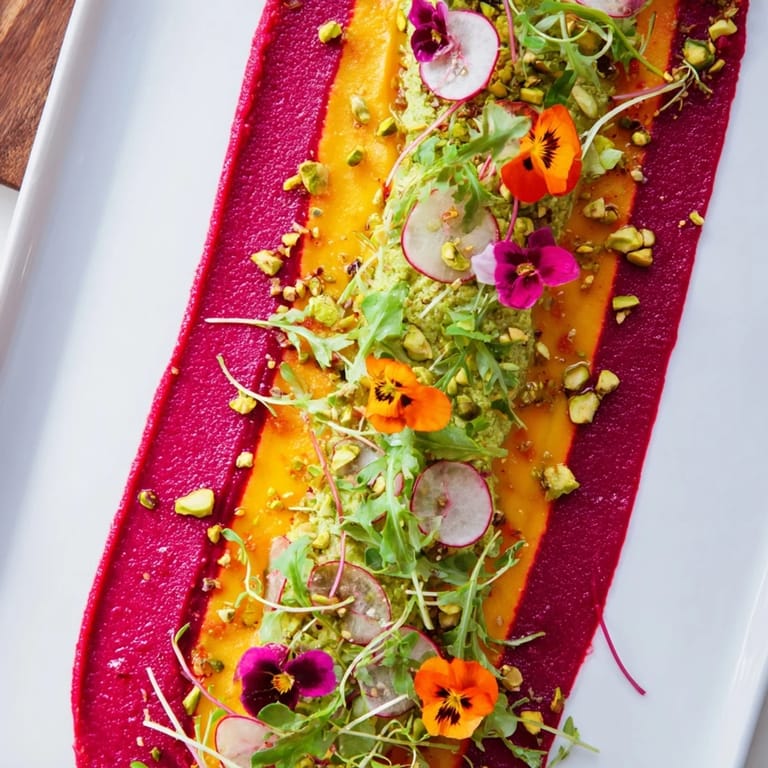
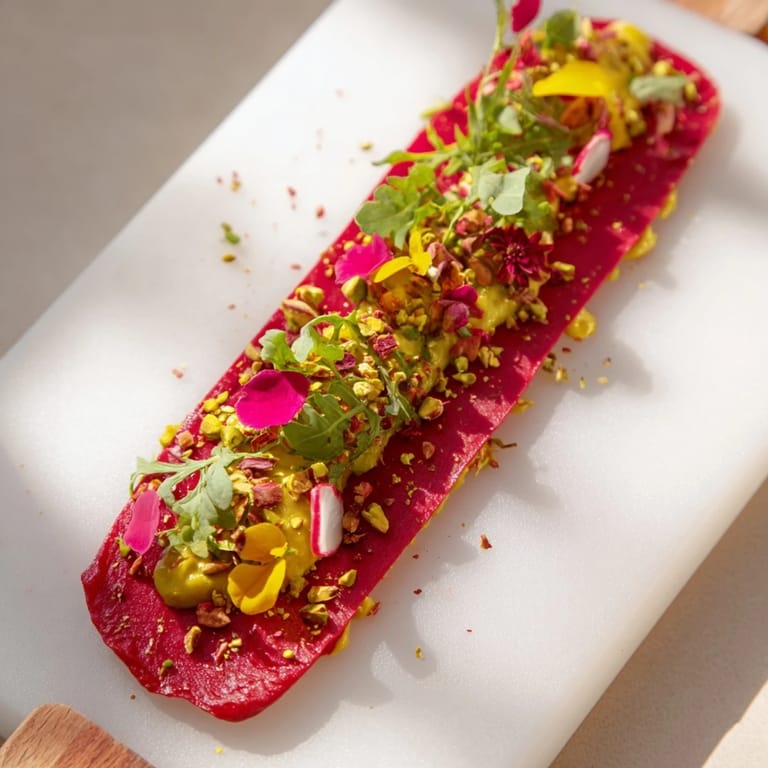
- On a clean, dry board, use your offset spatula or the back of a large spoon to drag a thick, confident line of beet purée down the center, about three inches wide. Let that color set for a moment—it's your foundation.
- Layer and compose:
- Pipe or spread the carrot purée in artistic strokes along the top of the beet stripe, then drizzle or dot the avocado cream in a pattern that feels right to you. There's no wrong way here; trust your instinct about where color and texture want to live.
- Garnish with intention:
- Scatter microgreens across the stripe with a light hand, add a few edible flowers where they catch the light, sprinkle crushed pistachios for crunch, and finish with flaky sea salt. Step back and look at it before your guests do.
- Serve immediately:
- Bring the board to the table while everything is still fresh and the colors are most vivid. Encourage people to scoop directly from the stripe with their spoons, letting all three purées and toppings combine in each bite.
 Save to Pinterest
 There's a moment during plating when everything suddenly makes sense—when the three colors align on the board and you realize you've created something that's both completely minimal and somehow full of intention. That's the moment I live for in cooking, when technique and creativity stop being separate things and just become one gesture.
The Art of the Stripe
This dish exists because modern plating taught me that negative space is just as important as what you put on the board. The empty white space around that single stripe isn't emptiness—it's breathing room. It lets the eye rest and makes the colors sing louder than they would if the plate were full. Once you see it this way, you start noticing it everywhere in design and nature.
Building Flavor Through Texture
I used to think a smooth purée was the most elegant thing you could create, until I added that crunch of toasted pistachios and suddenly understood why chefs layer textures. The soft beet gives way to the slight resistance of the nut, which opens into the creaminess of the avocado, which finishes with a pop of flaky salt. Each textural shift makes you taste the whole thing differently, and that's where the real sophistication lives.
Variations and Personal Touches
The beauty of this stripe concept is that it's a template, not a rule. I've made versions with roasted sweet potato, with blanched pea purée, with butternut squash when autumn started feeling inevitable. Each one brought its own color story and flavor mood to the board. The technique stays the same; only the ingredients change, which means once you understand how this works, you can improvise endlessly.
- Try roasted chickpeas tossed in smoked paprika for a savory crunch that complements any purée combination.
- Pickled red onions add a sharp, acidic brightness that cuts through richness beautifully.
- A drizzle of aged balsamic reduction creates subtle sweetness and visual depth without overwhelming the delicate flavors.
 Save to Pinterest
 This dish reminds me that sometimes the most meaningful food is the simplest—when every element has a reason for being there and nothing is just decoration. Serve it to someone you want to truly feed, not just fill.
Questions & Answers About This Recipe
- → How do I achieve a smooth texture for the beet purée?
Roast the beets until tender, then blend with a splash of water or lemon juice to reach a silky consistency without lumps.
- → Can I substitute dairy in the avocado cream?
You can use coconut yogurt or other plant-based alternatives to maintain creaminess while keeping the dish vegan-friendly.
- → What is the best way to plate the purées for visual impact?
Use an offset spatula to create a wide, even stripe of beet purée, then layer or pipe the carrot and avocado purées on top in artistic strokes or dots.
- → Which garnishes complement this dish best?
Microgreens, edible flowers, crushed pistachios, and a sprinkle of flaky sea salt enhance both texture and flavor.
- → How long does preparation and cooking take?
Prepare all components within approximately 1 hour and 15 minutes, including roasting, steaming, blending, and plating.
- → Is this dish suitable for gluten-free diets?
Yes, all ingredients used are naturally gluten-free, making it safe for those avoiding gluten.