 Save to Pinterest
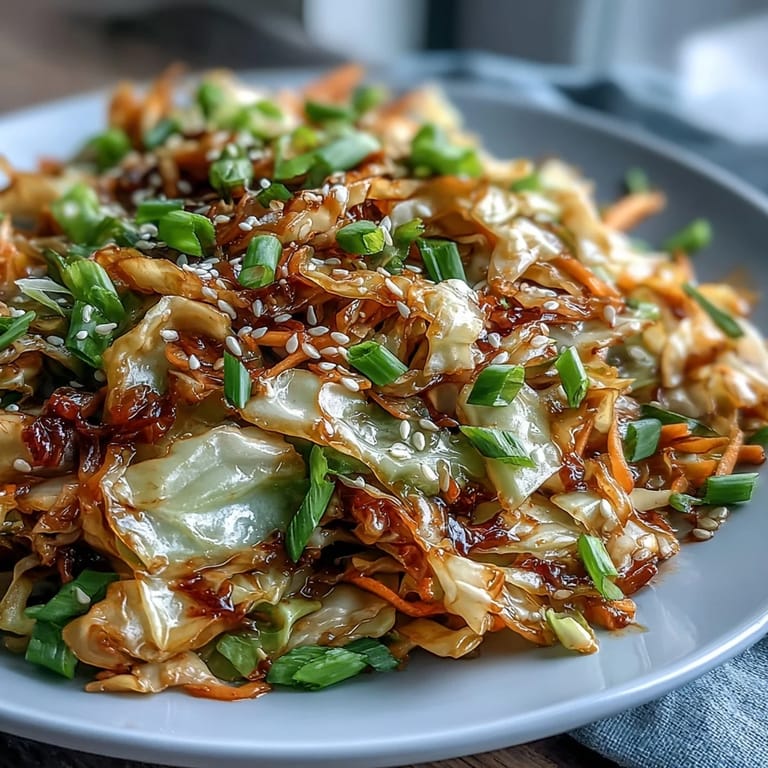
 The sizzle hit first, then that sharp vinegar steam that makes your eyes water just a little. I was standing at my wok on a Tuesday night, too tired to plan anything complicated, and this cabbage dish saved me. What started as a way to use up half a wilted cabbage became something I crave on repeat. The balance of heat and tang wakes up your palate in a way few side dishes can, and the crunch stays intact if you don't overthink it.
I made this for a friend who claimed she hated cabbage, and she finished two bowls before admitting it. The garlic and ginger hit the hot oil with that unmistakable fragrance that fills the whole kitchen, and suddenly everyone wanted to know what was cooking. It became my go to whenever I needed to prove that vegetables could be the most exciting thing on the table.
Ingredients
- Green cabbage: The backbone of the dish, it holds up to high heat and soaks up the sauce without falling apart, so slice it thin but not too fine.
- Carrot: Adds a touch of sweetness and a pop of color that makes the whole dish look alive on the plate.
- Scallions: They bring a mild onion bite and a hint of freshness, especially when you toss them in at the end.
- Garlic: Minced fine, it blooms in the oil and becomes the aromatic base that ties everything together.
- Fresh ginger: The warmth and zing are irreplaceable, and I learned to mince it small so it distributes evenly.
- Soy sauce: Provides the salty umami depth, and using tamari makes it gluten free without sacrificing flavor.
- Rice vinegar: The sour punch that defines this dish, it cuts through the richness and makes every bite bright.
- Chili paste: This is where the heat lives, and you control how bold or gentle you want it.
- Sugar: Just a teaspoon balances the acid and heat, rounding out the sauce so it doesnt taste one dimensional.
- Toasted sesame oil: A few drops add a nutty finish that lingers after each bite.
- Vegetable oil: High smoke point oil is essential for stir frying without burning.
- Black pepper and salt: Simple seasonings that enhance without overpowering the sauce.
- Toasted sesame seeds: Optional, but they add a little crunch and visual appeal.
Tired of Takeout? 🥡
Get 10 meals you can make faster than delivery arrives. Seriously.
One email. No spam. Unsubscribe anytime.
Instructions
- Mix the sauce:
- Whisk together soy sauce, rice vinegar, chili paste, sugar, and sesame oil in a small bowl until the sugar dissolves. Having it ready before you start cooking keeps the stir fry moving fast.
- Heat the wok:
- Pour vegetable oil into a large wok or skillet and crank the heat to medium high, letting the oil shimmer before you add anything. A hot wok is the secret to that restaurant style sear.
- Bloom the aromatics:
- Toss in garlic and ginger, stirring constantly for about 30 seconds until the smell fills your kitchen. Dont let them brown or theyll turn bitter.
- Stir fry the vegetables:
- Add the cabbage and carrot, using a spatula to toss them quickly so they cook evenly. Keep them moving for 3 to 4 minutes until theyre just starting to soften but still have plenty of crunch.
- Add the sauce:
- Pour the prepared sauce over the vegetables and toss everything together, making sure each piece gets coated. Let it cook for another 2 to 3 minutes, stirring occasionally, until the cabbage is tender crisp.
- Finish and garnish:
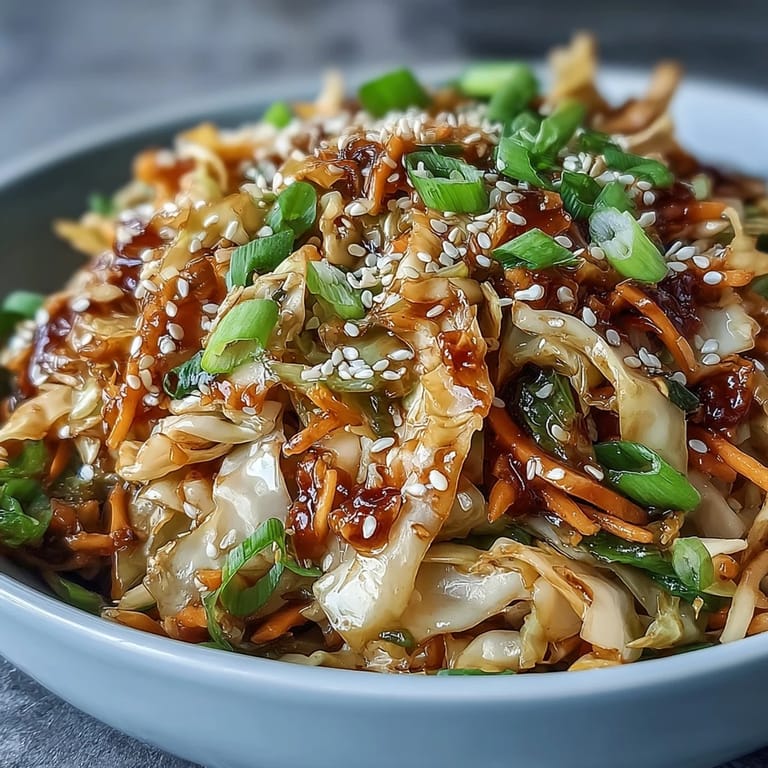
- Stir in black pepper, salt, and scallions, cooking for one more minute. Transfer to a serving dish and sprinkle with toasted sesame seeds and extra scallions if you like.
 Save to Pinterest
 The first time I served this at a potluck, someone asked if I ordered it from the Chinese place down the street. That moment reminded me how much flavor you can coax out of humble ingredients when you respect the heat and the timing. It stopped being just a side dish and became proof that simple cooking can still surprise people.
How to Keep It Crisp
The trick is to never crowd the wok, because too many vegetables at once will drop the temperature and cause them to steam. If youre doubling the recipe, cook it in two batches and keep the first batch warm in a low oven. I also learned to slice the cabbage no thicker than a quarter inch so it cooks fast and stays tender crisp, not limp.
What to Serve It With
This pairs beautifully with steamed jasmine rice or fried rice, and Ive even piled it on top of noodles for a quick lunch. It also works as a bright counterpoint to grilled chicken, pork, or tofu. On nights when I want something light, I eat it straight from the bowl with chopsticks and call it dinner.
Ways to Make It Your Own
Swapping green cabbage for Napa gives you a softer, sweeter bite, and adding sliced mushrooms or bell peppers brings more texture and color. If you like it fiery, double the chili paste or throw in a few dried chili peppers when you bloom the garlic. I sometimes stir in a handful of roasted peanuts at the end for extra crunch and richness.
- Try a splash of black vinegar instead of rice vinegar for a deeper, maltier tang.
- Add a teaspoon of cornstarch to the sauce if you want it to cling more thickly to the vegetables.
- Leftovers reheat surprisingly well in a hot skillet, just add a splash of water to revive the sauce.
 Save to Pinterest
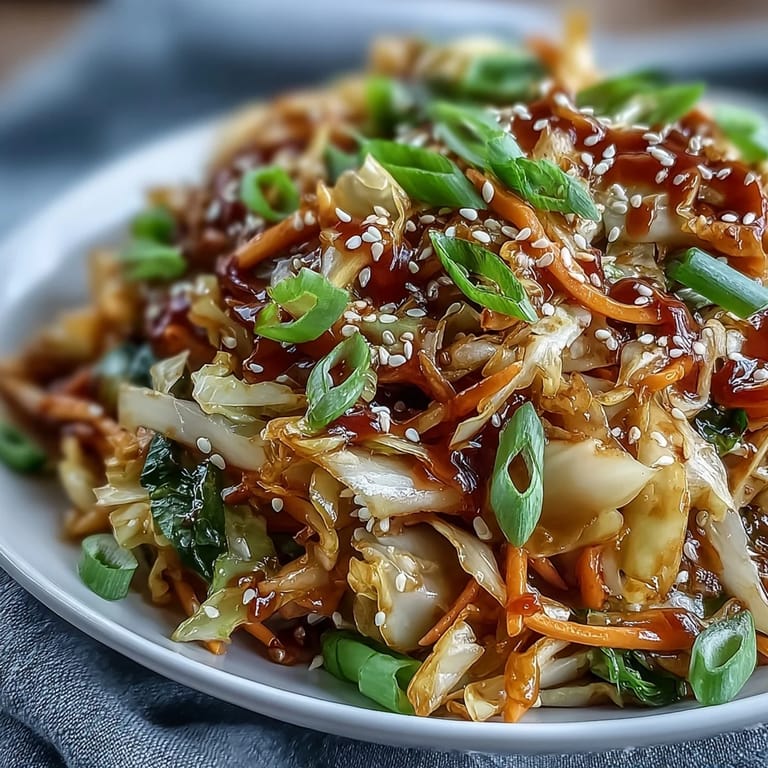
 This dish taught me that bold flavor doesnt require a long ingredient list or hours of simmering. Keep your heat high, your movements quick, and trust that simplicity can be just as satisfying as anything complicated.
Questions & Answers About This Recipe
- → Can I use Napa cabbage instead of green cabbage?
Yes, Napa cabbage works beautifully and provides a milder, more delicate flavor. It cooks slightly faster, so reduce the stir-fry time by about a minute to maintain the crisp texture.
- → How can I make this dish spicier?
Increase the chili paste to 2 tablespoons or add red pepper flakes to taste. You can also include sliced fresh chili peppers when stir-frying the garlic and ginger for an extra kick.
- → What can I serve with hot and sour cabbage?
This dish pairs wonderfully with steamed jasmine or brown rice, fried rice, or noodles. It also complements grilled chicken, tofu, or fish as a flavorful side dish.
- → How do I store leftovers?
Store in an airtight container in the refrigerator for up to 3 days. Reheat in a skillet over medium heat to restore some of the crispness, or enjoy cold as a tangy slaw-style side.
- → Can I add other vegetables to this stir-fry?
Absolutely. Bell peppers, mushrooms, snap peas, or bean sprouts make excellent additions. Add firmer vegetables like peppers with the cabbage, and more delicate ones like bean sprouts toward the end of cooking.
- → Is this dish gluten-free?
It can be made gluten-free by substituting regular soy sauce with tamari or a certified gluten-free soy sauce. Always verify that your chili paste is also gluten-free by checking the label.