 Save to Pinterest
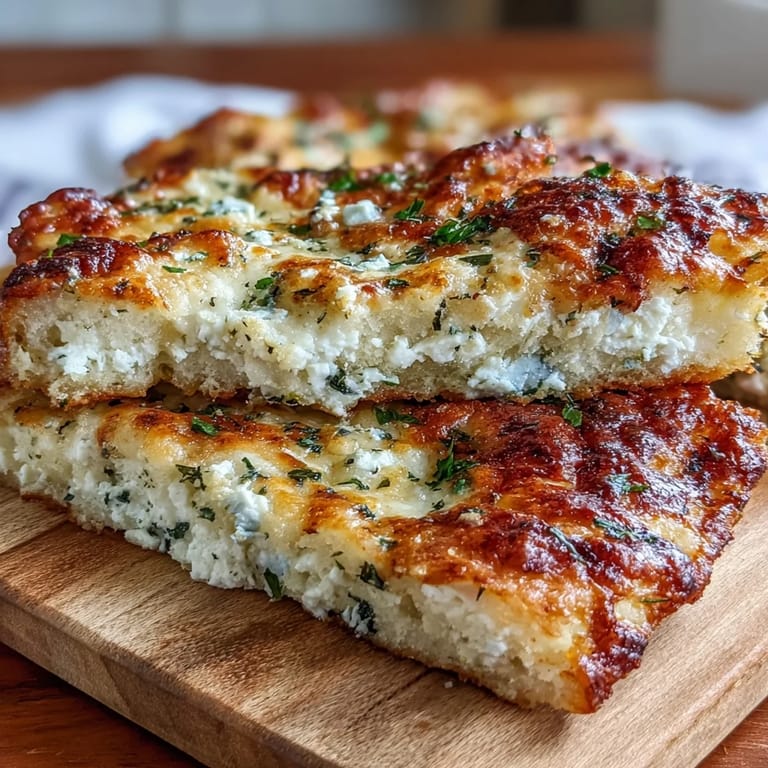
 One rainy afternoon, I opened the fridge to find cottage cheese that needed using and almost no yeast left in the pantry. I tossed together what I had, pressed the dough a few times, and watched these flatbreads puff up in the skillet with barely any effort. The kitchen filled with the scent of toasted garlic and warm bread, and I realized I'd stumbled onto something I'd make over and over. They were soft, tangy, and ready in less time than it took to decide what to eat.
I made a double batch the first time my neighbor stopped by unexpectedly, and we stood at the counter tearing off warm pieces to dip in hummus. She kept asking what made them so fluffy, and I admitted I'd just been trying to use up leftovers. Sometimes the best recipes come from not overthinking it. We finished every single one before she left.
Ingredients
- All-purpose flour: The backbone of the dough, giving structure without making it heavy, and a little extra for dusting keeps things from sticking.
- Baking powder: This is what creates those beautiful bubbles and lift in the skillet, no yeast required.
- Fine salt: Balances the tanginess of the cottage cheese and brings out the flavor in every bite.
- Garlic powder: Optional but worth it, it adds a gentle savory note that makes the kitchen smell amazing.
- Full-fat cottage cheese: Drain it well or the dough will be too wet, the curds add moisture and a subtle tang that sets these apart.
- Large egg: Binds everything together and adds richness, making the flatbreads tender instead of dry.
- Olive oil: A tablespoon in the dough plus a brush in the pan gives a golden, slightly crisp exterior.
- Fresh chopped herbs: Parsley or chives add bright flecks of flavor, but you can skip them if you're keeping it simple.
- Water: Just a tablespoon or two if the dough feels crumbly, it should be soft and slightly sticky, not stiff.
Tired of Takeout? 🥡
Get 10 meals you can make faster than delivery arrives. Seriously.
One email. No spam. Unsubscribe anytime.
Instructions
- Whisk the dry ingredients:
- Combine flour, baking powder, salt, and garlic powder in a medium bowl until evenly mixed. This ensures every flatbread gets the same lift and flavor.
- Mix the wet ingredients:
- In a separate bowl, mash the drained cottage cheese with egg, olive oil, and herbs using a fork until mostly smooth. Breaking up the curds now makes the dough easier to work with.
- Combine wet and dry:
- Pour the cottage cheese mixture into the flour and stir gently with a spatula until a shaggy dough forms. If it feels too dry, add water one teaspoon at a time until it comes together.
- Knead lightly:
- Turn the dough onto a floured surface and fold it 6 to 8 times, just enough to form a cohesive ball. Over-kneading will make the flatbreads tough instead of tender.
- Rest the dough:
- Cover with a towel or plastic wrap and let it sit for 10 minutes at room temperature. This short rest relaxes the gluten and makes rolling much easier.
- Divide and roll:
- Split the dough into 4 equal pieces, roll each into a smooth ball, then flatten into rounds about ¼ inch thick. Dust with flour as needed to prevent sticking.
- Heat the skillet:
- Warm a nonstick or cast-iron skillet over medium heat and brush lightly with olive oil. The pan should be hot enough that a drop of water sizzles but doesn't smoke.
- Cook the first side:
- Place one flatbread in the skillet and cook for 2 to 3 minutes until bubbles appear and the underside is golden brown. Those bubbles are a good sign, don't press them down.
- Flip and finish:
- Turn the flatbread over and cook another 1 to 2 minutes until golden and cooked through. Adjust the heat if it browns too fast or too slow.
- Keep warm and repeat:
- Transfer the cooked flatbread to a plate and cover with a clean towel to keep it soft. Repeat with the remaining dough, adding more oil to the pan as needed.
 Save to Pinterest
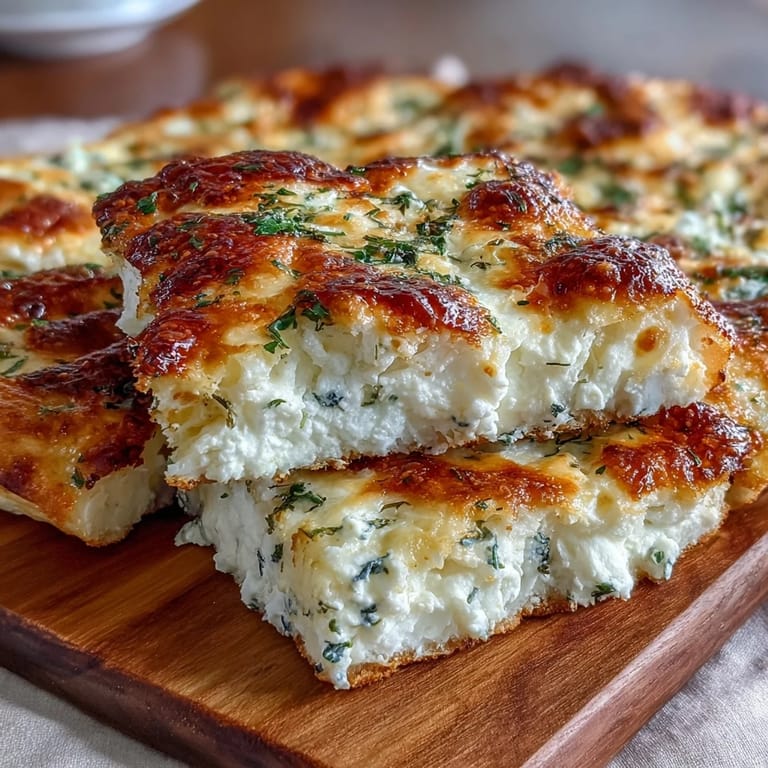
 The first time I served these at a potluck, someone asked if I'd ordered them from a bakery. I laughed and said they took less time than driving to the store. That moment reminded me that homemade doesn't have to mean complicated. Sometimes the simplest things feel the most special.
Storage and Reheating
I keep leftovers in an airtight container in the fridge for up to three days, and they reheat beautifully in a dry skillet or the microwave with a damp paper towel draped over them. For longer storage, I stack them with parchment between each one and freeze them for up to a month. They thaw fast and taste almost as good as fresh, which means I always have a backup plan for busy weeknights.
Flavor Variations
Once you've made the basic version, it's fun to play around with mix-ins. I've folded in finely chopped spinach for color, sun-dried tomatoes for a Mediterranean twist, and even a pinch of cumin and coriander for a warmer, spiced flavor. Each variation cooks the same way, but the taste shifts just enough to keep things interesting. It's become my go-to canvas for whatever I'm craving.
Serving Suggestions
These flatbreads work as a wrap stuffed with grilled vegetables and hummus, a dipper for tzatziki or baba ganoush, or a quick pizza base topped with sauce and cheese and baked at 425°F for 8 to 10 minutes. I've also torn them into pieces and served them alongside soup or salad, and they disappear fast every time. The versatility is part of why I keep making them.
- Use them as a base for shawarma-style wraps with tahini and pickles.
- Brush with garlic butter right after cooking for an extra layer of flavor.
- Serve alongside curry or stew to soak up every bit of sauce.
 Save to Pinterest
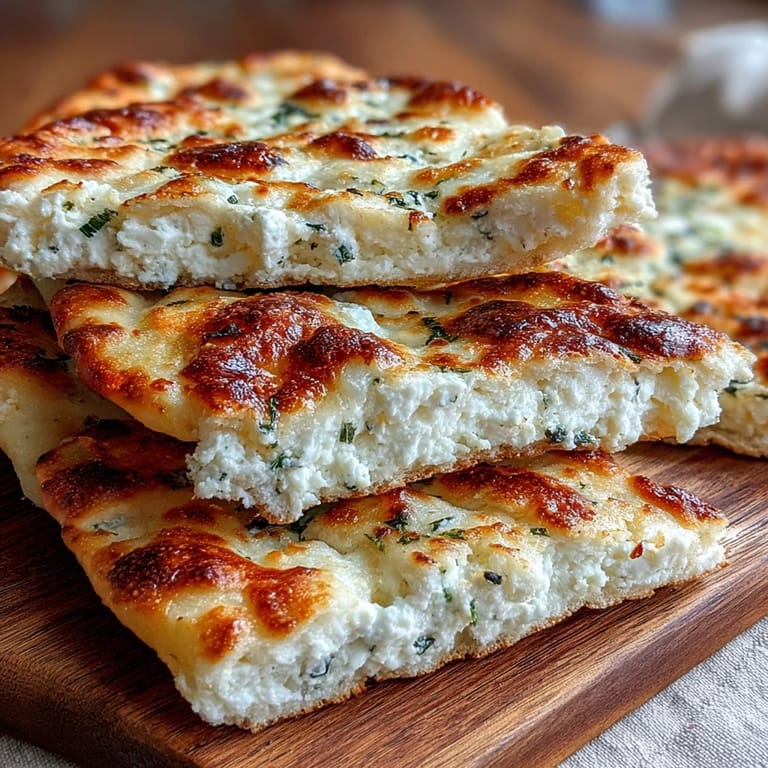
 There's something satisfying about pulling warm flatbread off the stove and knowing it took almost no time and even less fuss. Whether you're using them for dinner or just snacking straight from the pan, they never disappoint.
Questions & Answers About This Recipe
- → What makes these flatbreads fluffy?
The combination of baking powder and cottage cheese creates air pockets within the dough. As the flatbreads cook, steam from the moisture expands, forming those characteristic bubbles while the protein structure stays tender rather than tough.
- → Can I taste the cottage cheese?
Cottage cheese contributes subtle tanginess rather than a distinct flavor. Once blended into the dough and cooked, it mellows into a pleasant background note that complements garlic and herbs without overwhelming the other ingredients.
- → How do I prevent the dough from sticking?
Keep your work surface lightly dusted with flour and use flour sparingly when rolling. The dough should feel slightly tacky but not gluey—if it sticks to your hands, a light dusting resolves it without drying out the final bread.
- → Why is there a rest period?
Resting allows the flour to fully hydrate and the gluten to relax. This ten-minute break makes the dough more pliable and easier to roll thinly without snapping back, resulting in evenly cooked, tender flatbreads.
- → Can I freeze the dough?
Yes, portion the dough into balls, wrap each tightly in plastic, and freeze for up to one month. Thaw overnight in the refrigerator, then bring to room temperature before rolling and cooking as usual.
- → What's the best way to reheat leftovers?
Warm them in a dry skillet over medium-low heat for 30–60 seconds per side, or microwave with a damp paper towel covering for 15–20 seconds. The skillet method restores some crispness to the exterior.