 Save to Pinterest
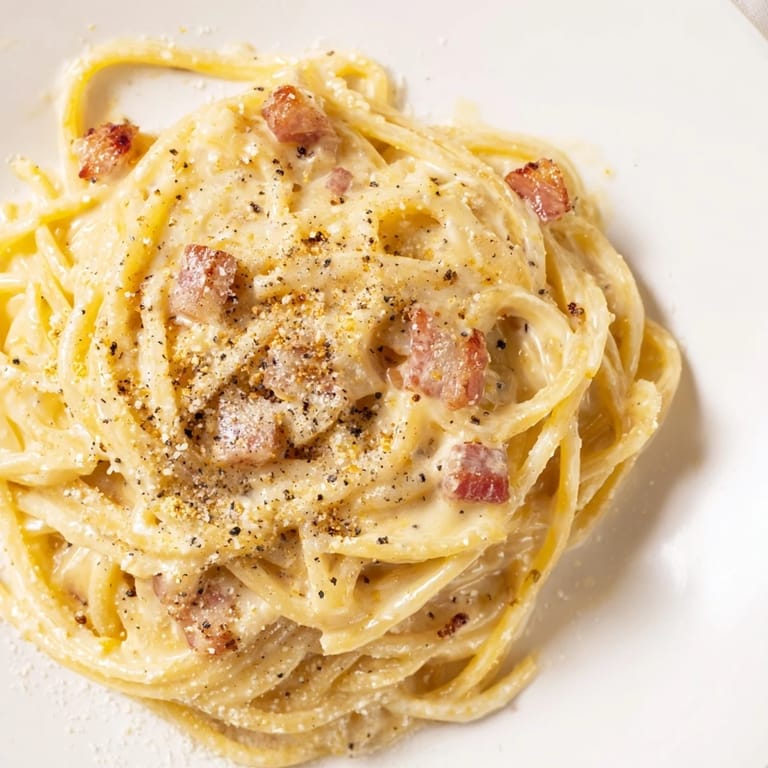
 There's something almost reckless about carbonara—the way you're supposed to work fast, trust your instincts, and let the heat of the pasta do the magic instead of a stove. I learned this the hard way one weeknight when I was too hungry to overthink it, just wanted something creamy and rich that didn't require an hour of simmering. That's when carbonara stopped being a fancy restaurant dish for me and became the thing I reach for when I need proof that good food doesn't need complexity.
I made this for someone who claimed they didn't like eggs, and watching their face change when they tasted that first forkful—when they realized the eggs had become something entirely different, something luxurious—that's when I understood why Romans have been making this for generations. It wasn't about fooling anyone; it was about transformation.
Ingredients
- Spaghetti: 200 g dried spaghetti, cooked to that perfect al dente moment where it still has a subtle bite—it's more important than you'd think because overcooked pasta absorbs the sauce unevenly.
- Eggs: 2 large eggs, the real stars here, creating the sauce through emulsion magic rather than cream, so use ones you'd eat raw if you had to trust their quality.
- Parmesan cheese: 40 g freshly grated (that's about a third of a cup), and yes, the grater makes a difference—pre-grated cheese has additives that mess with the melt.
- Black pepper: 1/4 teaspoon ground fresh, tasting it as you go because pepper is the backbone of the flavor here.
- Bacon or pancetta: 100 g diced into small pieces, cooked until the edges crisp up and the fat renders into liquid gold for tossing the pasta.
- Pasta water: 80 ml reserved from the cooking pot, this starchy water is your secret ingredient for silkiness.
- Extra Parmesan and cracked pepper: For finishing, because the last thing you taste is what stays with you.
Tired of Takeout? 🥡
Get 10 meals you can make faster than delivery arrives. Seriously.
One email. No spam. Unsubscribe anytime.
Instructions
- Start the water and season it properly:
- Fill a large pot with water and salt it until it tastes like the sea—not exaggerating, this is your only seasoning for the pasta itself. Bring it to a rolling boil while you organize everything else, because once the pasta goes in, things move fast.
- Cook the spaghetti to al dente:
- Follow the package time but start checking a minute early, fishing out a strand to taste it. You want it tender but with just a hint of resistance in the center—it'll keep cooking slightly from the residual heat.
- Mix the egg mixture while pasta cooks:
- Crack eggs into a bowl with the grated Parmesan and black pepper, whisking until combined but not frothy. Set it aside and don't overthink it; you're just getting everything ready for the moment of truth.
- Render the bacon until crispy:
- In a large skillet over medium heat, scatter the diced bacon and let it cook undisturbed for a minute, then stir occasionally until the edges brown and curl up. The fat pooling at the bottom is what carries all the flavor.
- Drain pasta and reserve the water:
- When the spaghetti is perfectly al dente, scoop out about 80 ml of the starchy pasta water before draining everything. This starchy water is what turns eggs into sauce instead of scrambled bits.
- Combine everything off the heat:
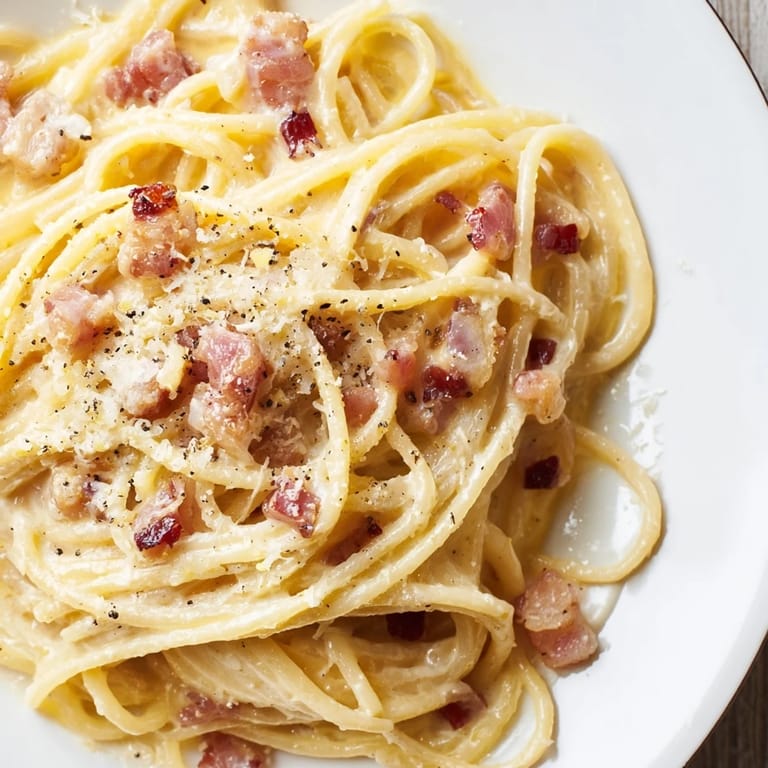
- Remove the skillet from heat first—this is crucial, you need it cool enough that the eggs emulsify rather than scramble. Add the drained pasta to the bacon, pour in the egg mixture, and toss constantly, adding pasta water a splash at a time until you see a glossy, silky coat forming on every strand.
- Serve immediately:
- Divide between bowls right away, because carbonara waits for no one and gets grainy if it sits. Top with extra Parmesan and a generous crack of black pepper.
 Save to Pinterest
 There was an evening when a friend watched me make this and said it looked impossible—all those moving pieces, all that timing. But halfway through when the sauce came together, silky and coating every strand, they understood what I meant about trust and technique creating something greater than the sum of its parts.
Why This Recipe Works
Carbonara succeeds because it respects its ingredients instead of hiding them. The bacon provides salt and richness, the Parmesan adds umami and body, the eggs deliver richness and silkiness, and the pasta water acts as an emulsifier—each element doing its job. When you stop fighting the process and let the residual heat of hot pasta do the cooking, you end up with something that tastes far more luxurious than it has any right to be given how straightforward it is.
Making It Your Own
The beauty of carbonara is that it's actually quite forgiving once you understand the core technique. Some kitchens add a minced garlic clove to the bacon, toasting it briefly before removing it entirely so you get the flavor without the texture. Others swap Pecorino Romano for Parmesan to get a sharper, more assertive saltiness that some prefer. The ingredient list is short enough that any change becomes obvious, so if something doesn't work, you'll know exactly what to adjust next time.
The Equipment That Matters
You need a large skillet wide enough that the pasta spreads out and cooks evenly with the sauce, and a pot big enough that the pasta has room to move around without sticking to itself. A grater for the Parmesan isn't negotiable if you want silky sauce instead of grainy—it's the kind of small decision that completely changes the outcome. Everything else is just keeping things organized.
- A large skillet lets the pasta and sauce combine evenly without crowding.
- A grater for Parmesan produces finer pieces that emulsify better than pre-grated cheese.
- Reserve your pasta water before draining—it's too easy to forget and too important to skip.
 Save to Pinterest
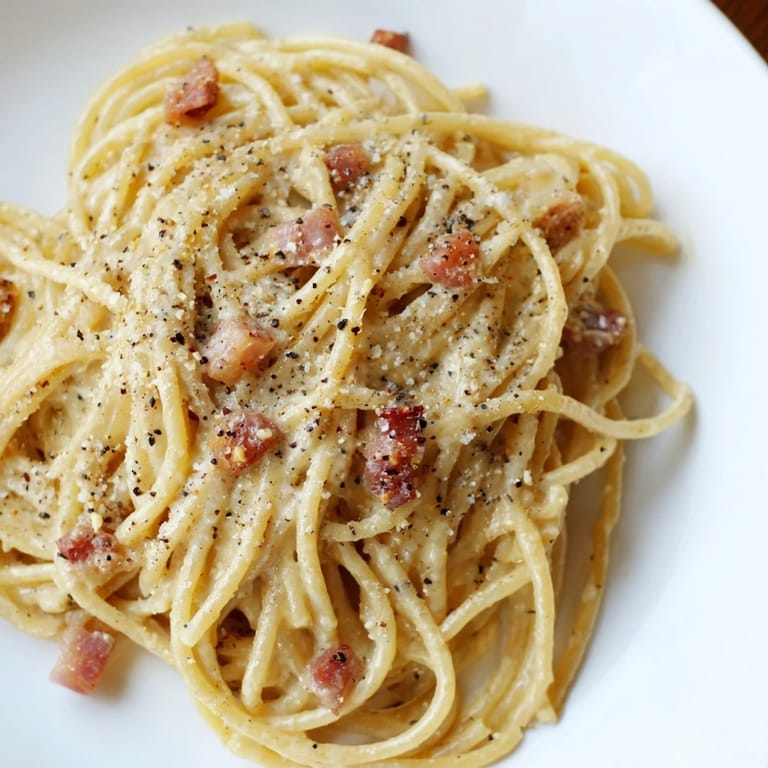
 Carbonara taught me that cooking is often about understanding why something works instead of just following steps. Once you get it, you'll make it all the time.
Questions & Answers About This Recipe
- → How do I prevent the eggs from scrambling?
Work quickly off the heat when mixing the egg and cheese blend with the pasta, stirring vigorously while adding reserved pasta water gradually to create a creamy sauce.
- → Can I substitute the bacon with pancetta?
Yes, pancetta is a traditional choice and can replace bacon to give an authentic Roman flavor and crispy texture.
- → Is it necessary to reserve pasta water?
Yes, adding reserved pasta water helps adjust the sauce’s consistency so it clings smoothly to the spaghetti.
- → What type of cheese works best?
Freshly grated Parmesan is ideal, but Pecorino Romano can be used for a sharper, more authentic taste.
- → Can I add garlic to the dish?
Adding minced garlic to the bacon while frying infuses extra flavor; remove it before tossing pasta to keep the sauce silky.