 Save to Pinterest
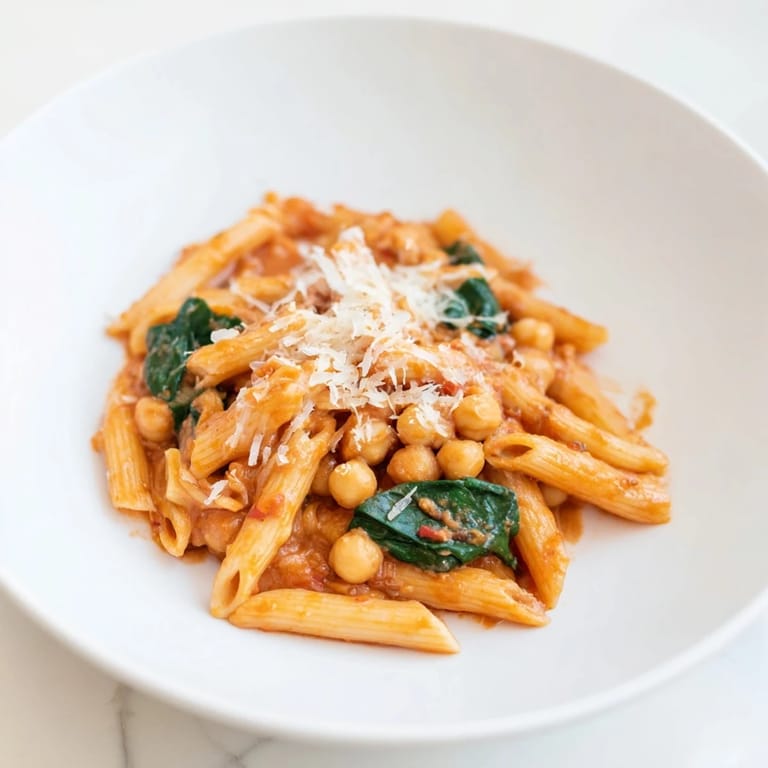
 I threw this together on a rainy Tuesday when my pantry was looking bare and I didn't feel like going out. I had a can of chickpeas, some wilted spinach that needed using, and pasta—always pasta. What started as a desperate dinner became something I now make at least twice a month. The sauce clings to every ridge of the pasta, and the chickpeas get this tender, almost creamy texture that makes the whole dish feel indulgent without being heavy.
The first time I served this to friends, I apologized in advance because it felt too simple. They went quiet after the first bite, then one of them asked if I'd been hiding an Italian grandmother from them. I laughed, but that night I realized that the best meals don't need to be complicated—they just need to taste like comfort. Now when people come over and ask what's for dinner, I tell them it's chickpea pasta, and they actually get excited.
Ingredients
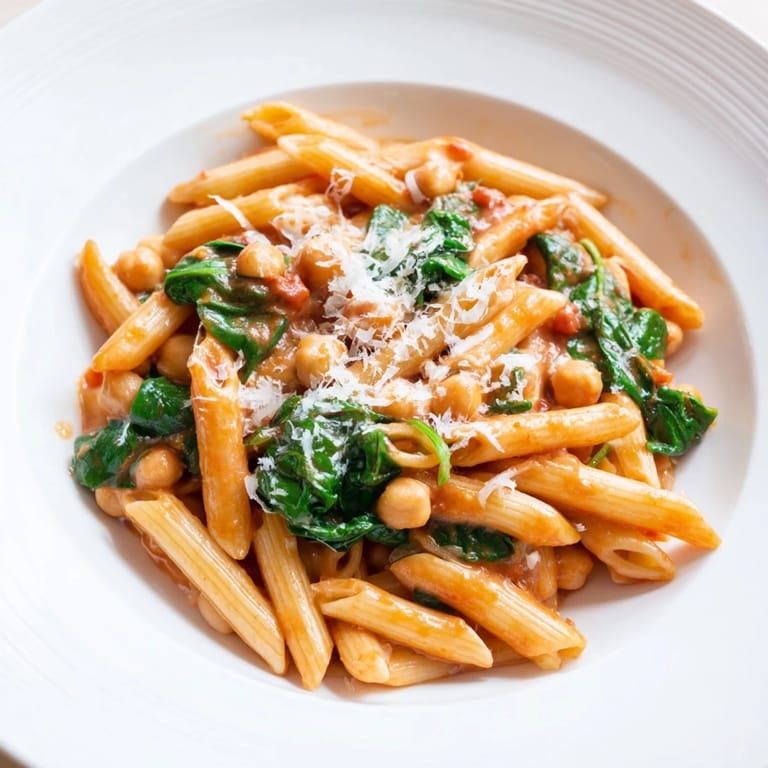
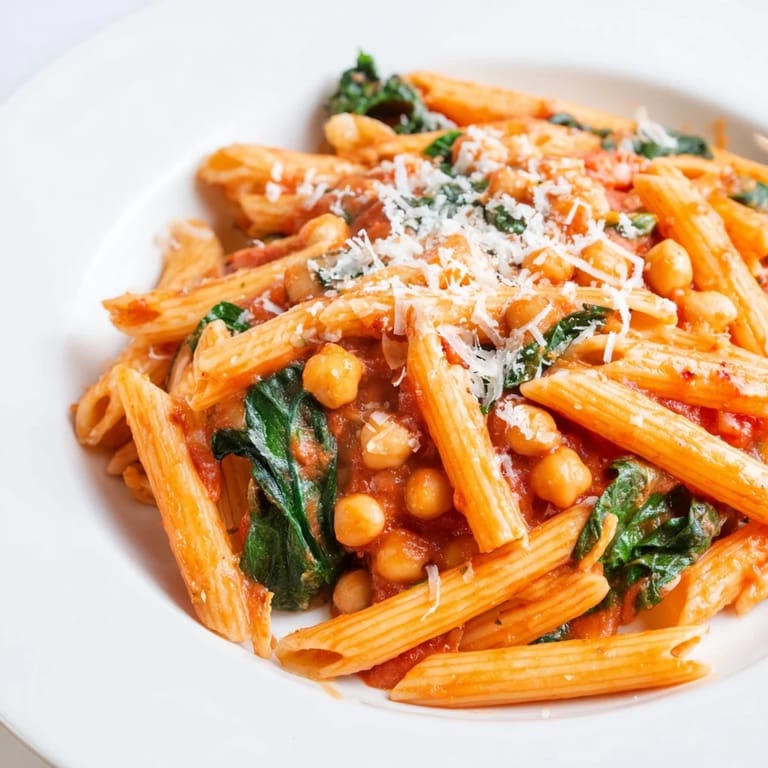
- Short pasta (penne, rigatoni, or fusilli): The ridges and tubes are key here—they trap the creamy sauce and catch little bits of spinach and chickpeas in every bite.
- Olive oil: Use a decent one if you have it, since it's the base flavor of the whole dish and you'll taste it in the background.
- Yellow onion: Finely chop it so it melts into the sauce rather than standing out, adding sweetness without being obvious.
- Garlic: Fresh is essential—don't even think about using the jarred stuff, it just doesn't have the same aromatic punch.
- Chickpeas: Rinse them well to get rid of that canned taste, and they'll soak up all the tomato and cream flavors beautifully.
- Diced tomatoes: I prefer fire-roasted if I can find them, they add a subtle smokiness that makes the sauce taste more complex.
- Vegetable broth: This thins the sauce just enough so it coats the pasta instead of clumping, and adds a savory backbone.
- Dried oregano and thyme: These are the flavors that make it taste Tuscan—earthy, warm, and just a little rustic.
- Crushed red pepper flakes: Optional, but a pinch adds a gentle heat that wakes up the whole dish without making it spicy.
- Heavy cream or plant-based cream: This is what makes the sauce silky and crave-worthy, turning a simple tomato base into something luxurious.
- Parmesan cheese: It melts into the cream and adds a salty, nutty richness that ties everything together.
- Fresh baby spinach: It wilts down to almost nothing but adds color, nutrition, and a slight earthiness that balances the richness.
- Fresh basil leaves: Torn at the last minute, basil adds a bright, aromatic finish that makes the dish feel restaurant-quality.
Tired of Takeout? 🥡
Get 10 meals you can make faster than delivery arrives. Seriously.
One email. No spam. Unsubscribe anytime.
Instructions
- Boil the pasta:
- Get a large pot of well-salted water boiling—it should taste like the sea—and cook your pasta until it still has a little bite to it. Don't forget to scoop out half a cup of that starchy pasta water before you drain, it's liquid gold for adjusting the sauce later.
- Sauté the aromatics:
- Heat olive oil in a large skillet over medium heat and add the chopped onion, letting it soften and turn translucent for a few minutes. Toss in the garlic and stir constantly for about a minute until your kitchen smells amazing, but don't let it brown or it'll taste bitter.
- Build the tomato chickpea base:
- Add the chickpeas, diced tomatoes, vegetable broth, oregano, thyme, and red pepper flakes if you're using them, then season with salt and pepper. Let it simmer uncovered for about ten minutes, stirring now and then, until it thickens slightly and the flavors meld together.
- Make it creamy:
- Turn the heat down to low and stir in the cream and Parmesan, mixing until everything is smooth and glossy. This is the moment the sauce transforms from good to irresistible.
- Wilt the spinach:
- Toss in the spinach and stir it around for a couple of minutes until it collapses into the sauce. It looks like a huge pile at first, but it shrinks down fast.
- Toss with pasta:
- Add the drained pasta to the skillet and toss everything together, adding splashes of reserved pasta water until the sauce clings to every piece. You want it glossy and cohesive, not dry or soupy.
- Serve and garnish:
- Plate it up immediately while it's hot, then scatter torn basil leaves and extra Parmesan over the top. Serve it with a smile because you know it's going to be good.
 Save to Pinterest
 One evening my sister came over feeling defeated after a long week, and I made this without much fanfare. We ate it on the couch with a cheap bottle of wine, and halfway through her bowl she looked up and said, this is exactly what I needed. Sometimes food isn't just about flavor—it's about the moment it creates, the permission it gives you to slow down and breathe. That night this pasta became more than dinner, it became a reminder that comfort doesn't have to be complicated.
Making It Your Own
This recipe is forgiving and adaptable, which is part of why I love it so much. If you want to make it vegan, swap in plant-based cream and nutritional yeast or vegan Parmesan, and it's just as creamy and satisfying. I've used kale instead of spinach when that's what I had, and it worked beautifully—just give it an extra minute to soften. You can also throw in sun-dried tomatoes or roasted red peppers for a sweeter, more intense flavor, and sometimes I add a squeeze of lemon juice at the end for brightness.
Pairing and Serving
This dish is hearty enough to stand on its own, but I usually serve it with a simple green salad dressed in olive oil and lemon, and some crusty bread for mopping up every last bit of sauce. A crisp, chilled Pinot Grigio cuts through the creaminess perfectly, though honestly a glass of whatever you have open works just fine. If you're feeding a crowd, double the recipe—it scales up easily and everyone will want seconds.
Storage and Reheating
Leftovers keep well in the fridge for up to three days in an airtight container, and they reheat like a dream on the stovetop with a splash of water or broth to loosen the sauce. The microwave works too, but stir it halfway through and add a little liquid so it doesn't dry out. I've even eaten it cold straight from the fridge during a busy morning, and while it's not the same as fresh, it still hits the spot.
- If the sauce thickens too much in the fridge, just add a bit of broth or pasta water when reheating.
- Don't freeze this one—the cream can separate and the texture won't be the same.
- Make extra on purpose, it's one of those meals that tastes even better the next day once the flavors have had time to marry.
 Save to Pinterest
 This is the kind of recipe I come back to when I need something reliable, something that feels like a hug in a bowl. I hope it becomes one of your go-to meals too, the one you make on quiet nights when you just want something good.
Questions & Answers About This Recipe
- → Can I make this dish ahead of time?
Yes, you can prepare the sauce up to 2 days in advance and store it in the refrigerator. Reheat gently before adding spinach and pasta. Cook fresh pasta just before serving for best texture.
- → What pasta shapes work best for this dish?
Short pasta varieties like penne, rigatoni, or fusilli are ideal as they catch and hold the creamy sauce. Avoid long pasta like spaghetti, which doesn't coat as well with this type of sauce.
- → How do I achieve the perfect sauce consistency?
Use the reserved pasta water to adjust consistency. Add small amounts gradually while tossing until the sauce coats the pasta beautifully. The pasta water's starch helps emulsify the cream sauce.
- → Is this dish suitable for dietary restrictions?
Absolutely. Use plant-based cream and vegan Parmesan for a fully vegan version. Substitute gluten-free pasta for gluten sensitivity. Always check ingredient labels for hidden allergens.
- → What vegetables can I add to enhance this dish?
Sun-dried tomatoes, roasted red peppers, or artichoke hearts complement this dish beautifully. You can also substitute kale for spinach or add mushrooms for earthiness.
- → What wines pair well with this pasta?
A crisp Pinot Grigio pairs wonderfully with the creamy tomato sauce. Alternatively, try a light Vermentino or Pinot Gris for a refreshing contrast to the rich flavors.