 Save to Pinterest
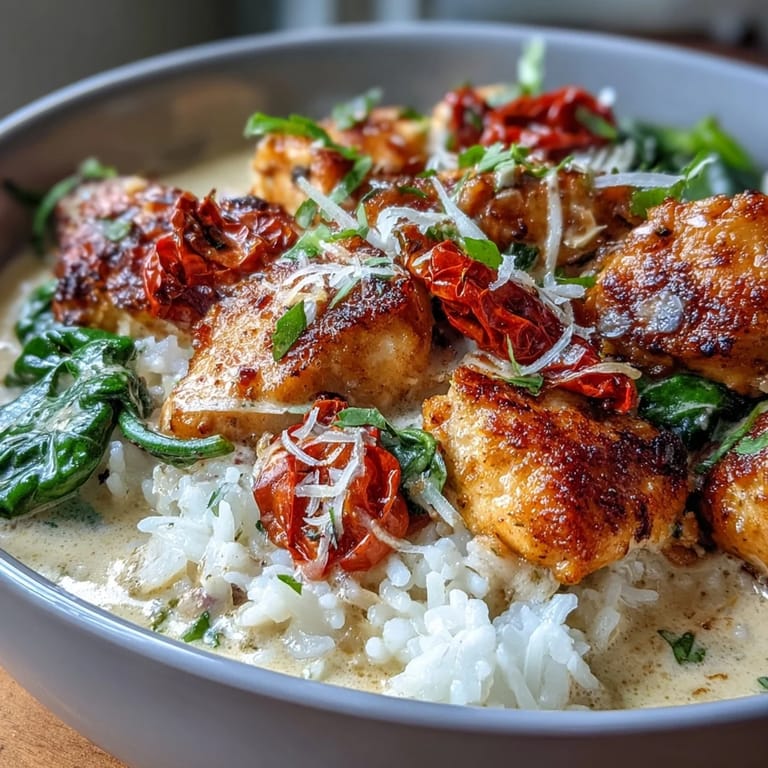
 There's something about a one-pan dinner that feels like winning at life, especially when it tastes like you've been simmering it for hours. This Creamy Tuscan Chicken Rice Skillet came to life on a Tuesday evening when I realized I had chicken, rice, and a jar of sun-dried tomatoes staring at me from the pantry, and honestly, it felt like fate. What started as a desperate attempt to avoid multiple dishes turned into something so rich and comforting that my family asked for it again the next week. The magic happens when cream meets garlic and Parmesan, transforming simple ingredients into something that tastes like a trattoria in your own kitchen.
I served this to my partner's parents on their first visit to our place, and I was genuinely nervous about pulling off something that sounded fancy enough to impress. Watching their faces light up when they took the first bite—that moment when they paused and asked what was in it, like they couldn't quite believe how good it was—made me feel like I'd unlocked something special. It became our go-to dish for impressing people without the stress, because the one-pan approach meant I could actually enjoy their company instead of sweating in the kitchen.
Ingredients
- Chicken breasts: Cutting them into cubes instead of cooking whole breasts means they cook evenly and absorb all those creamy flavors, plus they stay tender when you don't overcook them (which is hard to do in a crowded pan).
- Long-grain white rice: This type of rice stays separate and fluffy rather than clumping together, and it drinks up the broth beautifully without turning mushy.
- Yellow onion and garlic: These two are the backbone of the aromatics, and mincing them fine means they distribute throughout the whole dish instead of leaving big chunks.
- Sun-dried tomatoes: They're packed with concentrated flavor and add a slight chew that fresh tomatoes can't match; draining the oil keeps the dish from becoming greasy.
- Baby spinach: It wilts down to almost nothing, so a whole cup becomes just a whisper of green that adds nutrition without changing the dish's character.
- Heavy cream and Parmesan: This is where the luxury lives—the cream creates a silky sauce while the Parmesan adds that savory depth that makes people ask for the recipe.
- Chicken broth: Using low-sodium broth means you control the salt level and won't end up with an oversalted dish by the end.
- Olive oil and butter: The combination gives you the fruity flavor of olive oil with the golden richness that only butter brings when you're searing the chicken.
- Italian herbs and red pepper flakes: The herbs tie everything to Tuscan tradition while the red pepper flakes (if you use them) add a whisper of heat that makes people come back for another bite.
Tired of Takeout? 🥡
Get 10 meals you can make faster than delivery arrives. Seriously.
One email. No spam. Unsubscribe anytime.
Instructions
- Sear your chicken until it's golden:
- Heat the olive oil and butter together in a large skillet over medium-high heat until the butter froths—this means your pan is hot enough to create that beautiful golden crust. Cut your chicken into roughly 2.5 cm cubes so they cook through in about 5–6 minutes without drying out, and don't move them around constantly; let them sit for a minute or two on each side to develop that color.
- Build your flavor base with onions and garlic:
- Once the chicken comes out, use the same skillet with all those browned bits stuck to the bottom (that's pure flavor). The onions should go translucent and soft, which takes about 3 minutes, then add the garlic and give it just a minute so it becomes fragrant without browning and turning bitter.
- Wake up the sun-dried tomatoes:
- Let them spend a minute or two in the hot pan to release their concentrated tomato flavor into the oil and aromatics. If you're using fresh cherry tomatoes too, they'll warm through and just start to soften, adding brightness to the finished dish.
- Toast your rice in the aromatic mixture:
- Stir the rinsed rice into everything in the pan, coating each grain with the flavorful oil and vegetables. This step is crucial because it gives the rice a subtle toasted flavor and helps keep the grains separate as they cook.
- Simmer the rice until it's nearly tender:
- Pour in the chicken broth, bring it to a simmer, then reduce heat to low and cover with a lid. Let it cook for about 15 minutes, stirring occasionally so nothing sticks to the bottom, and you're looking for the rice to be almost done and most of the liquid absorbed.
- Create the creamy sauce and reunite with the chicken:
- This is where the magic happens—stir in the heavy cream, Parmesan, Italian herbs, and those red pepper flakes if you're using them. Return the seared chicken to the pan and let everything simmer gently, uncovered, for 5–7 minutes so the sauce thickens, the chicken heats through, and the flavors meld together.
- Finish with spinach and seasoning:
- Fold in the chopped spinach and cook it just until it wilts, about a minute—you want it tender but still bright green. Taste the whole thing and adjust the salt and pepper until it sings, because this is your moment to make it perfect.
- Garnish and serve with pride:
- Top with fresh basil and extra Parmesan if you have them, and watch people's faces when they take the first bite.
 Save to Pinterest
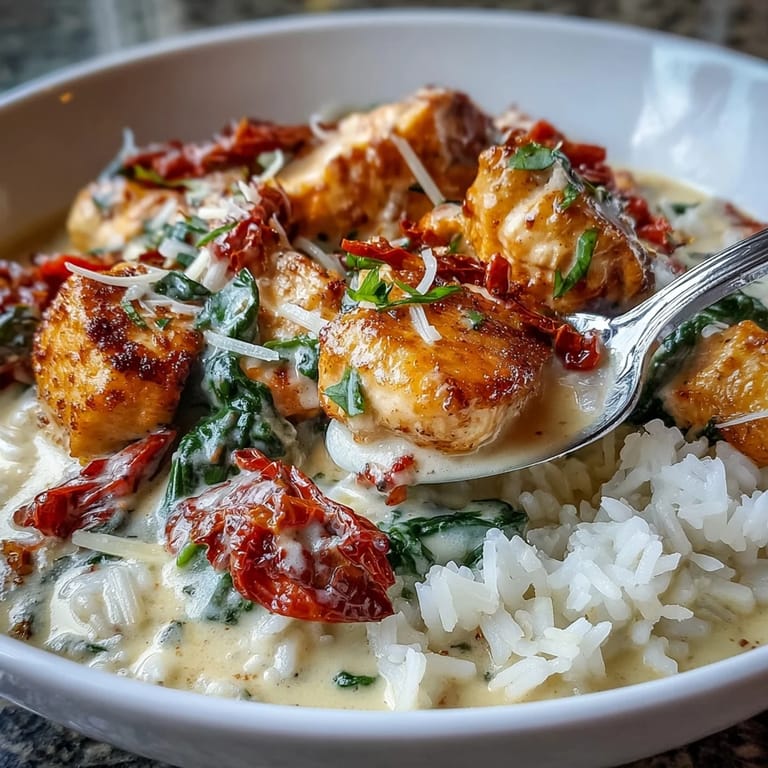
 The first time I made this for my own family dinner, my youngest asked why it tasted like we'd gone to Italy without leaving home. That question stuck with me because it captured exactly what this dish does—it takes everyday ingredients and transforms them into something that feels a little bit luxurious, a little bit special, but still completely achievable on a regular Tuesday night. Since then, it's become the recipe I make when I want everyone at the table to feel celebrated without me spending hours in the kitchen.
The Secret to Creamy Sauce
The sauce in this dish doesn't come from trying to thicken cream with cornstarch or flour—it comes from the starch that the rice releases into the liquid as it cooks. This is why stirring occasionally matters, because you're gradually incorporating that starch into the liquid, and by the time you add the cream, you've already got the foundation for something silky. If your sauce feels too thin even after the rice is cooked, let it simmer uncovered for a few extra minutes and watch it thicken before your eyes; the liquid will reduce and concentrate, and the Parmesan will help bind everything together into something restaurant-quality.
Why This Works as a One-Pan Meal
Most recipes make you choose between cooking the protein and cooking the rice in the same pan, which means either the rice tastes like chicken broth and nothing else, or the chicken gets cold while you finish cooking. This recipe solves that problem by building layers of flavor as you go—the chicken starts in the pan, then comes out while you build the aromatic base and toast the rice, then returns to simmer in the creamy sauce. By the time everything comes together, the chicken has been bathed in flavors and the rice has absorbed a deeply savory broth, so you end up with a finished dish where everything belongs together instead of feeling like separate components on the same plate.
Variations and Flexibility
This recipe is genuinely forgiving, which means you can bend it to whatever you have on hand or whatever you're craving. The wine note in the original instructions is worth trying—add a splash of dry white wine after you cook the onions and let it reduce before adding the broth, because the acidity brightens everything and adds sophistication. If you prefer darker meat, chicken thighs will give you more flavor and more forgiveness if you accidentally overcook them, and they stay juicier than breasts.
- Swap heavy cream for half-and-half or even evaporated milk if you want something lighter, though the sauce won't be quite as luxurious.
- Try adding fresh basil while the spinach is wilting, or experiment with other greens like arugula or torn kale.
- A squeeze of fresh lemon juice at the very end wakes everything up and adds brightness without needing to be an official ingredient.
 Save to Pinterest
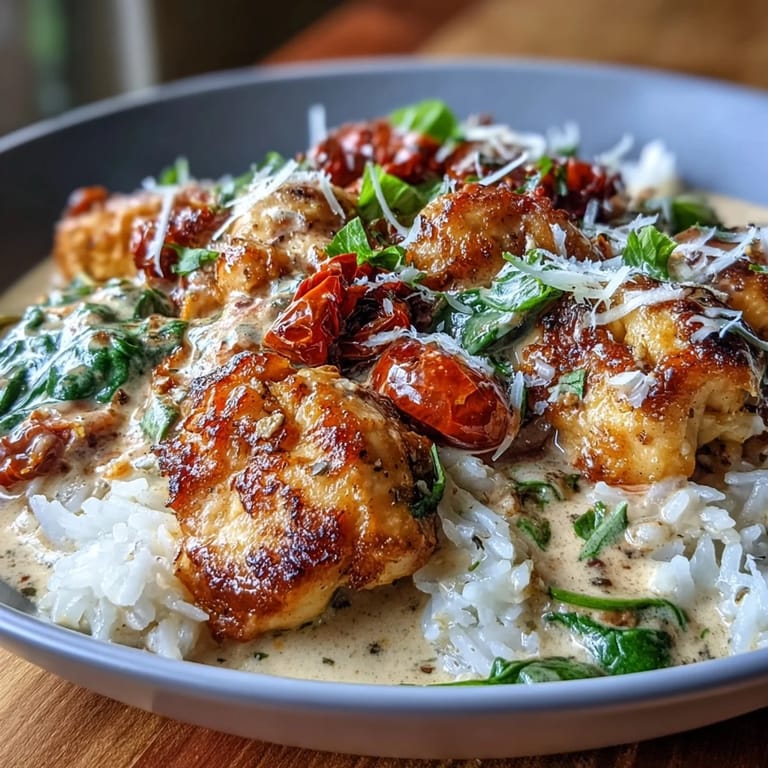
 This is the kind of dish that makes you feel like you're doing something special for the people you cook for, even on the nights when you're tired and running on fumes. It comes together in under an hour, it tastes like you've been cooking all day, and it fills the house with the kind of smell that makes everyone drift toward the kitchen asking what's for dinner.
Questions & Answers About This Recipe
- → Can I use brown rice instead of white rice?
Brown rice requires more liquid and longer cooking time—about 45 minutes instead of 15. Increase broth to 3½ cups and adjust cooking accordingly. The texture will be heartier with a nuttier flavor profile.
- → What can I substitute for heavy cream?
Half-and-half works well for a lighter version, though the sauce won't be quite as thick. For dairy-free options, coconut cream adds richness with subtle sweetness, or use full-fat canned evaporated milk for comparable creaminess without the coconut flavor.
- → Can I make this ahead of time?
This skillet tastes even better the next day as flavors meld. Store in an airtight container for up to 4 days. Reheat gently with a splash of broth or cream to restore the sauce's creamy consistency. The rice will absorb more liquid overnight, so you may need to add moisture when reheating.
- → What's the best way to prevent the rice from sticking?
Stir occasionally while the rice simmers and keep heat at low—gentle bubbling prevents scorching. Using a heavy-bottomed pan with even heat distribution also helps. If rice starts sticking, reduce heat further and add small amounts of warm broth as needed.
- → Can I use chicken thighs instead of breasts?
Absolutely—boneless thighs stay juicier and add more flavor. Cut into similar-sized cubes and adjust cooking time slightly if needed. Thighs tolerate longer cooking without drying out, making them very forgiving in this one-pan method.
- → What wine pairs well with this dish?
A Chianti or Sangiovese complements the Tuscan flavors beautifully with their bright acidity and cherry notes. For white wine lovers, a Pinot Grigio provides crisp contrast to the rich cream sauce. If adding wine to the skillet, use a dry white wine like Sauvignon Blanc.