 Save to Pinterest
 My neighbor brought over a celeriac the size of a small melon last autumn, insisting I had to try roasting it. I'd walked past those knobby root vegetables at the market dozens of times, never quite sure what to do with one. That evening, the kitchen filled with this nutty, almost chestnut-like aroma as it caramelized in the oven, and I understood immediately why she was so enthusiastic. The soup that followed was unlike anything I'd made before—earthy and refined, creamy without feeling heavy.
I made this for my sister during a particularly gray February, and she actually asked for seconds, which nearly never happens. There's something about ladling a velvety soup into bowls and watching someone's expression shift when they taste that toasted hazelnut finish. It became our thing after that—her comfort meal whenever she needed to feel grounded.
Ingredients
- Celeriac (700 g, peeled and cubed): This is the star, and roasting it beforehand creates a depth you won't get any other way—trust the extra step.
- Onion and garlic: These build the flavor foundation while the celeriac roasts, creating an aromatic base that holds everything together.
- Potato (150 g, peeled and diced): Adds body and helps create that silky texture without needing excessive cream.
- Vegetable broth (900 ml): Use a quality one if you can; it makes a real difference in the final depth of flavor.
- Olive oil (2 tbsp total): Split between roasting and sautéing to build layers of flavor.
- Heavy cream or plant-based alternative (100 ml): Optional but recommended for richness, though the soup works beautifully without it if needed.
- White pepper (1/2 tsp): White pepper here is gentler than black, keeping the soup visually pure and the flavor refined.
- Salt, to taste: Season gradually and adjust at the end; this soup needs proper seasoning to shine.
- Hazelnuts (70 g, roughly chopped): Raw nuts work fine, but toasting them yourself in the skillet gives you control and flavor you won't get from pre-toasted.
- Unsalted butter or plant-based margarine (1 tbsp): For coating the hazelnuts and creating that golden, crispy texture.
- Sea salt for crumble (1/4 tsp): This small amount seasons the crumble specifically, bringing out the nuttiness.
- Fresh parsley (1 tbsp, finely chopped): Optional garnish, but even a small pinch adds a fresh note that feels intentional.
Tired of Takeout? 🥡
Get 10 meals you can make faster than delivery arrives. Seriously.
One email. No spam. Unsubscribe anytime.
Instructions
- Heat your oven and prepare the celeriac:
- Preheat to 200°C (390°F). Toss your cubed celeriac with 1 tbsp olive oil, a pinch of salt, and pepper, then spread it on a baking tray in a single layer. Roast for 25 to 30 minutes, stirring halfway through, until the pieces are soft inside and golden at the edges—this is where the magic happens.
- Start the aromatic base:
- While that's roasting, warm 1 tbsp olive oil in a large pot over medium heat. Add your chopped onion and let it soften for about 4 minutes until it turns translucent and starts to smell irresistible. Stir in the minced garlic and diced potato, cooking for another 2 minutes until fragrant.
- Combine and simmer:
- Transfer the roasted celeriac from the baking tray into the pot with your aromatics. Pour in the vegetable broth and bring everything to a gentle boil, then reduce the heat and let it simmer for 15 to 20 minutes until all the vegetables are completely soft and break easily with a spoon.
- Toast the hazelnuts:
- While the soup simmers, place your chopped hazelnuts in a dry skillet over medium heat and toast them for 3 to 4 minutes, stirring occasionally, until they smell warm and nutty. Add the butter and sea salt, continuing to stir until everything is golden and evenly coated, then slide onto a plate to cool.
- Blend until silky:
- Using an immersion blender directly in the pot, purée the soup until completely smooth and velvety—this usually takes a minute or two of steady blending. If using a countertop blender, work in batches and be cautious with the hot liquid, then return everything to the pot.
- Finish with cream and seasoning:
- Stir in the cream if you're using it, then taste carefully and adjust the salt and white pepper until it feels balanced and complete. The soup should taste clean and earthy with a subtle hint of sweetness.
- Serve and garnish:
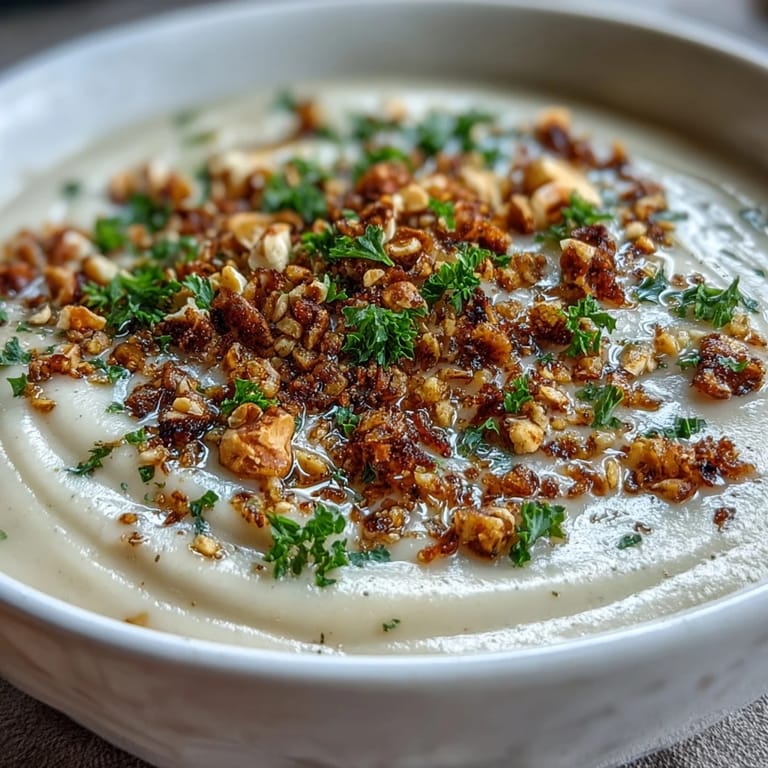
- Ladle the soup into bowls and top each one generously with your toasted hazelnut crumble. Scatter a tiny bit of fresh parsley over top if you have it, and serve while the soup is warm and the crumble is still crisp.
 Save to Pinterest
 I discovered on my second attempt that blending the soup too long actually works against you—oversmoothness somehow loses character. A few more pulses than necessary and the texture becomes almost too neutral, so I stop as soon as I don't feel any chunks between my teeth.
The Art of Roasting Celeriac
Roasting root vegetables seems straightforward until you realize that timing and temperature matter in ways that aren't always obvious. The golden edges are where flavor hides, so don't be afraid to let the celeriac sit another few minutes if it looks pale. I've learned to trust that slight darkening around the cubes; it's never a mistake.
Texture and Temperature Pairing
The contrast between the warm, silky soup and the cool, crisp crumble is what makes every spoonful interesting. If you add the crumble too early, it softens and loses that textural punch that makes the dish worth making. I've found that plating the crumble right before serving keeps it in perfect condition, and the sound it makes when you eat it is almost as satisfying as the taste.
Variations and Seasonal Thinking
This soup adapts beautifully to what you have on hand, and I've made successful versions by swapping celery root with parsnip or adding a small handful of fresh thyme from the garden. A squeeze of lemon at the end brightens everything without overwhelming the earthy base, and a dry white wine really does pair as promised—Pinot Gris or even a crisp Sauvignon Blanc works wonderfully.
- For a vegan version, swap the butter and cream for plant-based alternatives without losing any genuine comfort or richness.
- A tiny drizzle of truffle oil over the finished bowl elevates this from weeknight dinner to something almost restaurant-quality, though it's entirely optional.
- Cold leftover soup becomes something different and equally good—serve it chilled on a warm day with extra crumble for crunch.
 Save to Pinterest
 This soup has become one of those recipes I reach for when I want to feel like I'm taking care of myself and whoever I'm feeding. There's something about bringing it to the table that makes ordinary Tuesday nights feel a little more intentional.
Questions & Answers About This Recipe
- → What does celeriac taste like?
Celeriac offers a subtle celery flavor with earthy, nutty undertones and a pleasant sweetness. When roasted, these characteristics concentrate and mellow, creating a more complex and savory profile that pairs beautifully with rich toppings like hazelnuts.
- → Can I make this soup ahead of time?
Absolutely. The base soup keeps well refrigerated for up to 3 days and actually develops more depth as flavors meld. Prepare the hazelnut crumble fresh before serving to maintain its crisp texture. Reheat gently on the stovetop, adding a splash of broth or cream if needed to adjust consistency.
- → What can I use instead of hazelnuts?
Walnuts make an excellent substitute with similar earthy richness. Pecans offer a sweeter profile, while toasted pumpkin seeds provide a nutty crunch and are naturally tree nut-free. Almonds or pistachios also work well, bringing their own distinctive flavors to the pairing.
- → Is this soup suitable for freezing?
The soup base freezes beautifully for up to 3 months. Cool completely before transferring to airtight containers, leaving space for expansion. Thaw overnight in the refrigerator and reheat gently. For best results, add the hazelnut crumble fresh after reheating rather than freezing it assembled.
- → How do I achieve the smoothest texture?
Roasting the celeriac until completely tender is key—soft vegetables blend more easily. An immersion blender works well, but a high-speed countertop blender creates the silkiest results. Blend thoroughly, and if you want extra refinement, pass the purée through a fine-mesh sieve before adding cream.
- → Can I add other vegetables to the base?
Yes, the formula is quite flexible. A small parsnip adds sweetness, while a leek contributes gentle onion notes. Some cooks add a small apple for brightness, particularly during autumn months. Keep total vegetable quantities similar to maintain the proper consistency and balance.