 Save to Pinterest
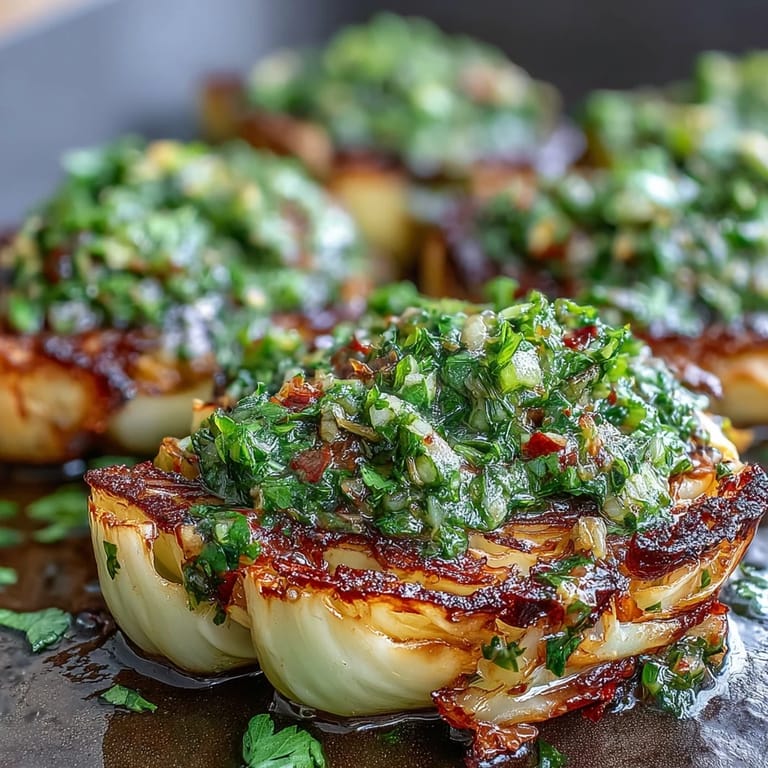
 I was rummaging through the vegetable drawer one evening, staring at a whole cabbage I'd bought impulsively at the farmers market. I'd been in a cooking rut, relying too heavily on the same roasted vegetables, and something about that dense, pale green head felt like a challenge. I sliced it into thick rounds, drizzled them with oil, and slid them into a hot oven without much of a plan. What came out 35 minutes later stopped me mid-bite: caramelized, crispy edges with a tender, almost buttery center that tasted nothing like the boiled cabbage I grew up avoiding.
The first time I made this for friends, I served it alongside grilled chicken, almost as an afterthought. Two of them went back for seconds of the cabbage before touching the chicken again. One friend, who claimed she didn't like cabbage, scraped the last bit of chimichurri off her plate with a piece of the crispy outer leaf. That night, I realized that sometimes the side dish can quietly steal the show if you just give it a little attention and a lot of heat.
Ingredients
- Green cabbage: Choose a large, firm head with tightly packed leaves so the steaks hold together when sliced; the density is what creates that meaty texture once roasted.
- Olive oil: Use regular olive oil for roasting the cabbage since it has a higher smoke point, saving your fancy extra-virgin for the chimichurri where its flavor shines.
- Sea salt and black pepper: Simple seasoning lets the natural sweetness of the roasted cabbage come through without competing with the bold chimichurri.
- Fresh flat-leaf parsley: The backbone of the chimichurri; its clean, grassy flavor balances the heat and richness of the oil.
- Fresh cilantro: Adds a bright, citrusy note that makes the sauce feel lively and complex, not one-dimensional.
- Jalapeños: Seeding them tames the heat while keeping the fresh pepper flavor; leave some seeds in if you like a sharper kick.
- Garlic cloves: Mince them finely so they distribute evenly and mellow as they sit in the acidic vinegar.
- Extra-virgin olive oil: The fruity richness here is essential; it carries all the flavors and gives the chimichurri its silky body.
- Red wine vinegar: The acidity cuts through the richness of the oil and brightens the herbs, making the sauce taste clean and sharp.
- Dried oregano: A small amount adds an earthy, slightly floral note that ties the chimichurri to its Argentinian roots.
- Red pepper flakes: Optional but recommended if you want layered heat that lingers after the jalapeño's initial bite.
Tired of Takeout? 🥡
Get 10 meals you can make faster than delivery arrives. Seriously.
One email. No spam. Unsubscribe anytime.
Instructions
- Prep the oven and pan:
- Preheat your oven to 425°F and line a baking sheet with parchment paper so the cabbage doesn't stick and cleanup stays easy. A hot oven is key to getting those crispy, caramelized edges.
- Slice the cabbage into steaks:
- Remove any loose or damaged outer leaves, then slice the cabbage vertically through the core into 1-inch thick rounds. The core holds each steak together, so don't remove it yet.
- Season and oil the steaks:
- Lay the cabbage steaks flat on the baking sheet, brush both sides generously with olive oil, and season with salt and pepper. Make sure every surface gets coated so it can caramelize properly.
- Roast until golden and crispy:
- Roast for 30 to 35 minutes, flipping the steaks halfway through so both sides develop deep golden color and crispy edges. The centers should be tender enough to pierce easily with a fork.
- Make the jalapeño chimichurri:
- While the cabbage roasts, combine parsley, cilantro, jalapeños, garlic, olive oil, red wine vinegar, oregano, red pepper flakes, salt, and black pepper in a small bowl. Stir well and let it sit for at least 10 minutes so the flavors can marry.
- Plate and top with chimichurri:
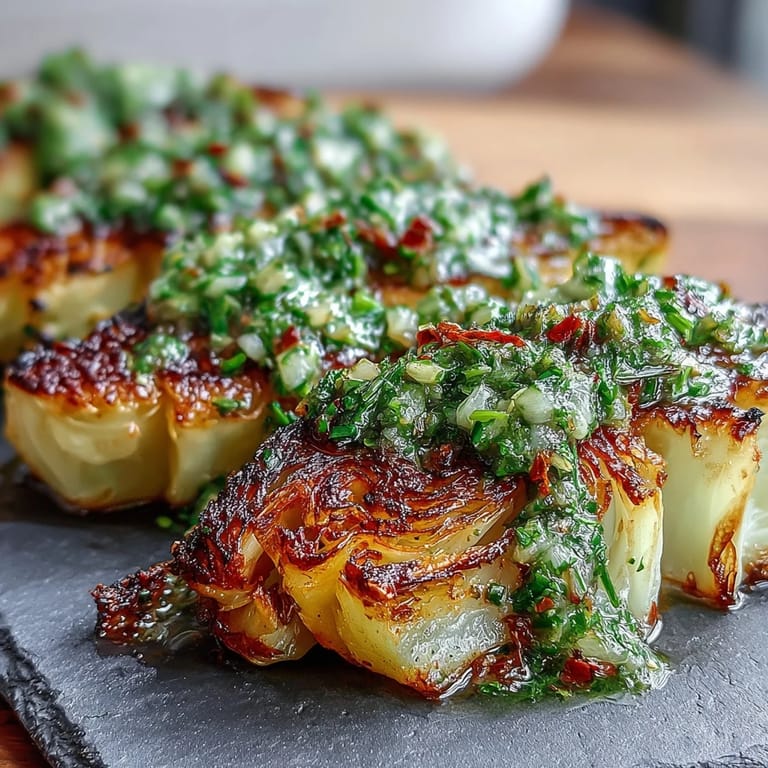
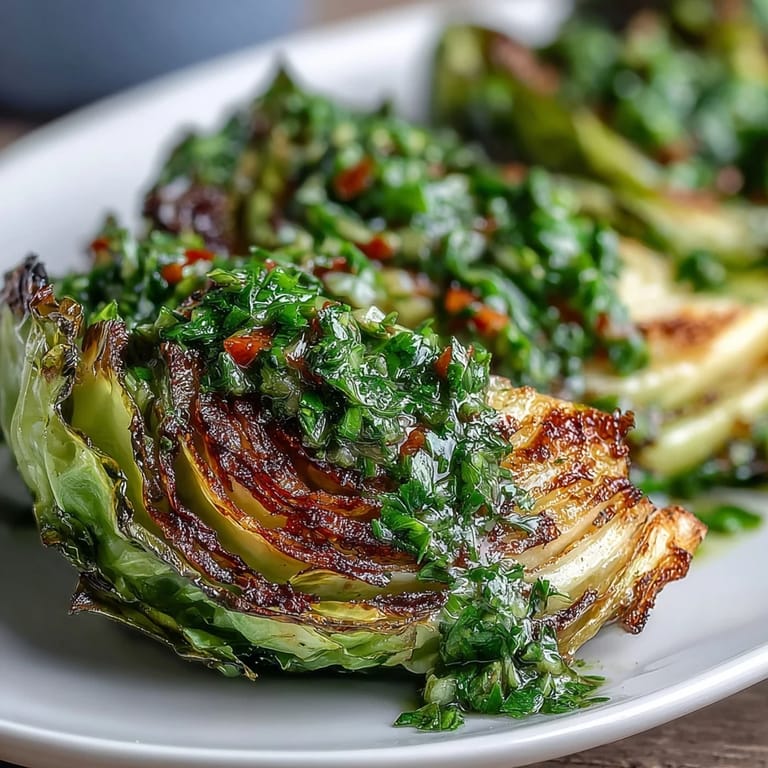
- Transfer the roasted cabbage steaks to individual plates and spoon a generous amount of chimichurri over each one. Serve immediately while the cabbage is still hot and the sauce is bright.
 Save to Pinterest
 There was a Sunday afternoon when I made this for myself, no guests, no occasion. I sat at the kitchen table with a cabbage steak on a plain white plate, the chimichurri pooling around the edges, and I remember thinking how rare it was to feel genuinely excited about a vegetable. It wasn't trying to be anything other than what it was: simple, bold, and completely satisfying. That's the kind of meal I want to make again and again.
Serving Suggestions
These cabbage steaks shine as a main dish when you serve them over quinoa, farro, or a bed of lemony couscous to soak up the chimichurri. They also make a bold side for grilled salmon, roasted chicken, or even a hearty steak if you're feeding a crowd. I've plated them alongside black beans and avocado slices for a simple vegan dinner that felt much fancier than the effort required. A squeeze of fresh lime just before serving adds a final burst of brightness that ties everything together beautifully.
Storage and Leftovers
The roasted cabbage steaks are best eaten fresh from the oven when the edges are at their crispiest, but leftovers can be stored in an airtight container in the fridge for up to two days. Reheat them in a hot oven or skillet to bring back some of the crispness, though they'll never be quite as perfect as day one. The chimichurri, on the other hand, keeps beautifully for up to three days and actually tastes better after the flavors have had time to deepen. I've used leftover chimichurri on scrambled eggs, grilled vegetables, and even stirred into pasta for a quick weeknight dinner.
Customizing the Heat
If you're sensitive to spice or cooking for a mixed crowd, start with just one jalapeño and taste the chimichurri before adding more. You can also swap the jalapeños for a milder pepper like poblano, or leave them out entirely and add a pinch of cayenne for background warmth. On the flip side, if you love heat, leave some jalapeño seeds in the mix or add a finely chopped serrano for a sharper bite.
- Use half the jalapeño and add a tablespoon of honey to the chimichurri for a sweet heat balance.
- Toss in a handful of fresh mint or basil for an herbal twist that feels lighter and brighter.
- Drizzle the finished steaks with tahini or yogurt sauce if you want a creamy contrast to the spicy chimichurri.
 Save to Pinterest
 This dish taught me that vegetables don't need to be complicated to be crave-worthy. Sometimes all it takes is high heat, good seasoning, and a bold sauce to make something unforgettable.
Questions & Answers About This Recipe
- → Can I use a different type of cabbage?
Yes, you can use red cabbage or savoy cabbage. Red cabbage will have a slightly sweeter flavor, while savoy has more delicate leaves that crisp up nicely.
- → How do I prevent the cabbage steaks from falling apart?
Keep the core intact when cutting your steaks—it holds the leaves together. Cut straight down through the core to create stable, thick rounds.
- → Can I make the chimichurri ahead of time?
Absolutely. The chimichurri actually improves when made a few hours ahead or even the day before, allowing the flavors to fully develop. Store covered in the refrigerator.
- → What can I serve with cabbage steaks?
Pair them with quinoa, brown rice, or cauliflower rice for a complete meal. They also complement grilled tofu, tempeh, or any protein of your choice.
- → How do I adjust the heat level?
For milder heat, use only one jalapeño and remove all seeds and membranes. For extra spice, keep the seeds or add the optional red pepper flakes.
- → Can I grill the cabbage instead of roasting?
Yes, cabbage steaks work wonderfully on the grill. Cook over medium-high heat for 5-7 minutes per side until charred and tender, brushing with oil as needed.