 Save to Pinterest
 There's something about the way butternut squash transforms in the oven that caught me off guard the first time I made this soup. The kitchen filled with this honeyed, almost caramel-like warmth while the cubes turned golden, and I realized I'd been standing there for five minutes just breathing it in like it was perfume. My roommate wandered in asking what smelled so good, and by the time I explained it was just vegetables, she was already pulling up a chair to wait for a bowl. That's when I knew this wasn't just another weeknight soup.
I made this for a friend who'd just moved to the city and was homesick, sitting in her barely-furnished apartment with cardboard boxes still stacked in the corner. She took one spoonful and got quiet in that way people do when food suddenly feels like proof that someone cares. We ended up talking for three hours while she had four bowls, and she's asked me to make it every time she visits since. It became our thing, which wasn't planned but somehow felt inevitable.
Ingredients
- Butternut squash (about 2 lbs), peeled, seeded, and cubed: Roasting brings out the natural sugars and gives the soup that velvety depth that raw squash just won't deliver; don't skip this step even though it adds time.
- Red lentils (3/4 cup), rinsed: These little guys dissolve almost completely into the broth, thickening everything naturally without cream while adding plant-based protein that actually keeps you full.
- Carrots (2 medium), peeled and chopped: They soften into the background but add a subtle sweetness that balances the earthiness of the lentils and spices.
- Onion (1 large), chopped: This is your flavor foundation, so don't rush the sautéing; let it get soft and slightly golden before you add anything else.
- Garlic (3 cloves), minced: Fresh is non-negotiable here; jarred garlic will flatten the whole flavor profile.
- Vegetable broth (4 cups) and water (1 cup): Using half water keeps the broth from tasting too concentrated while still giving you that savory backbone.
- Ground cumin, coriander, turmeric, cinnamon, and smoked paprika: Toast them briefly in the hot oil to wake them up; this thirty-second step is actually the secret to why this soup tastes like it's been simmering for hours.
- Olive oil (2 tbsp total): One tablespoon roasts the squash, the other starts the aromatic base; don't try to skimp on this.
- Lemon juice (1/2 lemon): This brightens everything at the end and prevents the soup from tasting flat or one-dimensional.
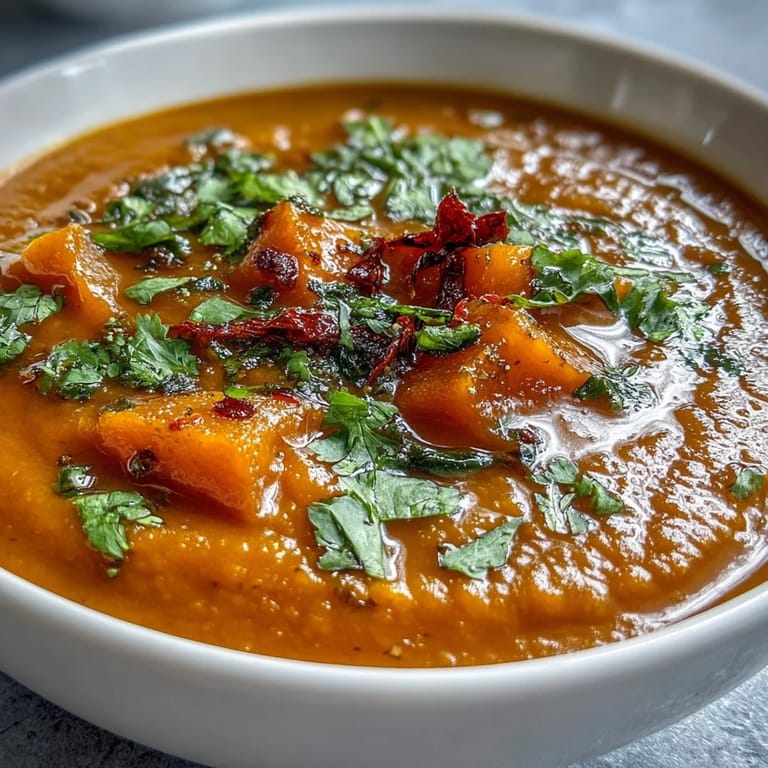
- Fresh cilantro or parsley (optional): If you have it, a small handful scattered on top adds a peppery note that makes people stop mid-spoon and ask what that is.
Tired of Takeout? 🥡
Get 10 meals you can make faster than delivery arrives. Seriously.
One email. No spam. Unsubscribe anytime.
Instructions
- Get your oven ready and start the squash:
- Preheat to 400°F and line a baking sheet with parchment. Toss your cubed squash with a tablespoon of olive oil, a pinch of salt, and some pepper, then spread it out in a single layer where the pieces aren't touching. Roast for 25 to 30 minutes until the edges are caramelized and a fork slides through easily.
- Build the flavor base while the squash roasts:
- Heat the remaining tablespoon of oil in a large pot over medium heat and add your chopped onion and carrots. Let them soften for about five minutes, stirring occasionally, then add the minced garlic and cook for just one more minute until you can smell it.
- Bloom the spices:
- Sprinkle in the cumin, coriander, turmeric, cinnamon, and smoked paprika, stirring constantly for about thirty seconds. This is the moment the whole kitchen smells like something special, and you'll understand why this step matters.
- Bring everything together:
- Add your roasted squash, rinsed red lentils, vegetable broth, and water to the pot. Bring it all to a boil, then reduce the heat and let it simmer uncovered for about twenty minutes until the lentils are completely soft and starting to dissolve into the broth.
- Make it smooth:
- Remove from heat and use an immersion blender to puree the soup until it's silky and uniform. If you don't have an immersion blender, carefully transfer it in batches to a regular blender, being cautious with the heat.
- Finish and taste:
- Stir in the lemon juice, then taste and adjust the salt and pepper to where it feels right. Sometimes it needs more lemon, sometimes a tiny pinch more salt; trust your palate.
 Save to Pinterest
 What surprised me most about making this soup regularly is how it became my default move when I didn't know what else to do in the kitchen. On days when the weather felt heavy or my energy was low, I'd roast a squash and suddenly have something to show for the effort that felt way more impressive than it had any right to. It's honest food that doesn't ask for much but gives back generously.
When You Want to Make It Creamier
There's a difference between the soup as written and the soup with a splash of coconut milk stirred in at the end, and I've made both depending on my mood. The version without milk is bright and lets you taste each ingredient separately; add the milk and it becomes almost dessert-like, wrapping everything in a subtle richness that makes it feel indulgent. I usually go with the creamier version on nights when I'm eating alone and want the soup to feel like a hug, but the original version is perfect for serving to guests who might prefer something lighter.
Customizing with Lentil Swaps
Red lentils are my pick because they practically melt into the soup, but I've experimented with yellow lentils and they work beautifully too if that's what you have on hand. They hold their shape slightly longer, so the soup ends up with a tiny bit more texture, which some people actually prefer. The cooking time stays roughly the same, so just keep an eye on them and blend when everything's soft enough.
Serving Ideas and Variations
The best part about this soup is how flexible it is once you've made it. I've served it with crusty bread on the side, stirred in a dollop of yogurt for tang, scattered fresh herbs on top, and even poured it into bowls and topped it with crispy chickpeas for crunch. One time I added fresh grated ginger along with the garlic for an extra warming kick that felt particularly good on a cold afternoon. The soup is the canvas, and you're the artist figuring out what makes you happiest.
- Leftover soup keeps in the fridge for up to four days and tastes even better the next day once the flavors have had time to mingle.
- You can freeze it in portions for up to two months, though it might need a splash of broth when you reheat it since it thickens in the freezer.
- If you're adding ginger, fresh is always better than powder, and grate it finely so it distributes evenly through the pot.
 Save to Pinterest
 This soup found its way into my regular rotation not because it's trendy or complicated, but because it asks so little and delivers so much. Make it once and you'll understand why I keep coming back to it.
Questions & Answers About This Recipe
- → Can I make this soup ahead of time?
Absolutely. This soup actually develops deeper flavors when made ahead. Store it in an airtight container in the refrigerator for up to 4 days, or freeze for up to 3 months. Reheat gently on the stove, adding a splash of broth if needed to adjust consistency.
- → What type of lentils work best?
Red lentils are ideal here because they break down beautifully during cooking, creating that velvety texture. Yellow lentils work similarly. Avoid green or brown lentils as they hold their shape and won't give you the same creamy consistency.
- → Is it necessary to roast the squash first?
Roasting the squash first adds incredible depth and sweetness to the final dish. If you're short on time, you can simmer raw cubes directly in the broth, but roasting elevates the flavor profile significantly.
- → How can I make this soup even creamier?
Stir in 1/4 cup of coconut milk or a splash of heavy cream before blending. You could also add a small peeled potato during simmering, which naturally thickens the puree without altering the flavor much.
- → What should I serve with this soup?
Crusty bread, gluten-free crackers, or a simple green salad make excellent accompaniments. For a heartier meal, top with roasted chickpeas or a dollop of yogurt if you eat dairy. Fresh herbs like cilantro or parsley add brightness.
- → Can I substitute other vegetables?
Yes, sweet potato works well in place of squash. You can also add a small parsnip for extra sweetness. Keep in mind that roasting times may vary slightly depending on the vegetables you choose.