 Save to Pinterest
 There's something almost meditative about cracking eggs into a blender and watching them transform into something completely different—light, frothy, barely there. I stumbled onto these crepes one rushed Tuesday morning when I had nothing but eggs in the fridge and a vague craving for something that felt more exciting than scrambled. The blender does the real work here, turning four simple eggs into a batter that cooks into something delicate and almost cloud-like, nothing like the dense omelets I'd been making for years.
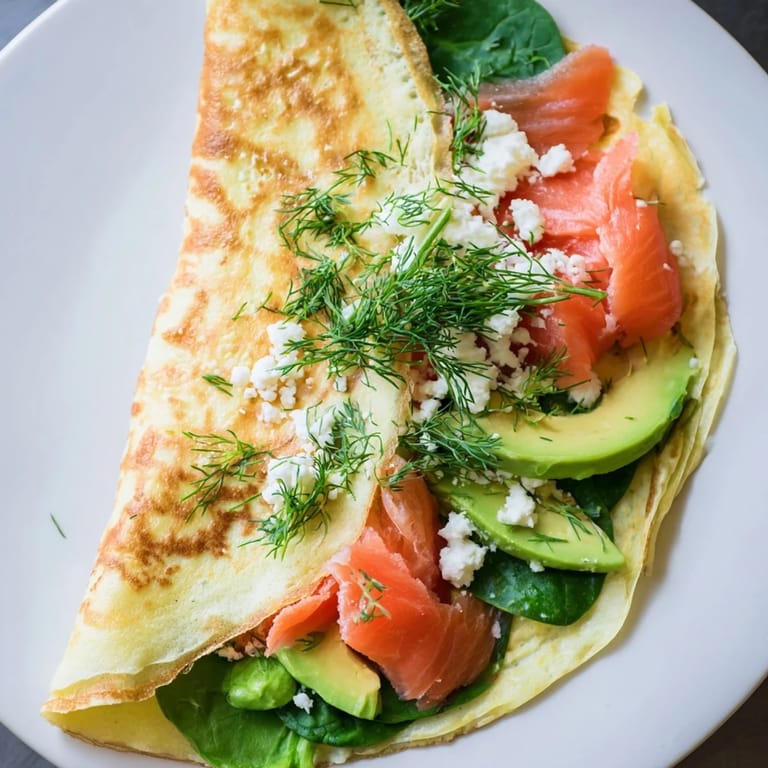
My sister came over one Sunday and watched me make these, skeptical at first because she'd never seen an egg turn into something you could actually roll. By the time I'd filled hers with smoked salmon and fresh dill, I watched her whole face change—that quiet moment when food surprises you in the best way, when something you thought was simple becomes exactly what you needed.
Ingredients
- Eggs: Four large ones are the foundation—they're what creates the structure without any help from flour or starches.
- Water or milk: Just two tablespoons; it keeps the crepe tender and helps the blender do its job smoothly.
- Salt and black pepper: A pinch of each wakes up the eggs and makes them taste like something intentional, not bland.
- Olive oil or butter: One teaspoon for cooking—enough to prevent sticking without making it heavy or greasy.
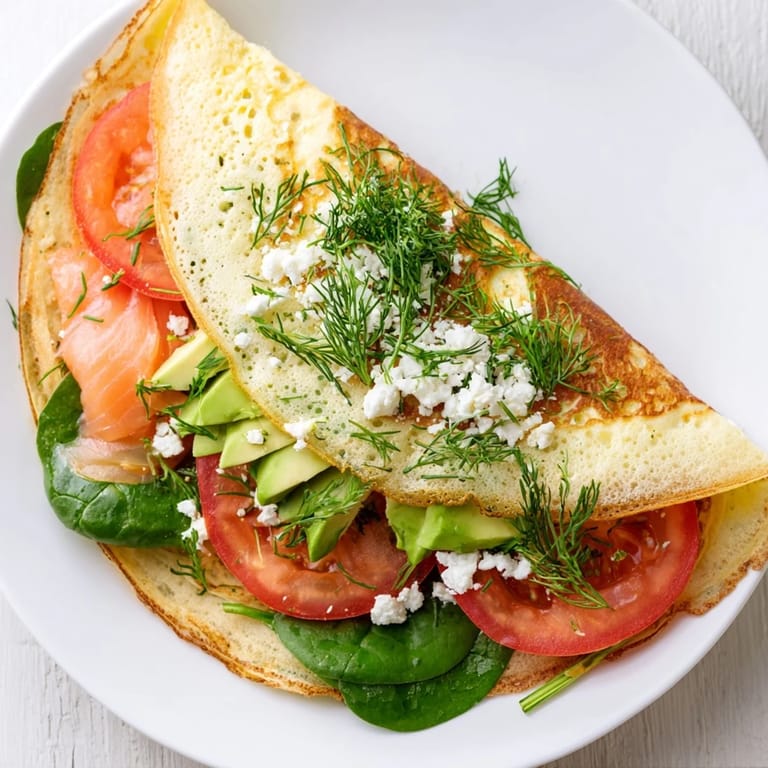
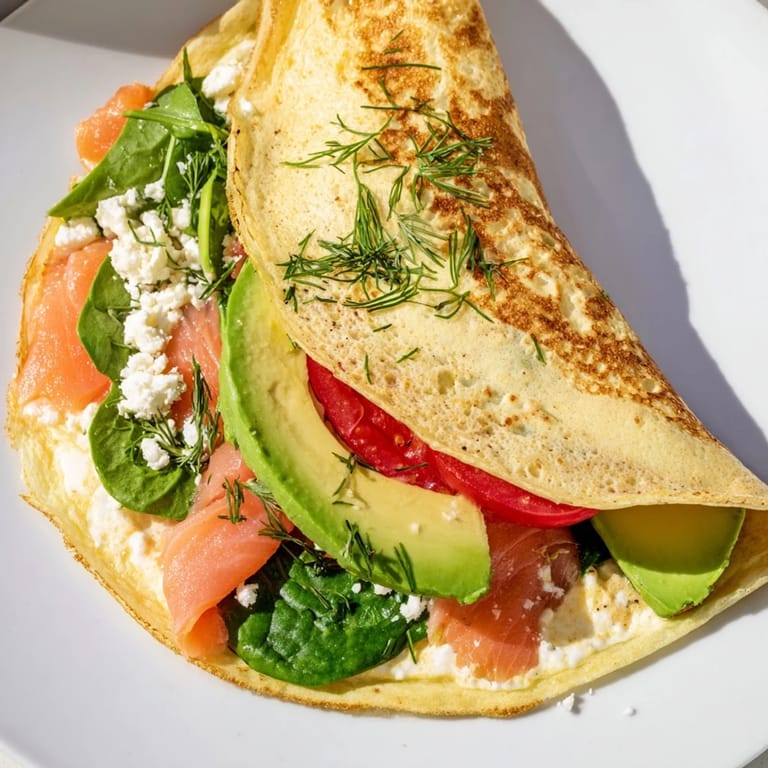
- Fillings: Baby spinach, smoked salmon, feta, tomato, avocado, fresh herbs—choose whatever calls to you, or layer them all.
Tired of Takeout? 🥡
Get 10 meals you can make faster than delivery arrives. Seriously.
One email. No spam. Unsubscribe anytime.
Instructions
- Blend until frothy:
- Crack the eggs into your blender with water, salt, and pepper. Blend on high for 30 to 45 seconds—you'll know it's ready when the mixture looks pale and airy, almost like the eggs are full of tiny invisible bubbles. This is the whole secret.
- Heat your skillet:
- Set a non-stick skillet over medium heat and give it a minute to warm through. Brush it lightly with oil or butter, just enough so the crepe won't stick but not so much that it pools.
- Pour and tilt:
- Pour half your blended eggs into the center of the skillet and immediately tilt the pan in all directions, letting the mixture flow into a thin, even layer that covers the bottom. Don't overthink it—the eggs find their own way.
- Cook with patience:
- Let it cook for 1 to 2 minutes. You'll notice the edges starting to lift and curl slightly, and the bottom will look set and very lightly golden. At that point, take a breath and carefully slide your spatula underneath, then flip it with one confident motion—it only needs another 30 seconds on the other side.
- Build and fill:
- Once both crepes are cooked and resting on a plate, arrange your chosen fillings in a line down the center of each one. The warmth of the crepe will soften any cold vegetables slightly, bringing everything together.
- Fold or roll:
- Fold the sides in first if you want a neat package, or roll it up like a burrito—either way works. Serve it warm, while the crepe is still pliable and the fillings haven't started to separate.
 Save to Pinterest
 I made these for my partner one quiet morning after a late night, nothing fancy, just eggs and whatever we had on hand. They were still warm when we sat down, and I watched the crepe tear slightly as they took a bite—imperfect and honest. That's when I realized this recipe wasn't about being picture-perfect; it was about taking the simplest ingredients and making something that felt like care.
Making It Sweet or Savory
The same crepe batter works beautifully on both sides of the sweet-savory divide, which is kind of the magic of it. For savory, stick with the salmon, herbs, and vegetables; they let the delicate egg flavor shine through. For sweet, lay down some fresh berries, add a spoonful of yogurt, and drizzle with honey—the crepe will taste almost like a dessert but still feel light enough for breakfast.
The Blender Difference
I know blenders feel like an extra step when you're in a hurry, but they're doing something crucial that a fork or whisk can't quite manage. The high-speed blending incorporates air into the eggs in a way that creates that tender, almost crepe-like texture instead of something denser. It's not complicated; it's just the blender being very good at one specific thing.
Prep and Timing
Once your fillings are prepped, the cooking itself takes maybe 10 minutes total, which means you can have this on a plate before your coffee gets cold. Slice your tomatoes and avocados while the first crepe cooks, and by the time you flip it, you're nearly done.
- Prep your fillings before you turn on the blender so nothing sits around waiting.
- Keep the heat at medium—too high and the crepe sets too fast and tears; too low and it gets rubbery.
- Serve immediately while the crepe is warm and still soft enough to fold without cracking.
 Save to Pinterest
 These crepes remind me that some of the best meals come from having nothing and making something feel like everything. It's honest food, quick and kind.
Questions & Answers About This Recipe
- → How do I achieve a frothy egg mixture?
Blend the eggs with water or milk on high speed for 30-45 seconds until the mixture is light and airy, ensuring a tender crepe texture.
- → What fillings work best with these egg wraps?
Both savory options like spinach, smoked salmon, feta, tomato, and herbs, or sweet choices like berries and honey complement the egg crepes nicely.
- → Can I use dairy-free alternatives in the egg mixture?
Yes, water or plant-based milk works well to keep the crepes light and suitable for various dietary needs.
- → How thin should the egg crepe be cooked?
Pour enough mixture to cover the skillet bottom in a thin, even layer; cook until edges lift easily, approximately 1-2 minutes per side.
- → How can I store leftover egg crepes?
Store cooled crepes in an airtight container in the refrigerator for up to 2 days; reheat gently before filling and serving.
- → Are these egg wraps suitable for low-carb diets?
Yes, the thin egg base is naturally low in carbohydrates, making it a great option for low-carb eating depending on fillings chosen.