 Save to Pinterest
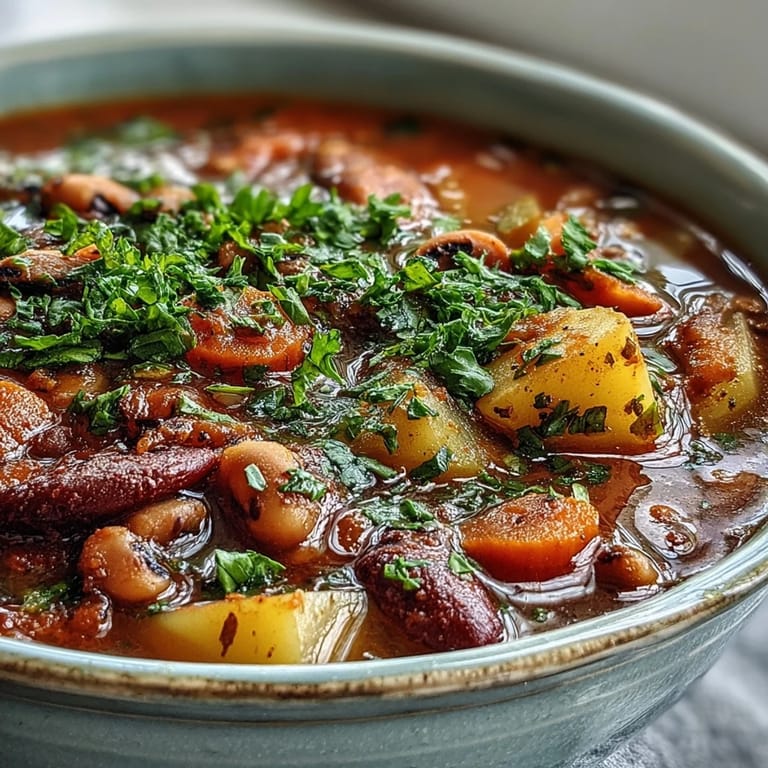
 There's something about the smell of sautéed onions that makes any kitchen feel like home, and this black-eyed pea stew does exactly that. My neighbor stopped by one chilly afternoon while I was simmering this pot, and the aroma pulled her right into the kitchen—before I'd even finished the first step. She sat at my counter and watched the transformation from raw vegetables to this golden, bubbling comfort in a bowl. That's when I realized this stew wasn't just nourishing; it was one of those dishes that invites people in. Simple, honest, and deeply satisfying.
I made this for my book club once, doubling the batch because someone always asks for seconds, and I watched grown adults go silent for a moment after that first spoonful. It was the kind of quiet that means food is doing its job—reminding you why you love eating in the first place. The smoked paprika gives it this subtle depth that nobody can quite name, which somehow makes the whole thing taste more special than it actually is.
Ingredients
- Extra virgin olive oil: Don't skimp here; good oil makes the sauté sing and adds richness you'll taste in every spoonful.
- Sweet onion: The natural sugar caramelizes slightly as it softens, building a flavor foundation that everything else relies on.
- Carrots and celery: These are your aromatic base—dicing them small means they soften evenly and disappear into the broth, thickening it naturally.
- Potatoes: Waxy varieties hold their shape better than starchy ones, keeping the stew from turning to mush.
- Diced tomatoes: Canned tomatoes work beautifully here because they're picked at peak ripeness; if you use fresh, choose ones that are deeply colored.
- Garlic cloves: Mince them fine and add near the end of the sauté window so they flavor the oil without burning.
- Black-eyed peas: Cooking your own takes time, so canned is my shortcut; just rinse them well to remove excess sodium.
- Vegetable broth: Use low-sodium so you control the salt level throughout cooking.
- Bay leaf, thyme, and smoked paprika: These three create a subtle smokiness that makes the stew taste like it simmered all day when it really didn't.
- Fresh parsley: Stirred in at the end, it brightens everything and adds a fresh note against the deep flavors.
Tired of Takeout? 🥡
Get 10 meals you can make faster than delivery arrives. Seriously.
One email. No spam. Unsubscribe anytime.
Instructions
- Heat your oil and start the soffritto:
- Warm the olive oil over medium heat in your pot, then add the diced onion. Let it sit for about a minute before stirring so the bottom caramelizes slightly, then stir every minute or so until it's soft and just beginning to turn golden. You'll know it's ready when your kitchen smells unbelievably good and the onion pieces are translucent.
- Build flavor with carrots and celery:
- Toss in the carrots and celery, stirring them into the oil so they get coated. Let them cook undisturbed for a minute or two, then stir occasionally—this gentle approach releases their natural sweetness without turning them mushy.
- Add potatoes and garlic:
- Stir in the diced potatoes and cook just long enough for them to get a light oil coating, then add the minced garlic. The garlic should sizzle gently for about a minute; listen for that sound and you'll know the timing is right.
- Pour in tomatoes and broth:
- Add the tomatoes with all their juices along with the vegetable broth, then drop in your bay leaf. Sprinkle in the thyme, smoked paprika, black pepper, and salt—this is when the stew begins to come alive.
- Simmer the vegetables until tender:
- Bring everything to a gentle boil, then lower the heat and let it simmer uncovered for about 15 minutes. The vegetables should be almost tender by now, and the broth will have started to develop deeper color and flavor.
- Finish with black-eyed peas:
- Stir in the black-eyed peas and let everything simmer together for another 10 minutes. This time allows the peas to warm through and absorb all the savory, slightly smoky flavors surrounding them.
- Taste and adjust:
- Remove the bay leaf, then taste a spoonful. Salt is a personal preference, so adjust it here if needed—remember you can always add more but you can't take it out.
- Finish with parsley and serve:
- Stir in the fresh chopped parsley just before ladling—this keeps it bright green and fragrant. Serve in bowls and top each with extra parsley for color and a final pop of freshness.
 Save to Pinterest
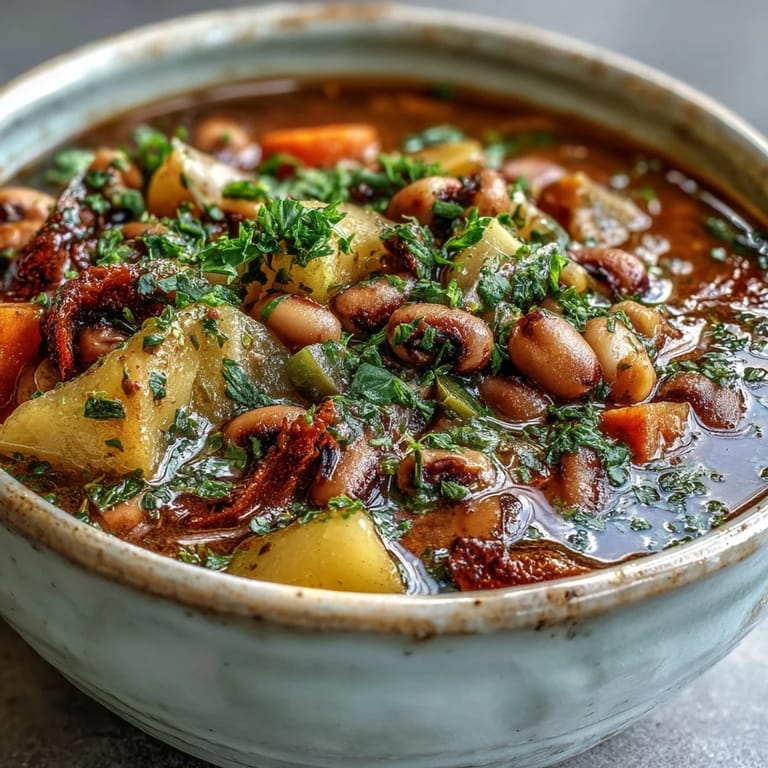
 My daughter asked for this stew three days in a row last week, and I realized it had quietly become one of those dishes that bridges the gap between comfort and nourishment. It's the kind of meal that makes everyone feel cared for without you having to spend all day in the kitchen.
The Power of Smoked Paprika
Smoked paprika is the secret weapon in this stew that nobody ever guesses. It's not spicy, but it adds this subtle smokiness that makes the whole pot taste deeper and more intentional than you'd expect from such a simple ingredient list. I've served this to people who swear they taste bacon or some kind of meat in it, and it's completely vegetarian—that's the paprika doing its job perfectly.
Timing and Texture
The magic window for this stew is about 40 minutes of actual cooking time, where everything softens to that perfect tender-but-not-mushy state. Cook it longer and your potatoes will start to dissolve, turning the broth starchy and thick; cook it less and you'll bite into carrots that are still a little crunchy. Getting the timing right is mostly about tasting as you go and trusting that your vegetables will tell you when they're ready through their tenderness.
Variations and Personalization
This stew is forgiving enough to handle additions and swaps depending on what's in your kitchen or what you're craving. I've added diced bell peppers, thrown in kale at the very end, and even stirred in a can of white beans when I've run low on black-eyed peas. The foundation is so solid that you can play with it without losing what makes it good.
- For a smokier version, add a dash of liquid smoke or one chopped chipotle pepper stirred in with the tomatoes.
- To make it even more filling, serve it over rice or with thick slices of crusty bread alongside for soaking up the broth.
- If you want extra greens, stir in chopped kale or spinach during the last five minutes of simmering so it wilts right into the pot.
 Save to Pinterest
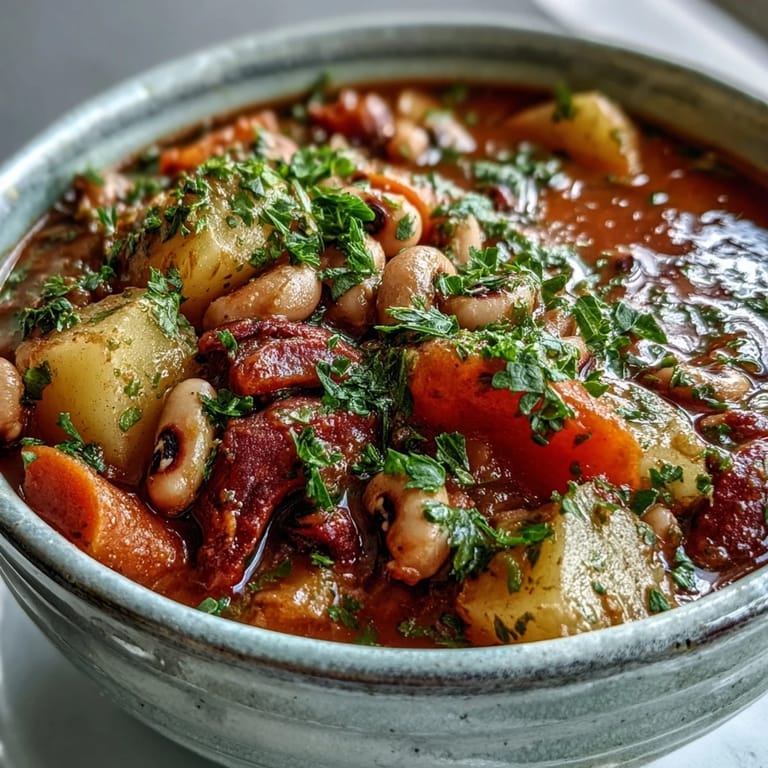
 There's a reason this stew keeps making its way onto my table, and it's because it delivers everything you want from food—warmth, nourishment, and that feeling of being cared for. Serve it with a simple salad and good bread, and you've got a meal worth sitting down for.
Questions & Answers About This Recipe
- → Can I use dried black-eyed peas instead of canned?
Yes, you can use dried peas. Soak them overnight and cook until tender before adding to the stew, or extend the simmering time accordingly.
- → How long does this stew keep in the refrigerator?
The stew stores well for up to 4-5 days in an airtight container in the refrigerator. The flavors often deepen and improve after a day or two.
- → Can I freeze this black-eyed pea stew?
Absolutely. Portion cooled stew into freezer-safe containers and freeze for up to 3 months. Thaw overnight in the refrigerator before reheating.
- → What can I serve with this stew?
Crusty bread, cornbread, or cooked rice make excellent accompaniments. A simple green salad also pairs nicely for a complete meal.
- → How can I add more protein to this dish?
Consider adding chopped kale or spinach during the last 5 minutes of cooking, or serve with quinoa. You could also add plant-based sausage for extra protein.
- → Is this stew suitable for meal prep?
Yes, it's perfect for meal prep. Make a batch on Sunday and portion it for lunches throughout the week. It reheats beautifully on the stove or in the microwave.