 Save to Pinterest
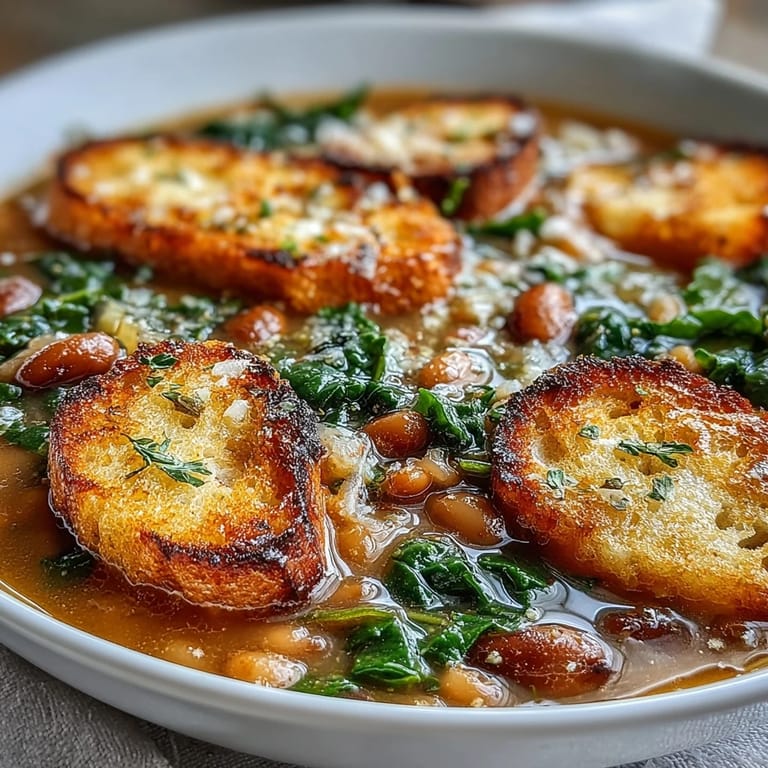
 There's something about a bowl of ribollita that stops time. I discovered this soup on a gray October afternoon in a tiny trattoria outside Florence, where an elderly woman ladled it into bowls with the kind of care usually reserved for heirlooms. The way the kale softened into the broth, how the white beans dissolved into creamy pockets of comfort, and then those crispy sourdough croutons shattering between my teeth—I knew I had to learn to make it. What started as a meal became the reason I finally understood why Italians never rush their food.
I made this for my sister during her first week in a new city, when she was too overwhelmed to cook for herself. Watching her face soften as she tasted it—not because it was fancy, but because it was exactly what she needed—that's when I realized this soup does something special. It doesn't try to impress; it just shows up and takes care of people.
Ingredients
- Extra-virgin olive oil: Use the good stuff you actually enjoy tasting, because you'll taste it in every spoonful—it's not just a cooking medium here, it's part of the soul of the dish.
- Yellow onion, carrots, celery: This is your soffritto base, and don't rush it; those 8 to 10 minutes of gentle cooking unlock sweetness that no amount of hurrying can achieve.
- Garlic cloves: Mince them fine so they distribute evenly and won't overpower any single bite with their intensity.
- Tuscan kale (cavolo nero): This specific kale has a subtle earthiness that mild kales simply don't offer; if you can't find it, spinach works but tastes noticeably different.
- Yukon gold potato: They hold their shape better than russets and have a buttery quality that complements the beans perfectly.
- Cannellini beans: Rinse them thoroughly even though it feels like you're washing away flavor—it actually removes the starchy liquid that would make your soup cloudy and heavy.
- Vegetable broth: The quality here matters since it's your backbone; homemade is wonderful, but a good store-bought broth won't disappoint.
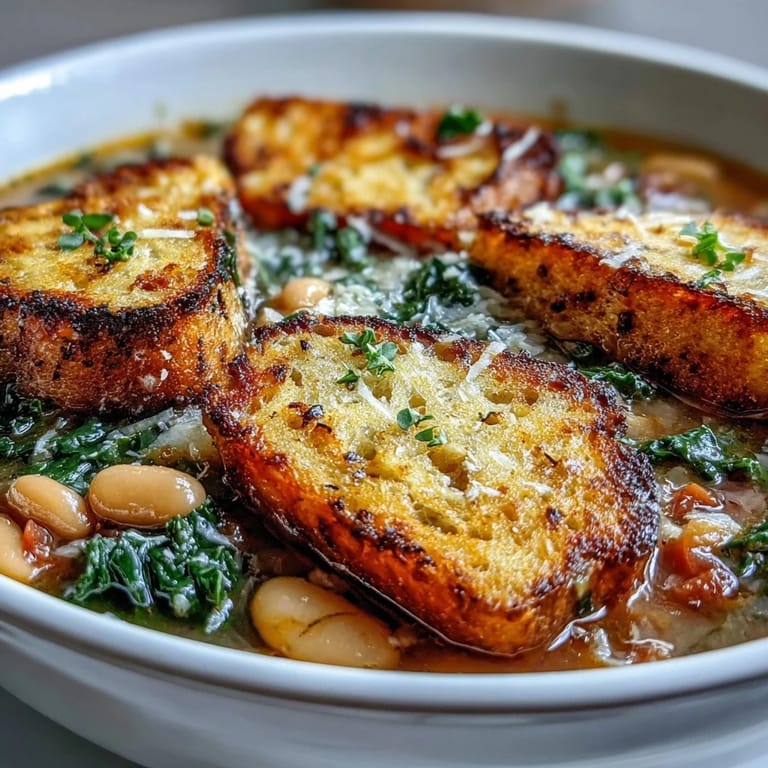
- Day-old sourdough bread: The staleness is intentional—fresh bread becomes mushy and sad, but older bread crisps into golden shards that stay crunchy against the hot soup.
Tired of Takeout? 🥡
Get 10 meals you can make faster than delivery arrives. Seriously.
One email. No spam. Unsubscribe anytime.
Instructions
- Build your flavor base with the soffritto:
- Heat your olive oil until it's fragrant and warm, then add the onion, carrot, celery, and fennel. As they cook down over 8 to 10 minutes, you'll notice the kitchen smelling progressively sweeter and more inviting—that's when you know the vegetables are releasing their natural sugars and becoming the foundation everything else will rest on.
- Welcome the garlic and heartier vegetables:
- Once your soffritto has softened, add the minced garlic and cook just long enough to smell that distinctive warm aroma without letting it brown. Then tumble in the zucchini, potato, and kale, stirring gently as they begin to wilt.
- Pour in the liquid and seasonings:
- Add your tomatoes with their juices, the drained beans, broth, bay leaf, and dried herbs. Season generously now with salt and pepper—you can always adjust, but this is when the soup learns what it's supposed to taste like. Bring everything to a boil so the flavors can mingle, then settle it down to a gentle simmer.
- Let time do the work:
- Simmer uncovered for 35 to 40 minutes, stirring occasionally so nothing sticks to the bottom. About halfway through, grab the back of a wooden spoon and gently press some of the beans and vegetables against the side of the pot—this partial mashing creates a thicker, creamier texture without making the soup feel heavy or one-note.
- Make your croutons while the soup simmers:
- Toss your sourdough cubes with olive oil and spread them on a baking sheet, then into a 400°F oven they go for 10 to 12 minutes. You'll know they're ready when they're golden and make a satisfying crunch when you bite one, and that's when you rub them with the cut side of a garlic clove while they're still warm so the garlic practically melts into them.
- Finish and serve:
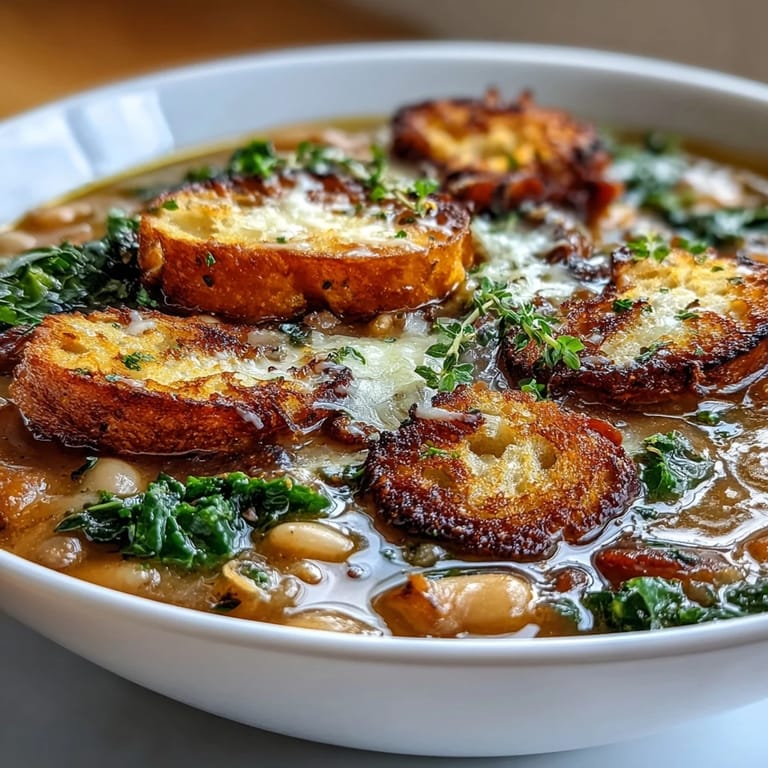
- Fish out the bay leaf, taste your soup one more time, and adjust salt and pepper if needed. Ladle into bowls and crown each one with a handful of those garlic-rubbed croutons, a generous drizzle of your best olive oil, and a shower of Parmigiano-Reggiano if that's your style.
 Save to Pinterest
 My neighbor watched me make this through her kitchen window (we have oddly transparent kitchens) and asked what I was cooking because the smell had drifted over to hers. Two hours later we were sitting at my counter with bowls of still-warm ribollita, and she told me she'd forgotten what it felt like to eat something made with this much intention. That's when soup stops being a recipe and becomes a gesture.
The Parmesan Rind Secret
If you have a piece of Parmigiano-Reggiano rind tucked in your freezer or cheese drawer, drop it into the soup while it simmers—it adds an umami depth that tastes like the recipe has been cooking since yesterday. Just remember to fish it out before serving, or your guests will give you confused looks wondering what the hard thing in their bowl is. The rind doesn't dissolve; it just gives generously and then gets removed, which feels like a metaphor for something, though I'm not sure what.
Variations That Actually Work
Once you understand the basic structure of this soup, you can shift things around without losing its identity. Swiss chard and spinach both work beautifully if kale isn't available, though they'll cook down faster so add them toward the end. White beans are traditional, but I've made this with cannellini and chickpeas mixed together when I had both on hand, and it created interesting textural moments. Some versions add a splash of red wine, which deepens everything and pairs perfectly with that crusty bread.
Making It Your Own
The first time I made this, I added fennel because the recipe mentioned it, but I wasn't sure about it. Turns out I loved the subtle licorice note it brought to the background, so now it's non-negotiable in my kitchen. The point is that ribollita is forgiving enough to accommodate your preferences and strong enough to carry them without falling apart. Start with the recipe as written, then make notes about what you'd change next time—that's how you develop the kind of cooking intuition that makes food feel personal instead of just produced.
- If you're cooking for someone avoiding nightshades, skip the tomatoes and add an extra carrot or two for sweetness instead.
- A pinch of red pepper flakes adds gentle heat without announcing itself, so don't be shy.
- Make a double batch on purpose—this soup gets better in the refrigerator as the flavors settle and deepen over a day or two.
 Save to Pinterest
 There's a reason this soup has survived centuries of Italian cooking—it doesn't need much, just good ingredients treated with respect and time. Every bowl is an invitation to slow down and remember why we cook for people we care about.
Questions & Answers About This Recipe
- → What type of beans are best for this dish?
Cannellini beans are traditional, offering a creamy texture that blends well with the other ingredients.
- → Can I substitute Tuscan kale with another green?
Swiss chard or spinach work well as alternatives, providing similar leafy texture and flavor.
- → How are the sourdough croutons prepared?
Cubes of day-old sourdough bread are tossed in olive oil, baked until golden, then rubbed with garlic for added aroma.
- → What herbs enhance this soup's flavor?
Dried thyme and oregano add a classic Italian herbaceous note, perfectly complementing the vegetables and beans.
- → Is it possible to make this dish vegan-friendly?
Yes, simply omit the cheese or use a plant-based alternative to keep it vegan.