 Save to Pinterest
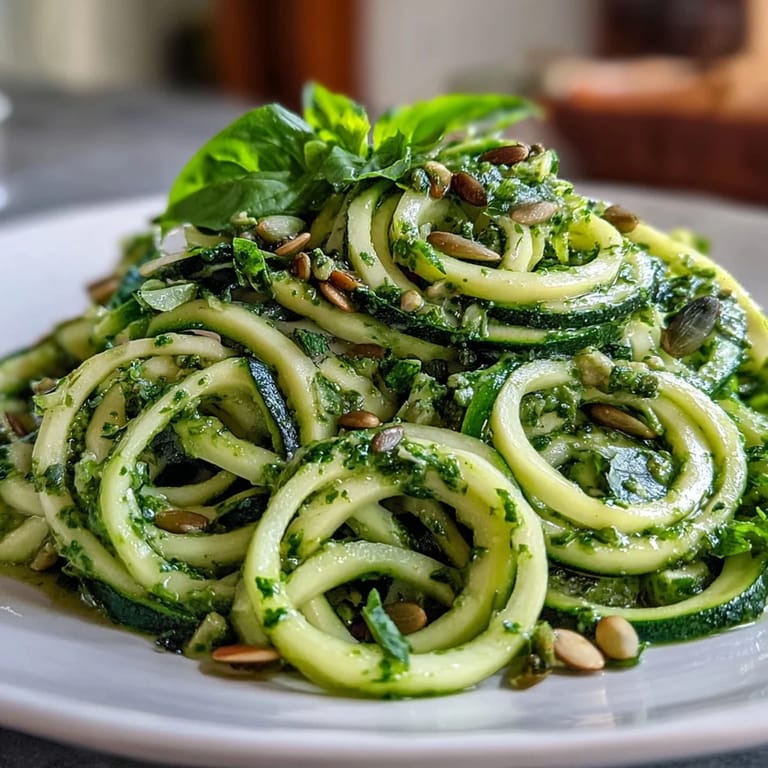
 There's something almost meditative about the moment a spiralizer transforms a humble zucchini into delicate ribbons of green. I discovered this pesto during a late summer afternoon when my farmer's market haul looked more like a vegetable garden than a bag of groceries, and I had a pile of basil that refused to be ignored. The pumpkin seeds came later, actually, when I was searching for something that could replace the traditional pine nuts I didn't have on hand. That first bite was electric—creamy, nutty, bright with lemon, and somehow both light and deeply satisfying.
I served this to a friend who claimed she could never enjoy zucchini noodles because they always turned into mush in her mouth. She took one twirl of her fork, paused mid-bite, and just smiled. That's when I realized this dish wasn't about pretending vegetables were something they weren't—it was about letting them be exactly what they were, just dressed for the occasion.
Ingredients
- Raw pumpkin seeds (pepitas): These are the soul of the pesto, bringing earthiness and a natural creaminess when blended that feels almost luxurious without a drop of dairy.
- Fresh basil leaves, packed: Don't measure loosely or you'll lose the bright herbaceous punch that makes this feel summery no matter the season.
- Garlic: Just two cloves keep things balanced and won't overpower the delicate sweetness of the zucchini.
- Extra-virgin olive oil: This isn't just fat—it's the vehicle that carries flavor and creates that silky texture pesto is known for.
- Lemon juice: The acid is essential, cutting through richness and making everything taste fresher and more alive.
- Nutritional yeast: It adds an umami depth and a subtle cheesy note that vegan eaters will recognize instantly and meat-eaters won't be able to quite identify.
- Sea salt and black pepper: Taste as you go here; the pesto will tell you what it needs.
- Medium zucchini: Choose firm ones without soft spots, as they spiralize cleanly and don't release excess water that turns everything soggy.
- Cherry tomatoes: These are optional but worth it—they add bursts of acid and sweetness that make the whole dish feel complete.
Tired of Takeout? 🥡
Get 10 meals you can make faster than delivery arrives. Seriously.
One email. No spam. Unsubscribe anytime.
Instructions
- Blend the pesto foundation:
- Pulse your pumpkin seeds, basil, garlic, olive oil, lemon juice, nutritional yeast, salt, and pepper in the food processor until you've got a thick, coarse paste that still has texture. This isn't supposed to be smooth like traditional pesto—those little seed pieces matter for the final bite.
- Reach the right consistency:
- Add water a tablespoon at a time, pulsing between each addition, until the pesto flows just slightly but still clings to a spoon. It should feel thick enough to coat noodles without sliding off.
- Create your noodles:
- Run your zucchini through a spiralizer or use a julienne peeler for thinner ribbons. Work over a clean cutting board so you can see what you're doing.
- Choose your temperature:
- If you want raw noodles, pat them dry and skip straight to tossing. For warm noodles, heat a skillet over medium, add a tablespoon of oil, and let the zucchini get just tender in about two to three minutes—you're warming, not cooking.
- Coat and serve:
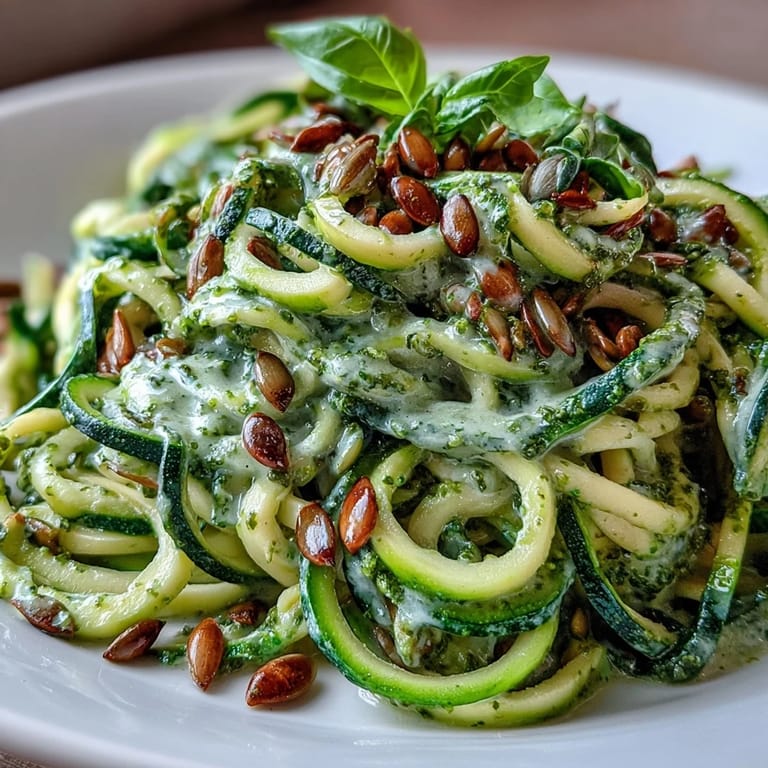
- Toss everything together in a large bowl, making sure every noodle catches some of that green pesto magic. Taste one strand before plating, adjust salt or lemon if needed, then serve with tomatoes and basil on top.
 Save to Pinterest
 This dish became something more than dinner one evening when I realized I was eating it while standing at the kitchen counter, not because I was in a hurry, but because I was too busy tasting it to sit down. That's when I understood that food doesn't have to be complicated to be memorable.
Raw or Warm: What Changes Everything
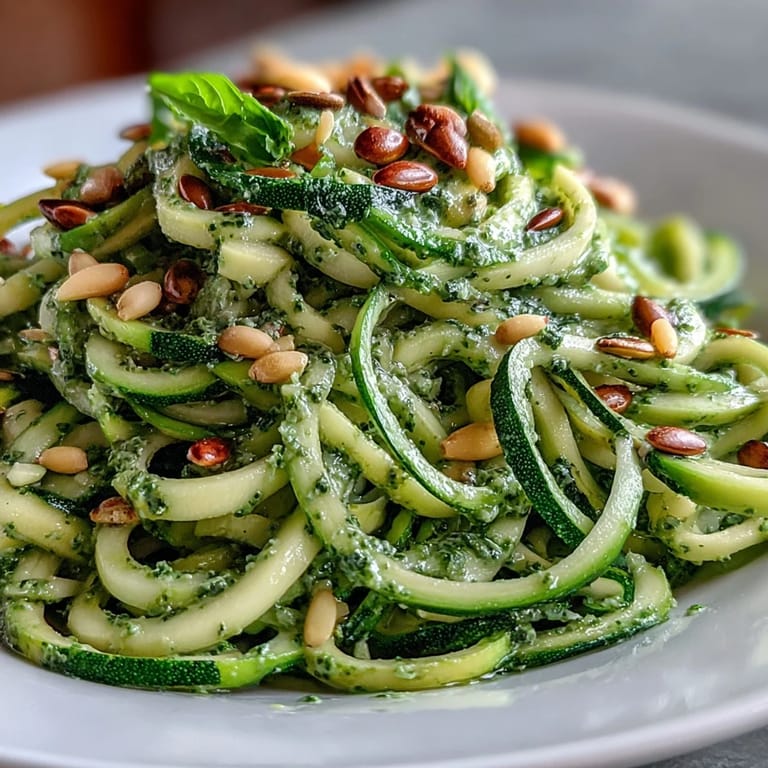
The choice between serving this cold or warm is more than just temperature—it changes the entire personality of the dish. Raw zucchini noodles feel fresh and crisp, the pesto coating them like a cool sauce, almost like a summer salad but heartier. Warm noodles soften slightly and allow the pesto to nestle into every coil, becoming something closer to a traditional pasta dish. I've made this both ways for the same person on different nights, and honestly, they'll probably tell you they prefer whichever one you served them first.
Building Your Own Pesto Library
Once you've made this version, you start seeing pesto possibilities everywhere. Sunflower seeds work beautifully if you're avoiding pumpkin. Walnuts add an earthier, almost woodsy note. Pine nuts bring traditional elegance. The basil is interchangeable with spinach, arugula, or even parsley depending on what's in season or what you have hiding in the back of your crisper drawer. I keep a running list of combinations I want to try because this formula—seeds or nuts, green herbs, garlic, acid, fat, and seasoning—is endlessly adaptable and never boring.
Making It Your Complete Meal
On its own, this is light and elegant, but sometimes you want something more substantial. I've added roasted chickpeas for protein and crunch, tossed in white beans that dissolve slightly into the pesto, scattered toasted breadcrumbs over the top, and even crumbled crispy tofu across a bowl. Fresh avocado stirred into the pesto makes it creamier and richer. A handful of arugula added at the very end brings peppery contrast. The beauty is that nothing fights with these flavors—they all seem to belong together naturally, and you get to decide how full your bowl becomes.
- Keep leftover pesto in a jar in your refrigerator and use it on salads, vegetables, or spread on toast within three to four days.
- Double the pesto recipe if you're making this for more than two people, as it keeps well and you'll want some left over.
- Taste the pesto before tossing with noodles so you can adjust seasoning while you still can—it's harder to fix once everything is mixed together.
 Save to Pinterest
 This recipe has become one I make when I want to prove to myself that eating well doesn't require effort or compromise, just intention and a few good ingredients. It's the kind of dish that makes you feel good before you even take a bite.
Questions & Answers About This Recipe
- → Can I use other seeds instead of pumpkin seeds?
Yes, you can substitute pumpkin seeds with sunflower seeds or walnuts to create a similar texture and flavor profile.
- → Is it necessary to cook the zucchini noodles?
No, zucchini noodles can be served raw for a fresh crunch or lightly sautéed for a softer texture without losing their vibrant color.
- → What can I add for extra creaminess in the pesto?
Adding avocado to the pesto base will enhance its creaminess and provide a richer mouthfeel.
- → How can I increase the protein content of this dish?
Incorporate cooked chickpeas or white beans into the pesto or toss them with noodles to boost protein.
- → What are suitable beverage pairings for this dish?
Pair it with a crisp Sauvignon Blanc or sparkling water with lemon to complement the fresh flavors.