 Save to Pinterest
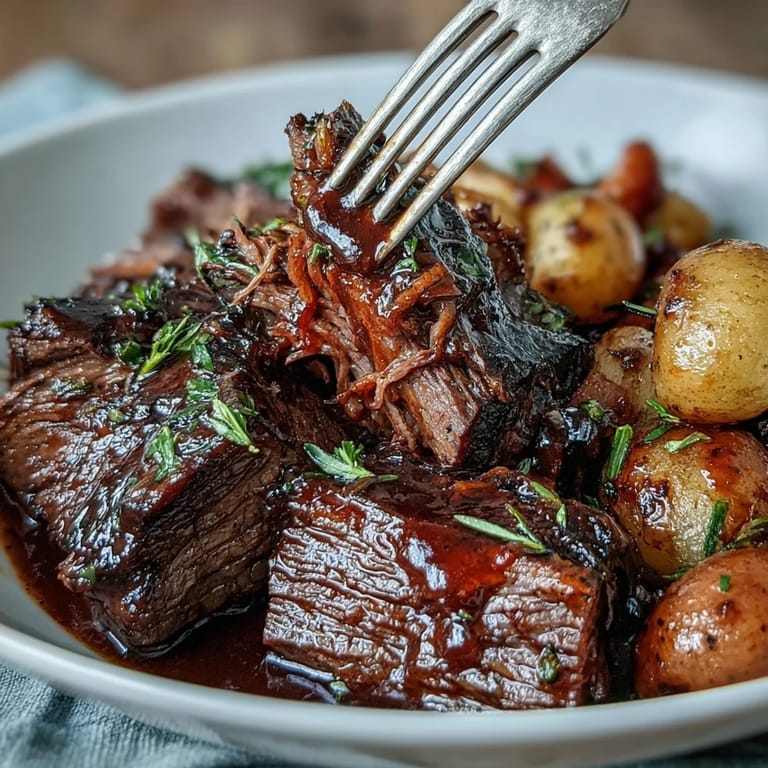
 My neighbor stopped by one November afternoon with that defeated look people get when they're tired of cooking, and I realized she needed exactly what I'd learned to make without thinking: a pot roast that does the work while you do everything else. There's something almost rebellious about dumping a packet of onion soup mix into a slow cooker and walking away, trusting that eight hours later you'll have something that tastes like it simmered all day. The first time I made this version, I was skeptical—too easy, I thought—but the moment that beef fell apart under a fork, I understood why this became the recipe I keep returning to.
I made this for my brother's first week back home after his job transfer, and watching him eat three helpings without saying much told me more than words could. My mom used to make pot roast on Sundays, but hers involved constant attention and worry—this version lets you sit together instead of standing over a stove. That's when I realized the real magic wasn't the recipe itself, but what it freed up: time to actually be present.
Ingredients
- Chuck roast, 3 lbs: This cut has the marbling and connective tissue that turns silky and tender during slow cooking, becoming almost shredded if you pull it apart with a fork.
- Onion soup mix, 1 packet: Don't overlook the simplicity—this packet contains dried onions, beef flavoring, and seasonings that bloom into the broth and create an instant, layered base you'd struggle to build from scratch.
- Black pepper, 1 tsp: Applied directly to the raw beef before cooking, it creates a subtle crust and keeps the seasoning from tasting flat.
- Dried thyme, 1 tsp: Optional but worth adding if you have it—it whispers through the broth without overpowering, touching everything with earthiness.
- Carrots, celery, potatoes, onion: The vegetables act as both flavor builders and a natural bed that keeps the roast from sitting directly on the hot slow cooker bottom, which helps it cook evenly.
- Beef broth, 2 cups: Use good quality broth if you can—it matters more here than in most recipes since it becomes your entire cooking liquid and gravy foundation.
- Tomato paste, 2 tbsp: This adds a subtle sweetness and depth that rounds out the onion flavors and prevents the broth from tasting one-dimensional.
- Worcestershire sauce, 2 tbsp: A splash of umami that makes people ask what your secret ingredient is, even though it's hiding in plain sight.
- Cornstarch, 2 tbsp with cold water: This thickens the broth into proper gravy, but only if you add the cornstarch slurry in the last few minutes—adding it earlier breaks down the thickening power.
Tired of Takeout? 🥡
Get 10 meals you can make faster than delivery arrives. Seriously.
One email. No spam. Unsubscribe anytime.
Instructions
- Dry the roast and season it:
- Pat the chuck roast completely dry with paper towels—this small step helps it brown better later and keeps it from steaming. Season generously with black pepper and thyme, letting the spices sit on the cold meat for a minute so they stick.
- Build your vegetable foundation:
- Cut your carrots, celery, potatoes, and onion into roughly 2-inch pieces so they cook evenly and create natural space between the meat and the slow cooker walls. Toss them into the bottom of the slow cooker without much worry about neatness.
- Position the roast:
- Lay the seasoned chuck roast directly on top of the vegetables—this isn't a delicate arrangement, just place it where it balances.
- Mix your braising liquid:
- In a mixing bowl, whisk together the beef broth, onion soup mix, tomato paste, and Worcestershire sauce until the soup mix breaks down and the tomato paste dissolves into the liquid. You want no lumps, just a unified, savory broth.
- Pour and cover:
- Pour the entire mixture over the roast and vegetables until everything is mostly submerged. Set your slow cooker to LOW and cover it—don't peek for the first few hours, as this disrupts the gentle cooking process.
- Let time do the work:
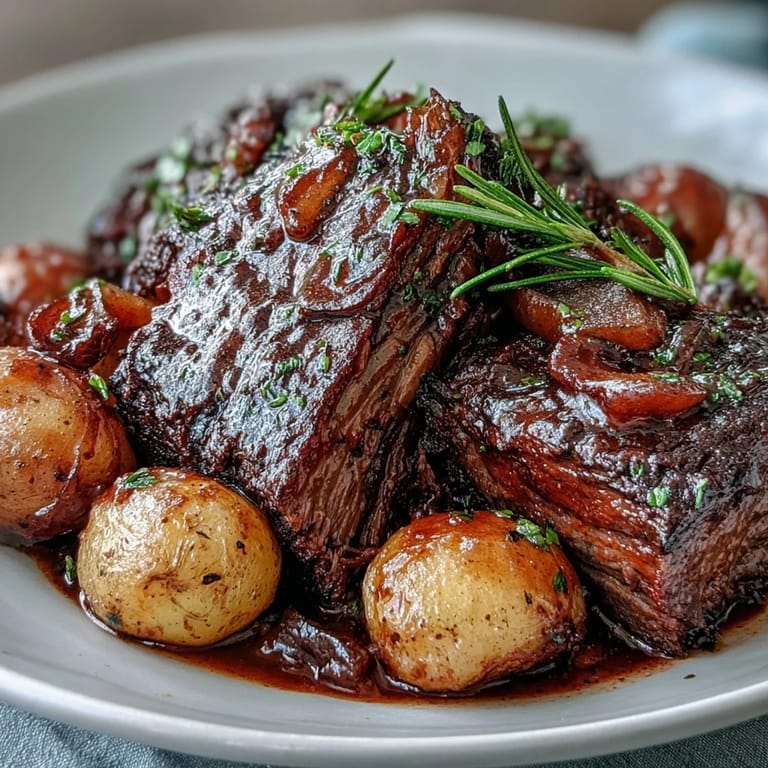
- Cook on LOW for 8 hours (or HIGH for 5 to 6 hours if you're short on time) until the roast shreds easily with a fork and the vegetables are tender. The smell alone will tell you when you're getting close.
- Optional: Thicken the gravy:
- If you want a thicker sauce, mix cornstarch with 2 tablespoons of cold water to make a smooth slurry. Stir this into the hot liquid during the last 5 to 10 minutes on HIGH, watching it thicken in real time.
- Serve it up:
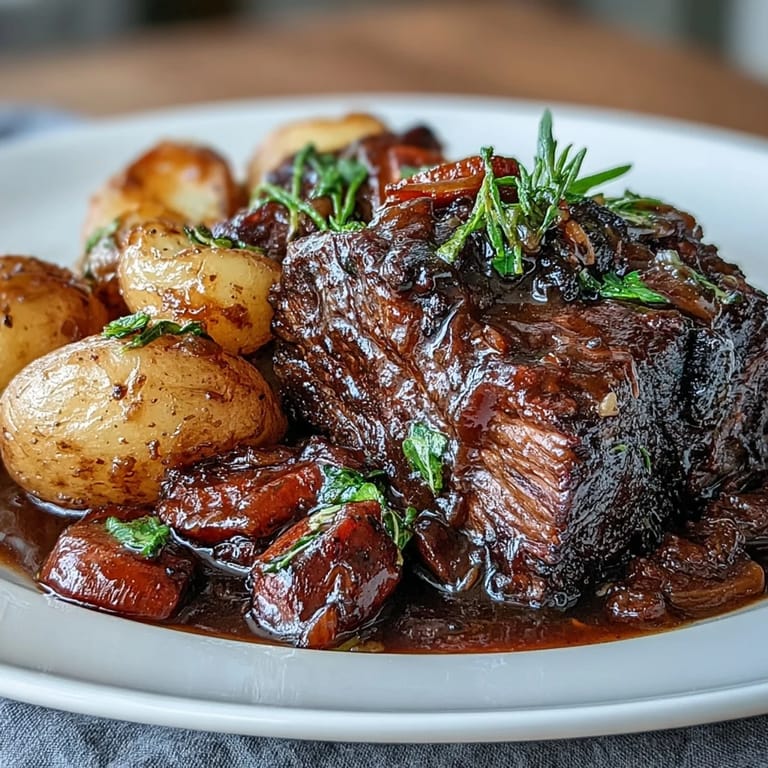
- Transfer the roast and vegetables to a serving platter, then spoon the gravy over everything. Shred or slice the roast depending on how tender it is—it might fall apart on its own.
 Save to Pinterest
 There was a Sunday when my daughter asked to help with dinner, and instead of the usual chaos, I could stand beside her while we prepped vegetables without rushing or worrying about timing. She still talks about that afternoon, though I'm pretty sure what she remembers most is the ease of it—how a recipe that sounds fancy actually leaves room for teaching moments instead of stress.
The Secret of the Onion Soup Mix
People often apologize when they tell me they use soup mix, as if it's somehow less legitimate than making stock from scratch, but I've tasted homemade pot roasts that pale next to this version. The packet contains a specific blend of dehydrated onions, beef flavoring, and spices that integrate into the broth and create a rounded, savory foundation that's actually hard to replicate. Once you stop thinking of it as a shortcut and start thinking of it as an ingredient that serves a purpose, everything changes.
When to Sear and When Not To
I've made this recipe both ways—with and without searing the roast beforehand—and honestly, the slow cooker version works beautifully without it. The onion soup mix and Worcestershire sauce create enough depth that you don't feel the absence of a browned crust, but if you have an extra 10 minutes and want to add that caramelized layer, heat a little oil in a skillet and sear the roast on all sides until it's golden brown. It doesn't fundamentally change the dish, but some nights I do it anyway just for the ritual of it.
Beyond Basic: Variations Worth Trying
Once you've made this a few times and it becomes second nature, the door opens for experimentation without fear. You can swap parsnips for some of the potatoes, add a splash of red wine to the broth, or even throw in fresh mushrooms during the last hour of cooking. The foundation is so solid that it welcomes changes, which is part of why I keep coming back to it—it's reliable but never boring.
- Try adding balsamic vinegar or a spoonful of Dijon mustard to the broth for unexpected depth.
- Fresh thyme sprigs added in the last hour are different from dried thyme and worth exploring.
- If you have it, a good beef demi-glace makes the gravy even richer, though it's absolutely not necessary.
 Save to Pinterest
 This pot roast has earned its place in my regular rotation not because it's complicated or impressive, but because it shows up reliably when life is hectic and hungry. There's real comfort in knowing that three ingredients and eight hours will deliver something warm, filling, and worth sharing.
Questions & Answers About This Recipe
- → Can I sear the roast before slow cooking?
Yes, searing the roast in a hot skillet before slow cooking adds depth of flavor and helps lock in juices.
- → What vegetables work best with this dish?
Carrots, baby potatoes, celery, and onions are traditional choices that soak up flavors well and cook evenly.
- → How can I thicken the cooking liquid into a gravy?
Mix cornstarch with cold water and stir it into the slow cooker near the end of cooking, then cook on high for 5-10 minutes until thickened.
- → Is it possible to substitute vegetables in this dish?
Yes, parsnips or turnips can replace some potatoes for a different flavor profile.
- → What wine pairs well with this slow-cooked pot roast?
A robust red wine, such as Cabernet Sauvignon, complements the deep, savory flavors perfectly.
- → Can this dish be made gluten-free?
Use a gluten-free onion soup mix and verify Worcestershire sauce ingredients to ensure the dish is gluten-free.