 Save to Pinterest
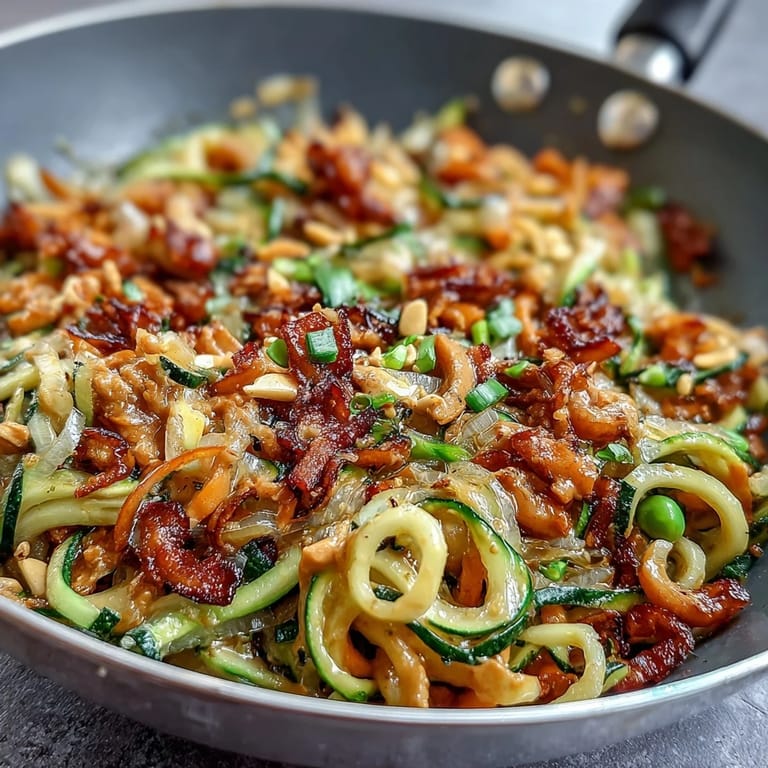
 There's something about the sound of a spiralizer that makes me feel like I'm actually doing something good for myself. One Tuesday evening, I was staring at a pile of zucchini from the farmers market, wondering how to make them interesting enough to actually eat instead of letting them languish in the crisper drawer. A friend mentioned peanut sauce, and suddenly I understood: vegetables weren't boring, I'd just been preparing them wrong. This stir-fry became my answer to the eternal question of how to eat light without feeling deprived.
I made this for my roommate on a night she came home completely exhausted, and watching her face light up when she tasted it was better than any compliment. She kept asking why restaurant stir-fries felt so heavy, and this one didn't, and the honest answer was that homemade peanut sauce tastes alive because you control exactly how much oil goes into it. That meal turned into a regular Thursday thing, and somehow we both developed better habits without it feeling like a sacrifice.
Ingredients
- Zucchini, spiralized: The foundation of this dish, and the magic is in not overcooking them; raw spiralized zucchini can even work if you're in a hurry, adding a fresh crunch that's honestly lovely.
- Red bell pepper: Slice thin so it caramelizes slightly on the edges and becomes sweet and tender without turning to mush.
- Carrot: Julienned or spiralized, it adds natural sweetness and a pleasant chew that contrasts beautifully with the softer vegetables.
- Snap peas: These keep their snap if you don't leave them in the pan too long, which is the whole point of a stir-fry anyway.
- Green onions and cilantro: Don't skip these; they're where the dish transforms from nice to memorable with their bright, fresh finish.
- Natural peanut butter: Use the kind with just peanuts and maybe salt; the vegetable oil separation is actually your friend here.
- Soy sauce or tamari: Low-sodium matters because you'll taste the peanut sauce, not just salt; tamari is genuinely indistinguishable if you're avoiding gluten.
- Rice vinegar: A touch of acid that wakes everything up; skip the fancy expensive kinds, regular rice vinegar does exactly what you need.
- Lime juice: Fresh squeezed makes a noticeable difference in brightness, but bottled works in a pinch.
- Sesame oil: Toasted is non-negotiable; the smoky, nutty flavor is what makes this taste intentional and not just healthy.
- Garlic and ginger: Mince the garlic fine and grate the ginger on a microplane if you have one; these release their flavor better when small.
- Roasted peanuts for garnish: Adds a textural contrast that makes you actually feel like you're eating something satisfying.
Tired of Takeout? 🥡
Get 10 meals you can make faster than delivery arrives. Seriously.
One email. No spam. Unsubscribe anytime.
Instructions
- Prep everything first:
- Spiralize your zucchini and carrot, slice your peppers thin, halve your snap peas, and mince your garlic and ginger. This takes five minutes and means you'll never be scrambling while things are cooking in the pan.
- Make the peanut sauce:
- Whisk together peanut butter, soy sauce, rice vinegar, lime juice, maple syrup, sesame oil, garlic, and ginger in a bowl, then thin it with warm water until it's smooth and pourable. Start with two tablespoons of water and add more by the tablespoon until it has the consistency of pancake batter.
- Heat your pan properly:
- Get a large nonstick skillet or wok screaming hot over medium-high heat, then add a splash of sesame oil if you want extra flavor. You want to hear the sizzle when vegetables hit the pan.
- Stir-fry the harder vegetables:
- Add your bell pepper, carrot, and snap peas, tossing constantly for two to three minutes until they're just tender but still have some firmness. The edges should look slightly caramelized, not steamed.
- Add the zucchini noodles:
- Toss in your spiralized zucchini and stir gently for two to three minutes until just heated through, never longer. This is where timing matters because soggy noodles turn a crisp dish into a sad one.
- Bring it together:
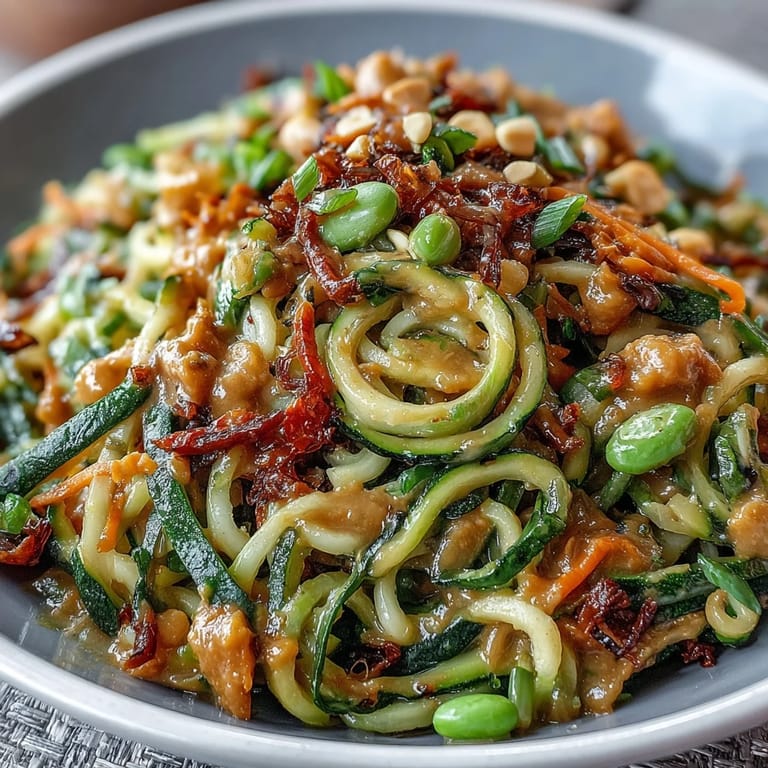
- Pour your peanut sauce over everything and toss constantly for one to two minutes until every strand of noodle is coated and the pan is heated through.
- Plate and garnish immediately:
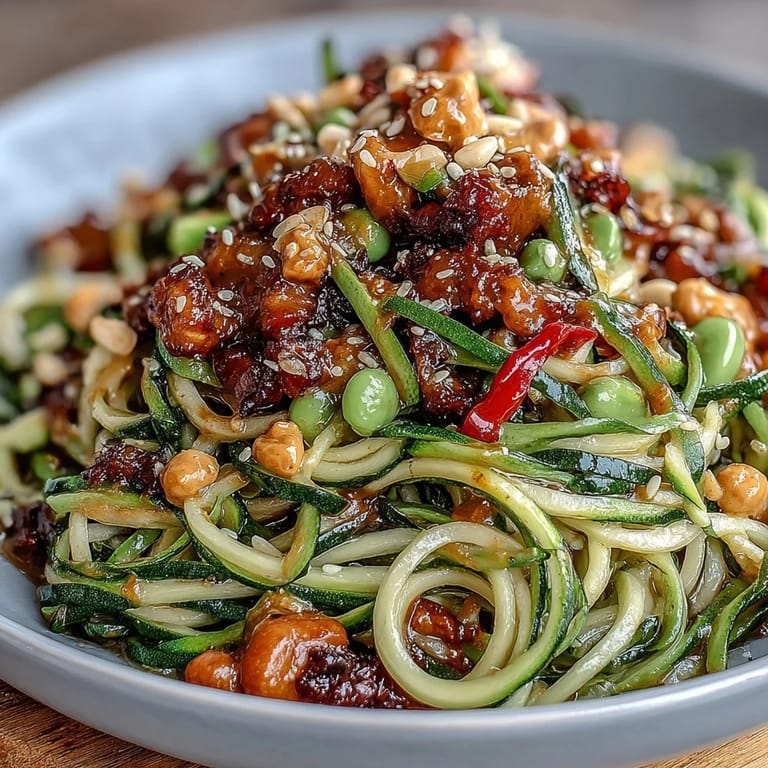
- Serve right away while everything is still hot, topped with chopped roasted peanuts, fresh cilantro, and sliced green onions. Waiting changes the texture, so eat it while it's perfect.
 Save to Pinterest
 I remember making this on a Saturday morning for a meal prep project, thinking I could portion it out for the week ahead. My partner ate two servings standing at the counter before I'd even finished plating, and we both laughed because some food is just too good to save for later. That's when I realized this recipe wasn't about being virtuous; it was about being genuinely delicious, which made all the difference.
Why This Works So Well
The secret is balance, honestly: the peanut sauce is creamy and rich but tempered by lime and vinegar, the vegetables are cooked just enough to be tender but still have character, and the whole thing comes together in the time it would take to order delivery. There's no deep frying, no heavy cream, no guilt, just vegetables that taste like you actually wanted to eat them. The sesame oil does the heavy lifting in terms of making everything taste sophisticated and intentional.
Making It Your Own
Once you understand how this stir-fry works, you can play with it endlessly. I've added mushrooms, broccoli, bok choy, baby corn, and even strips of purple cabbage depending on what I had or what sounded good. The peanut sauce works with literally any vegetable you like, and if you're adding protein like tofu or shrimp, throw it in when you heat the pan so it cooks before everything else. The only rule is respecting the timing so nothing turns to mush.
Storage and Variations
This is best eaten immediately, but if you have leftovers, store the noodles and sauce separately in the refrigerator and combine them when you're ready to eat, warming everything gently in the microwave or a pan. For a peanut-free version, almond or cashew butter works beautifully, and if you need soy-free, coconut aminos tastes almost identical. You can also swap maple syrup for honey or a tiny bit of brown sugar if you prefer, though maple's subtle earthiness is really what ties the whole sauce together.
- Make the peanut sauce up to three days ahead and just heat the vegetables fresh when you want to eat.
- If you don't have a spiralizer, a julienne peeler or even a vegetable peeler will work, just slice things thinner.
- Toast your own peanuts in a dry pan for five minutes if you want them fresher and more flavorful than the store-bought kind.
 Save to Pinterest
 This recipe proved to me that healthy eating doesn't require deprivation, just intention and good ingredients. It's become my go-to when I want to feel good about what I'm eating without feeling like I'm sacrificing flavor or satisfaction.
Questions & Answers About This Recipe
- → How do I prevent zucchini noodles from getting soggy?
To avoid soggy noodles, cook zucchini briefly—just 2 to 3 minutes—and avoid overcooking. Cook them last after the firmer vegetables, and serve immediately.
- → Can I substitute peanut butter in the sauce?
Yes, you can use almond or cashew butter as a peanut-free alternative. Adjust the sweetness and seasoning as needed to balance flavors.
- → What tools do I need to prepare the vegetables?
A spiralizer or julienne peeler works best for creating zucchini and carrot noodles. You'll also need a knife, cutting board, mixing bowl, and a whisk for the sauce.
- → Is this dish suitable for gluten-free diets?
Yes, use tamari instead of soy sauce to keep the dish gluten-free. Check all ingredient labels to confirm gluten-free status.
- → Can additional vegetables be added to this stir-fry?
Absolutely. Mushrooms, broccoli, or your favorite crunchy veggies can be added to increase variety and nutrition.