 Save to Pinterest
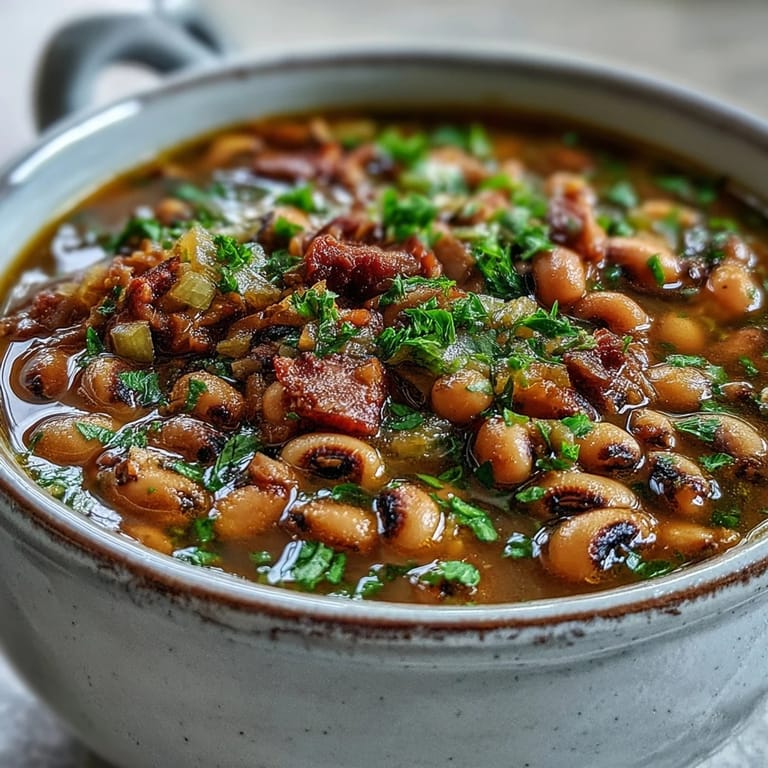
 My grandmother kept a ceramic bowl on her kitchen counter every December 31st, filled with dried black-eyed peas soaking overnight. She'd catch me peeking at them and say nothing, just smile—as if the peas themselves held secrets about the year ahead. That quiet ritual, the way the kitchen smelled of possibility and salt pork by morning, taught me that some foods carry more than flavor. They carry intention.
I made this for the first time on New Years Eve with my partner, and we didn't have smoked pork neck bones so we used ham hocks from the butcher counter. By the time they'd simmered for ninety minutes, the whole apartment smelled like a Southern kitchen we'd never actually been in. We ate standing at the counter at midnight, straight from the pot, without rice or cornbread or any of the proper trimmings. It didn't matter—we got the luck anyway.
Ingredients
- Dried black-eyed peas (1 pound): The foundation of this dish—they absorb every bit of that smoky, seasoned broth and become creamy without ever losing their shape, which is the whole point.
- Smoked pork neck bones or ham hocks (1½ pounds): This is where the soul lives, so don't skip it or substitute with bacon bits; the bones release collagen and that irreplaceable smoked flavor that makes the broth taste like comfort itself.
- Onion, celery, and bell pepper (1 of each): The holy trinity of Southern cooking, and the reason your kitchen will smell incredible within five minutes of hitting that hot oil.
- Garlic (4 cloves): Minced fine so it dissolves into the broth rather than sitting as distinct pieces.
- Water or low-sodium chicken broth (7 cups): Broth deepens the flavor, but water works too if you have good smoked meat doing the heavy lifting.
- Creole seasoning (1½ teaspoons): This is your shortcut to depth; it carries paprika, cayenne, garlic, and herbs all at once, so you're not fumbling with seven jars.
- Bay leaf, thyme, smoked paprika, black pepper: Each one adds a layer—the bay leaf anchors everything, thyme brings an earthy whisper, smoked paprika echoes the pork, and pepper just makes you taste everything more clearly.
- Salt (1 teaspoon, adjusted): Always taste at the end because the broth concentrates as it simmers, and you might need less than you think.
- Fresh parsley and hot sauce (optional): The parsley is bright and final, the hot sauce is for people who want to wake their taste buds up.
Tired of Takeout? 🥡
Get 10 meals you can make faster than delivery arrives. Seriously.
One email. No spam. Unsubscribe anytime.
Instructions
- Soak your peas the night before (or rush it):
- Cover them with water and let them sit overnight, which softens their skins and cuts cooking time. If you're short on time, pour boiling water over them, wait an hour, and drain—it works almost as well, though the overnight soak is gentler and more forgiving.
- Build your base with the holy trinity:
- Heat a splash of oil in a large Dutch oven over medium heat and sauté your chopped onion, celery, and bell pepper until they're soft and the kitchen smells like a Southern kitchen should. This takes about five minutes, and you'll know it's right when the onion turns translucent and the celery edges go tender.
- Add garlic and let it bloom:
- Stir in your minced garlic and cook for exactly one minute—long enough for the rawness to fade and the sweetness to surface, but not so long that it burns and turns bitter. You'll smell it shift from sharp to mellow; that's your signal to move on.
- Combine everything for the long simmer:
- Add your drained peas, smoked pork, broth, and all your seasonings at once. Stir well so nothing sticks to the bottom, then bring the whole pot to a boil before turning the heat down to low. Cover and let it simmer for an hour and a half, stirring every twenty minutes or so to prevent any sticking.
- Finish with the pork:
- When the peas are tender and falling apart slightly, remove the pork bones carefully and shred any meat clinging to them with two forks. Return the shredded meat to the pot and discard the bones and any excess fat sitting on top—this keeps the broth clean and the dish from feeling greasy.
- Taste and adjust:
- Remove the bay leaf and taste carefully. Add salt a pinch at a time because the broth has been reducing and concentrating its flavors the whole time you've been cooking. You might find it's already perfect.
- Serve with intention:
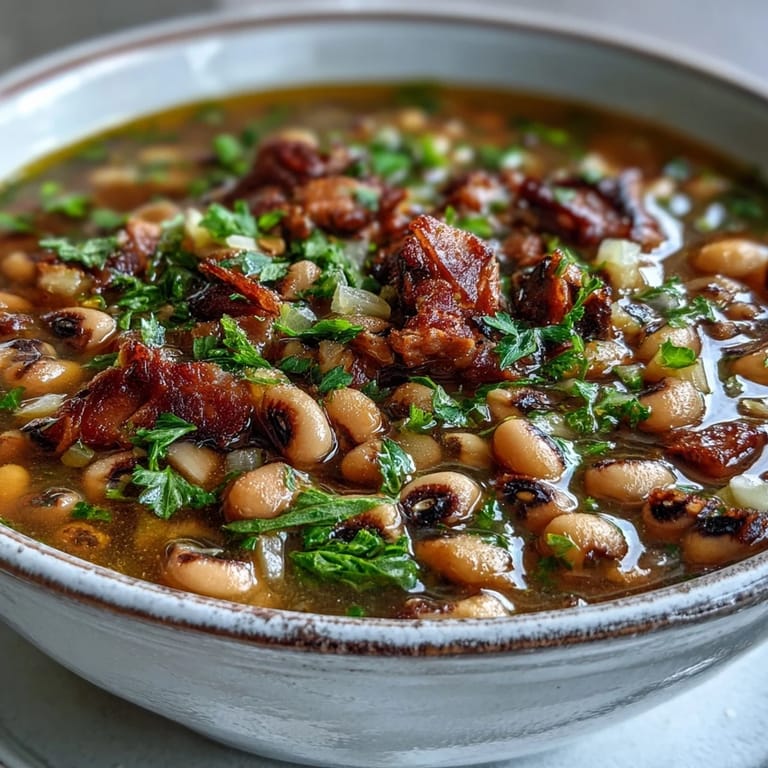
- Ladle into bowls, top with fresh parsley if you have it, and pass hot sauce for anyone who wants to add their own heat. Traditionally served over rice or with cornbread to soak up every drop of that broth.
 Save to Pinterest
 A friend came over one January 2nd to help me eat leftovers, and she told me that the peas tasted different than her mother's—not worse, just different, like they carried my kitchen instead of hers. That's when I understood that this recipe isn't about perfection or tradition in the rigid sense. It's about making something intentional and feeding people with it, and the details change based on whose hands are holding the spoon.
The Overnight Soak Makes All the Difference
I used to skip the overnight soak because it felt like planning ahead, which felt like work. Then I realized that soaking isn't just about speed—it's about texture. Peas that soak overnight open gently as they cook, becoming creamy inside while holding their shape. Quick-soaked peas can split or turn grainy, which changes the whole eating experience. Now I soak them the moment I know I'm making this dish, treating it as the first real step of cooking rather than a preliminary inconvenience.
Why Smoked Pork Is Not Optional
The first time I tried to make this vegetarian by adding extra smoked paprika and liquid smoke, I ended up with something that tasted like an impression of the real thing rather than the real thing itself. Smoked pork bones release collagen and gelatin as they cook, creating a broth with body and depth that no seasoning can replicate. If you're avoiding pork for dietary or ethical reasons, that's completely valid, but if you're just trying to save money, spend the extra few dollars on smoked neck bones or ham hocks. The difference is the whole dish.
Creole Seasoning Saves You Time Without Sacrificing Flavor
Some recipes want you to toast individual spices and build flavor from scratch, which is beautiful but sometimes life doesn't allow for it. A good Creole seasoning blend already contains paprika, cayenne, garlic, and herbs, so you're layering flavors instead of starting from nothing. Check the label to make sure you're buying actual seasoning and not salt with a hint of flavor, and don't be afraid to add an extra pinch if you like things spicier.
- Taste as you go because different brands of Creole seasoning vary in heat level and salt content.
- Store your seasoning in a cool, dark place or it loses its punch faster than you'd expect.
- If you're cooking for people with high blood pressure or salt sensitivity, you might use half the recommended amount and rely more on the smoked pork for depth.
 Save to Pinterest
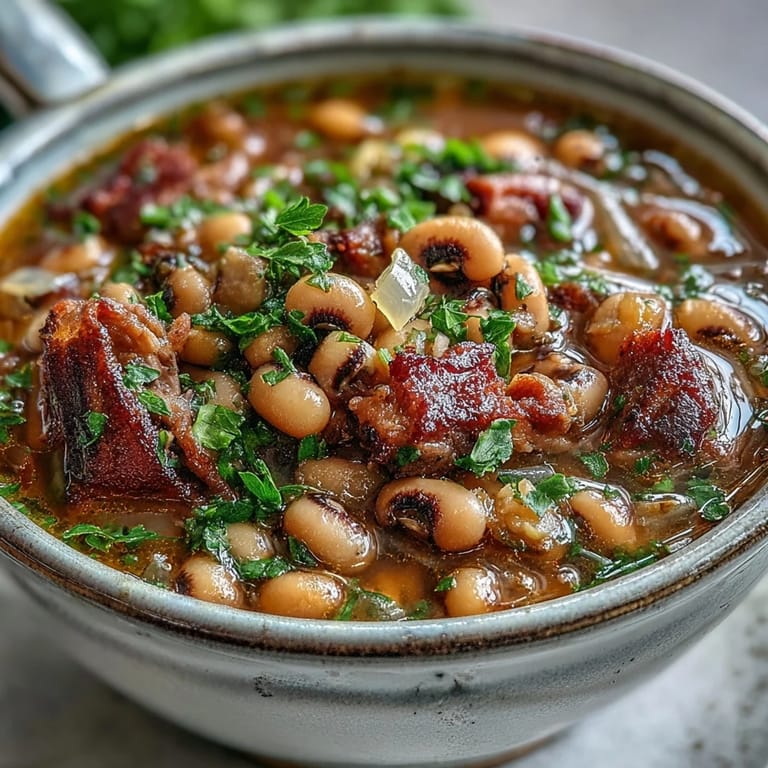
 Black-eyed peas are a reminder that some traditions exist because they work, not because they're old. Eat them on New Years Day if luck matters to you, or eat them on a Tuesday because they're delicious and nourishing and deserve better than to be treated as superstition. Either way, you're right.
Questions & Answers About This Recipe
- → Why are black-eyed peas eaten on New Year's Day?
Black-eyed peas are a Southern tradition believed to bring good luck and prosperity in the new year. The peas represent coins, and when eaten with collard greens (representing paper money) and cornbread (representing gold), they symbolize wealth and financial success for the coming year.
- → Can I make this vegetarian?
Yes, simply omit the smoked pork bones and use extra smoked paprika plus a splash of liquid smoke to maintain that essential smoky flavor. You can also add vegetable broth instead of water or chicken broth for deeper flavor.
- → Do I really need to soak the peas overnight?
Overnight soaking ensures even cooking and tender texture. If you're short on time, use the quick soak method: cover dried peas with boiling water, let sit for one hour, then drain and proceed with the instructions.
- → What's the difference between Creole and Cajun seasoning?
Both are spice blends with similar ingredients like paprika, garlic powder, and cayenne. Creole seasoning typically contains more herbs and is milder, while Cajun seasoning tends to be spicier with more pepper. They're generally interchangeable in this dish.
- → How should I serve black-eyed peas?
Traditionally served over steamed white rice with cornbread on the side. For a complete New Year's spread, pair with collard greens and cornbread. Hot sauce and fresh parsley make excellent garnishes for added brightness and heat.
- → Can I freeze leftovers?
Absolutely! This dish freezes beautifully for up to three months. Cool completely before transferring to airtight containers or freezer bags. Thaw overnight in the refrigerator and reheat gently on the stovetetop, adding a splash of water or broth if needed.