 Save to Pinterest
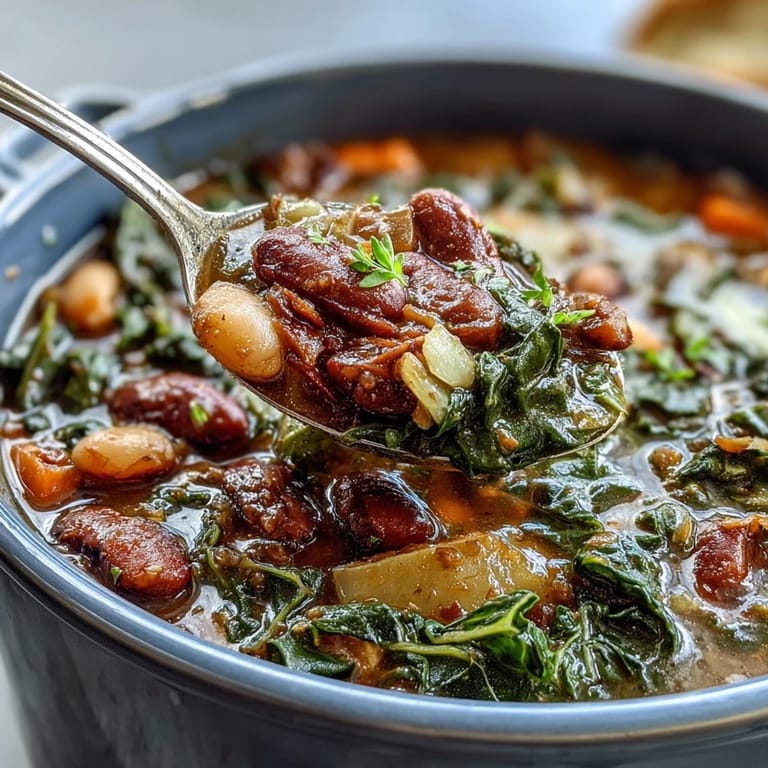
 My grandmother's kitchen always smelled like this stew simmering on the back burner—that earthy, complex aroma of collard greens meeting smoked paprika and something ancient and grounding. Years later, I realized she wasn't just cooking; she was teaching me through scent and taste what comfort food really meant. This black-eyed pea and collard green stew became my answer to cold days, homesickness, and the kind of hunger that only soul food understands. It's the dish I make when I want to feel held by my own hands.
I made this for my best friend during her first winter living away from home, and watching her take that first spoonful—the way her shoulders softened and her eyes closed—I understood why my grandmother cooked this way. She didn't say much, just kept eating, and somewhere between the third and fourth bowl, she finally talked about missing her family. Food doesn't fix loneliness, but it sure makes you feel less alone while you're eating it.
Ingredients
- Olive oil: Start with two tablespoons—enough to coat the pot and let your vegetables get golden without swimming in grease.
- Yellow onion, carrots, and celery: This holy trinity is your flavor foundation; don't skip the step of letting them soften completely, as it builds everything that comes after.
- Garlic: Three cloves minced fine so they disappear into the aromatics and wake up every other flavor in the pot.
- Jalapeño: Seed it first unless you're chasing serious heat; the pepper itself gives warmth without overwhelming.
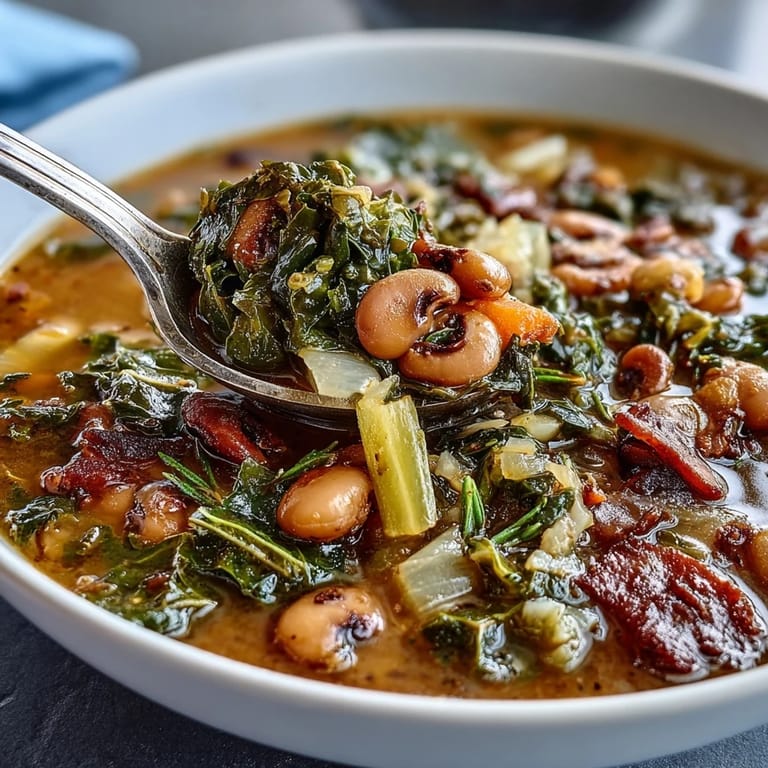
- Collard greens: About ten ounces, and yes, you have to remove those tough stems—they're bitter and chewy, and your stew deserves tender greens that actually want to be eaten.
- Diced tomatoes: Canned is perfect here; the acidity brightens everything and the juice becomes part of your broth.
- Black-eyed peas: Three cups cooked, or two drained cans—either way, they're earthy, meaty without meat, and they absorb flavors like little flavor sponges.
- Vegetable broth and water: Four cups broth and one cup water keeps the stew rich but not heavy; this ratio lets the vegetables shine without getting lost.
- Smoked paprika: One teaspoon of this is where the soul lives in this dish—don't use regular paprika, as you'll miss that smoke entirely.
- Dried thyme, cayenne pepper, salt, and black pepper: Layer these carefully, tasting as you go, because everyone's heat tolerance and salt preference lives in a different neighborhood.
- Bay leaves: Two whole leaves that you'll fish out at the end; they infuse without screaming.
- Apple cider vinegar: One tablespoon at the finish lifts and brightens like sunlight breaking through clouds.
Tired of Takeout? 🥡
Get 10 meals you can make faster than delivery arrives. Seriously.
One email. No spam. Unsubscribe anytime.
Instructions
- Build your flavor base:
- Heat the olive oil in your pot over medium heat and add the onion, carrots, celery, and jalapeño. Let them dance in that hot oil for six to eight minutes, stirring every couple of minutes so nothing burns at the edges—you want them soft and just starting to turn golden.
- Wake up the garlic:
- Stir in your minced garlic and cook for exactly one minute; this is the moment when your kitchen shifts from smelling like vegetables to smelling like dinner.
- Season and bloom:
- Add your smoked paprika, thyme, cayenne (if using), salt, and black pepper all at once, stirring constantly for about a minute so the spices wake up and release their oils into the hot pan.
- Introduce the greens:
- Pour in your chopped collard greens and stir for three to four minutes until they start to soften and look less like a pile of leaves and more like they're part of something larger—this step matters because it cooks out some of their rawness.
- Build the stew:
- Add the tomatoes with their juice, the black-eyed peas, broth, water, and bay leaves, stirring everything together so nothing gets stuck at the bottom. At this moment, your stew goes from ingredients to a whole thing with presence.
- Let it simmer:
- Bring everything to a simmer, then drop the heat to low, cover the pot, and let it sit undisturbed for forty-five to fifty minutes, stirring occasionally. The longer it sits, the more the flavors tangle up and become inseparable—this is where patience becomes deliciousness.
- The finish line:
- Remove the bay leaves and stir in your apple cider vinegar, tasting as you go and adjusting salt and pepper until it tastes like home to you. This last step is your signature moment—make it yours.
 Save to Pinterest
 There's something about stirring a pot of this stew that makes you stop scrolling through your phone and actually be present in the moment—the sound of the wooden spoon against the pot, the steam rising up, the way it smells like someone loves you. That's when I know I'm cooking with intention instead of just moving through the motions.
The Meat Question
The vegetarian version is genuinely complete and satisfying—the black-eyed peas bring protein and heartiness that doesn't leave you missing anything. But if you want to add smoked turkey or ham, dice about four ounces and sauté it with your vegetables at the beginning; if you're team liquid smoke, add a teaspoon with your spices and it'll ghost through the whole pot like memory. I've made both versions and each one feels different but equally right, which is exactly how soul food should work—it should bend to meet people where they are.
Heat and Flavor Adjustments
This stew walks a line between comforting and flavorful, and where that line sits is entirely up to you. The jalapeño is optional, which means you can taste without fear, and the cayenne is flexible too—half a teaspoon is a gentle whisper of heat, a whole teaspoon is a conversation starter. I once made this for someone who'd never had spicy food, so I left out all the heat, and she asked for hot sauce on the side anyway; turns out everyone's spice threshold is its own thing.
- Start conservative with heat and pass hot sauce at the table so people can choose their own adventure.
- Taste the stew halfway through cooking and adjust salt early, since it only intensifies as liquid reduces.
- The vinegar at the end can be swapped for a squeeze of fresh lemon if that's what your pantry holds.
Serving and Storage
Serve this hot in bowls with cornbread for breaking up the edges, or over rice if you want something sturdier underneath. The stew keeps in the fridge for five days and actually improves as it sits, the flavors settling into each other like people who've learned to be comfortable in silence. Reheat gently over medium-low heat, adding a splash of water if it's thickened up too much, and it'll taste like you just made it.
 Save to Pinterest
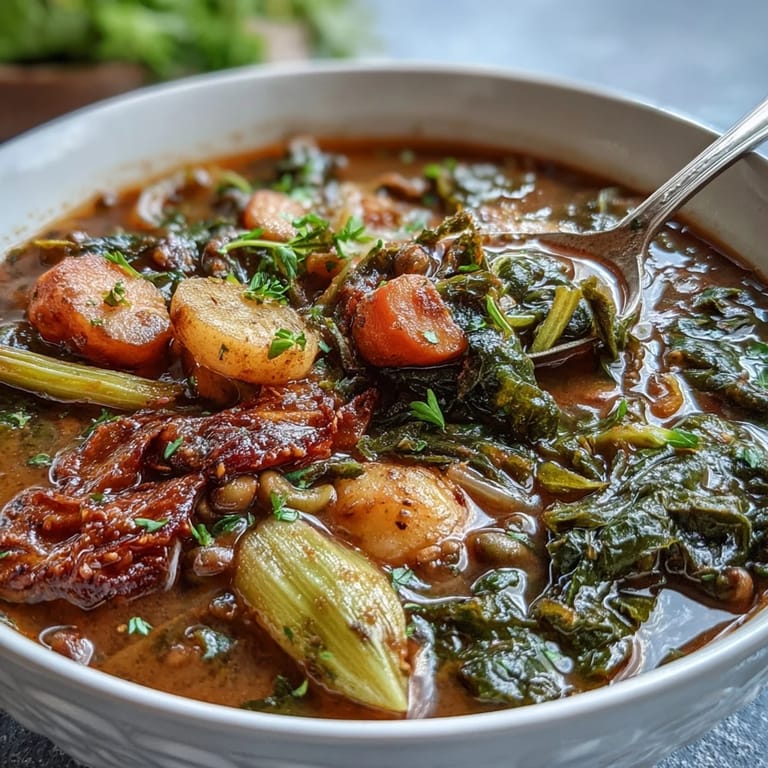
 This is the kind of food that teaches you something about yourself each time you make it—whether it's patience, generosity, or just the quiet knowledge that you're capable of feeding yourself and the people you love. That's the real magic happening in this pot.
Questions & Answers About This Recipe
- → What gives the stew its smoky flavor?
Smoked paprika adds a deep, smoky note that enhances the natural earthiness of the black-eyed peas and collard greens. For extra smokiness, smoked turkey or liquid smoke can be added.
- → Can I adjust the stew's heat level?
Yes, spice can be increased by adding more jalapeño or cayenne pepper according to your preference.
- → How do I prepare the collard greens for the stew?
Remove the tough stems and chop the leaves before adding them to the pot. Cooking them until wilted ensures tenderness and blends their flavor.
- → What is the best way to serve this stew?
Serve hot with traditional sides like cornbread or enjoy it on its own for a warming meal.
- → Is the stew suitable for special diets?
The base stew is vegetarian and gluten-free. To keep it vegan, avoid adding smoked meats and verify that broth products meet your dietary needs.